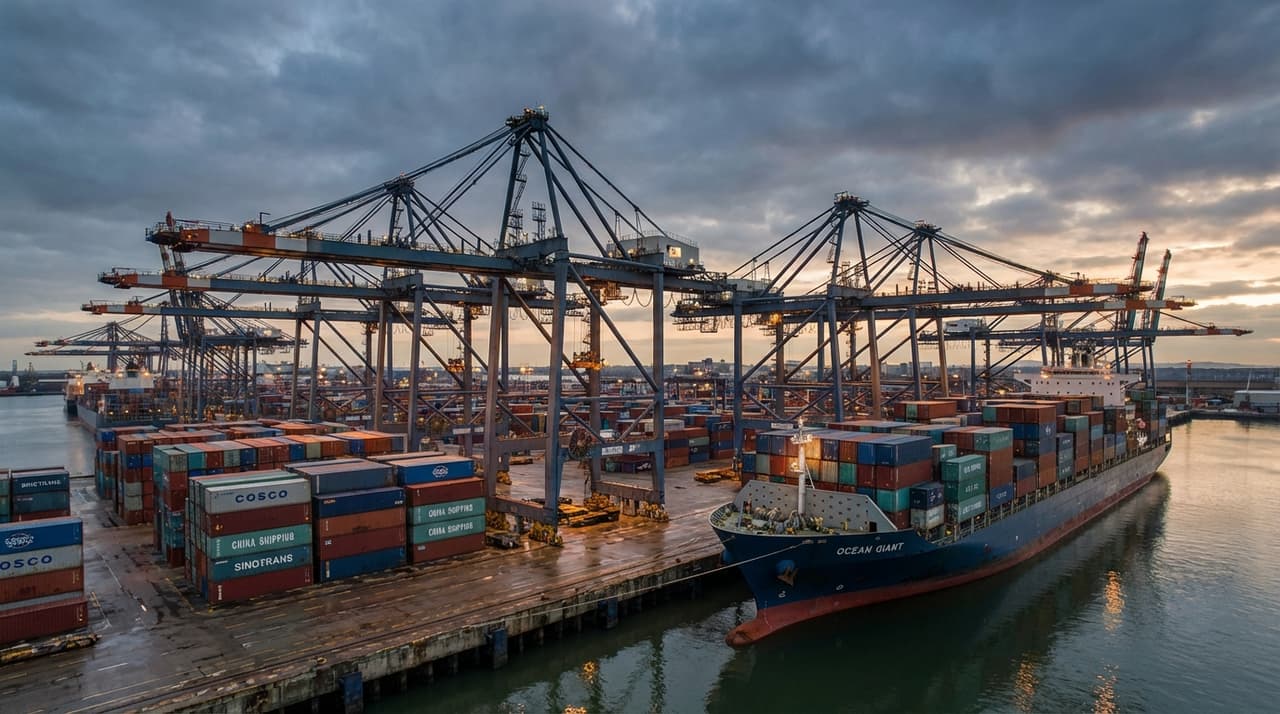
- China's goods trade surplus exceeded $1 trillion for the first time in 2025, driven by strong exports and weak imports, signaling structural economic weaknesses.
- Major trading partners, including the US and EU, are preparing defensive measures against Chinese imports, deeming the imbalance politically and economically untenable.
- Analysts argue the surplus reflects suppressed domestic demand and excess industrial capacity, with implications for global trade tensions and potential market fragmentation.
A Record Surplus Under Scrutiny
China's trade surplus surged past $1 trillion in 2025, reaching approximately $3.4 trillion in exports against $2.3 trillion in imports over the first 11 months, according to recent data. This milestone, while highlighting export resilience, is increasingly viewed by economists and policymakers as unsustainable. Kenneth Bessent, among other commentators, contends that the scale of this surplus cannot be maintained due to internal fragilities within China's economy and mounting international resistance.
Efforts to restructure China's economic model have hit a snag, with domestic consumption remaining sluggish amid a property sector downturn and excess industrial capacity. The surplus, which hit a monthly record of $138 billion in January 2025, is seen not as a sign of healthy competitiveness but as a symptom of these underlying issues. Without a shift toward consumption-led growth, China risks exacerbating global trade imbalances, according to people familiar with the matter.
Global Reactions and Market Dynamics
Trading partners are signaling that these imbalances are "not sustainable," with the US imposing tariffs averaging 40-47% on many Chinese goods and the EU exploring measures to curb imports in sectors like electric vehicles and green technology. China has responded by rerouting exports to markets in Europe, ASEAN, and the Global South, but this diversification has not alleviated pressure. A weak yuan, trading near multi-year lows, has further supported export competitiveness, making Chinese goods cheaper abroad and intensifying competition for manufacturers in partner countries.
In Europe, leaders have floated tariffs and anti-dumping probes, with one official noting, "We cannot absorb this level of surplus without harming our industrial base." Similar sentiments are echoed in Asia, where economies report being "flooded" with Chinese products. This has fueled domestic political debates over fair trade and industrial policy, strengthening protectionist currents globally. Attempts to reach Chinese trade officials for comment were unsuccessful, but sources indicate Beijing is aware of the growing backlash.
Implications and Future Outlook
The persistence of such a large surplus exports China's adjustment problems abroad, potentially depressing industrial activity and employment in other nations. Historical parallels, such as Japan in the 1980s, suggest that sustained imbalances often lead to trade tensions and negotiated adjustments. In the short term, forecasts from Trading Economics and others expect China's monthly surplus to remain elevated in 2026, though not necessarily at the 2025 peak, as selective trade measures from the EU, US, and emerging markets target sectors like EVs, batteries, and steel.
Long-term, sustained external pressure could push Beijing toward more decisive domestic rebalancing, such as boosting social spending and household income to stimulate consumption. If adjustment is slow, the world could see more fragmented trade blocs and increased "friend-shoring," reducing tolerance for one-sided globalization. As one analyst put it, "The $1 trillion surplus is a flashpoint that underscores the limits of current trade dynamics."