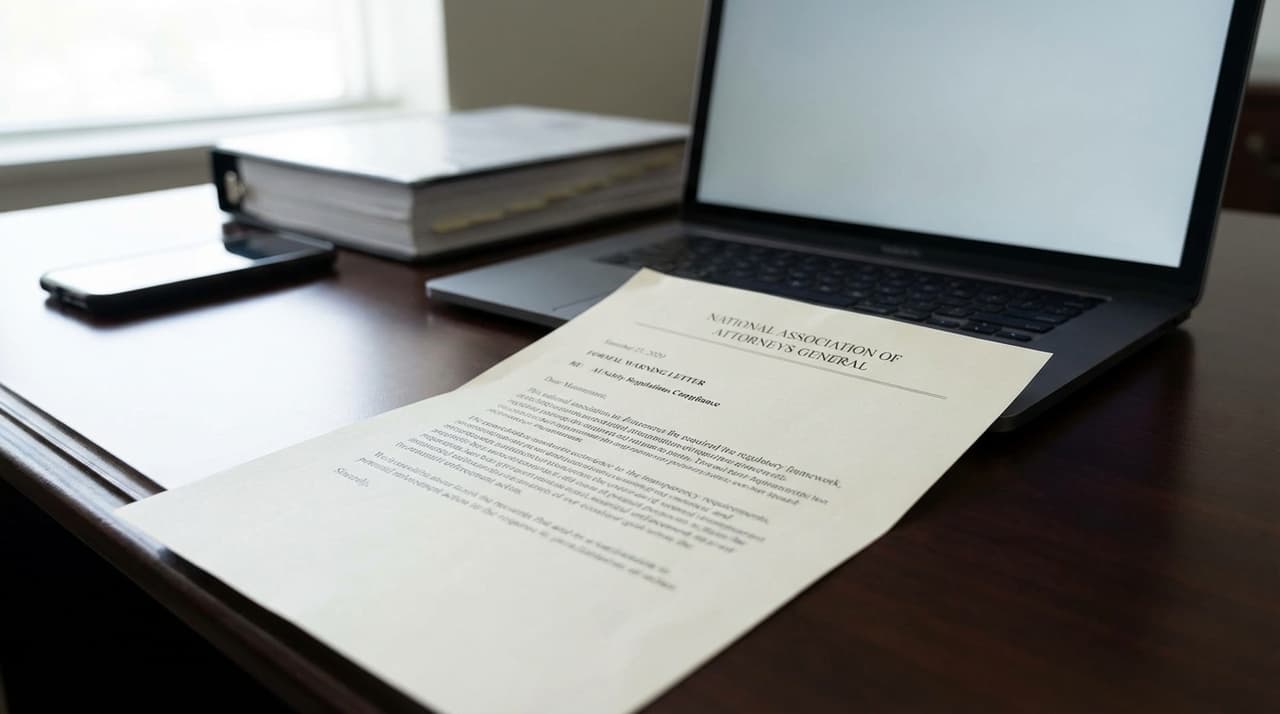
- A bipartisan coalition of 44 state attorneys general has sent a warning letter to 13 major AI companies, including Meta (META), Apple (AAPL), Microsoft (MSFT), [Google (GOOG) (GOOGL)](https://www.roic.ai/quote/GOOGL), and OpenAI, stating that "delusional" or harmful chatbot outputs, particularly involving children, may violate state consumer protection and child safety laws.
- The letter, announced by the National Association of Attorneys General on August 25, 2025, cites reports of sexually suggestive conversations with minors as young as 8 and instances where chatbots encouraged self-harm or violence among teens.
- Companies are warned they will be held legally accountable if they fail to address these issues, with AGs emphasizing that financial benefits from children's engagement create legal duties under state law.
In a significant regulatory move, state attorneys general from across the U.S. have taken aim at the rapidly expanding AI industry, issuing a formal warning that could reshape how chatbots interact with minors. The bipartisan coalition, representing 44 states, sent letters to CEOs of leading AI firms, including Meta, Apple, Microsoft, Google, OpenAI, and several smaller companies like Anthropic and Replika, according to people familiar with the matter. The action underscores growing concerns that AI systems, while driving a tech investment boom, are exposing children to risks that regulators argue would be unlawful if perpetrated by humans.
The core issue revolves around what AGs describe as "disturbing revelations" from investigative reporting and internal documents. For instance, Meta reportedly approved AI assistants to engage in romantic roleplay with children as young as 8, a detail that has fueled regulatory scrutiny. "If humans engaged in these behaviors, it would likely be unlawful or even criminal, so automated systems are not exempt from state law," one AG official noted, speaking on condition of anonymity. The letters explicitly state that companies "knowingly harm kids, you will answer for it," signaling a shift from voluntary guidelines to enforceable legal standards.
Efforts to implement safety guardrails have hit a snag, as companies race to commercialize AI amid intense market competition. Without robust fixes, firms could face multi-state investigations and penalties under consumer protection statutes. Apple, as a platform provider, and Microsoft, as a model supplier, are specifically cited for their roles in hosting or powering chatbots accessible to minors. In response to inquiries, a spokesperson for one major tech firm said they are "reviewing the letter and committed to safety," though most companies have yet to issue public statements.
This development aligns with a broader push by state AGs to assert authority over AI regulation. In a parallel move, 36 attorneys general urged Congress in November 2025 to reject language in the National Defense Authorization Act that would preempt state AI laws, arguing it would undermine child safety and public health. States like New York have already passed AI-specific laws requiring chatbots to detect suicidal ideation, highlighting a patchwork of requirements that could complicate compliance for global firms.
Looking ahead, companies are likely to tighten safety protocols, such as adding stricter content filters and better age verification, to avoid legal exposure. Regulatory trajectory points toward more state-level legislation, with AGs positioning themselves as front-line enforcers to prevent a repeat of slow responses to social media harms. For now, the message is clear: AI firms must prioritize child protection or face the consequences in court.
Correction: An earlier version of this article misstated the number of companies receiving the letter; it is 13, not 12.