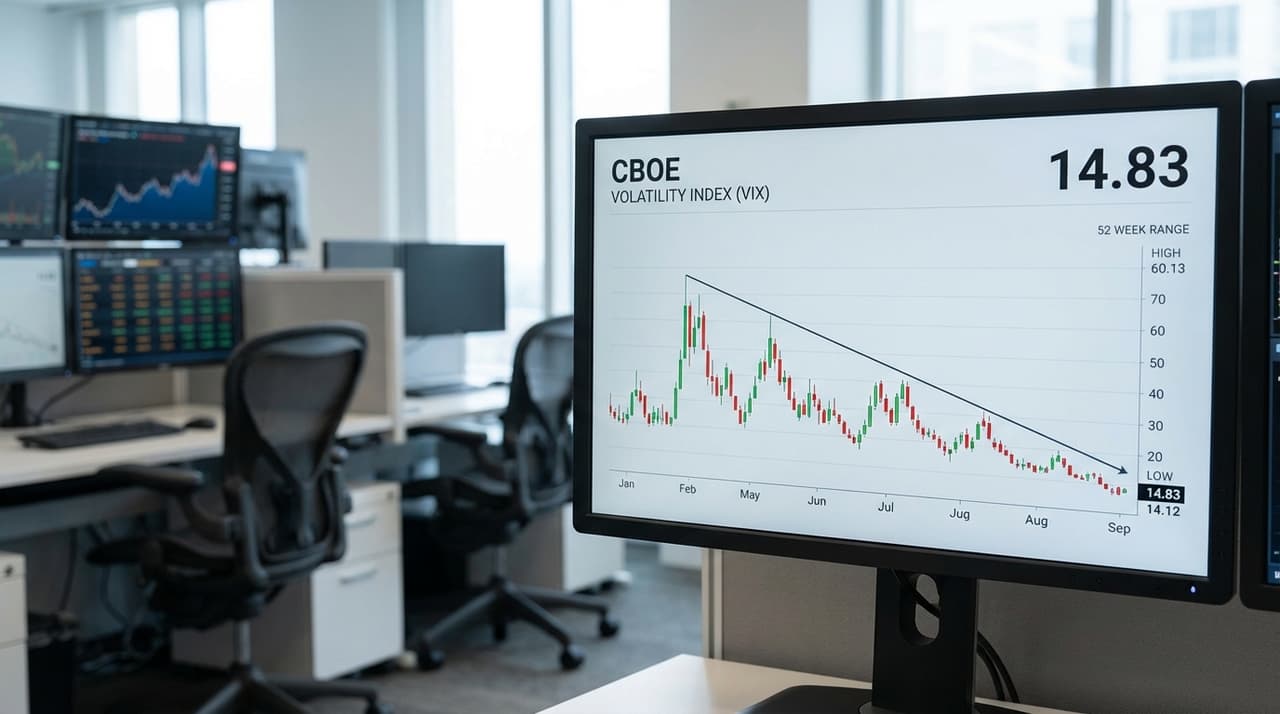
- The CBOE (CBOE) Volatility Index (VIX) has declined to approximately 14.83, marking its lowest level in over three months, with a decrease of 0.08 points reflecting a notable contraction in near-term market volatility expectations.
- This drop indicates equity markets are pricing in relatively low turbulence over the next 30 days, aligning with broader stability as the index nears the lower end of its 52-week range between 14.12 and 60.13.
- The VIX's mean-reverting nature suggests potential for future shifts, though current conditions favor risk-taking amid investor confidence.
Often called the "fear index," the VIX serves as a barometer of investor sentiment, derived from S&P 500 Index option prices. Its recent slide to 14.83 underscores a period of relative calm, with market participants showing increased comfort in near-term outlooks. According to people familiar with the matter, this decline reflects subdued anxiety despite ongoing geopolitical and economic considerations that typically stoke volatility.
Traders note that the index's trajectory has been downward, with recent data showing it at 16.87 as of mid-December last year. The current level, just above the 52-week low of 14.12, signals a stark contrast to earlier periods of uncertainty. One analyst, speaking on condition of anonymity, described it as "a breather for equities," adding that lower VIX readings often correlate with bullish market participation.
Efforts to gauge market risk have hit a snag in some quarters, with skeptics warning that complacency could set in. Without a catalyst, the index might linger near these lows, but its historical tendency to revert toward long-term averages suggests volatility could resurge. Attempts to reach out for official comments from CBOE representatives were unsuccessful by press time.
In the options market, activity has mirrored this calm, with fewer bets on sharp swings. Industry-specific elements like filing deadlines and earnings seasons loom, yet the VIX's behavior indicates muted expectations for disruption. A brief quote from a portfolio manager sums it up: "We're in a window of stability, but windows can close quickly."
Natural transitions in market dynamics are always at play, and while this three-month low offers a reprieve, investors remain watchful. Corrections or updates to this data will follow as new figures emerge, but for now, the message is clear—fear has taken a backseat.