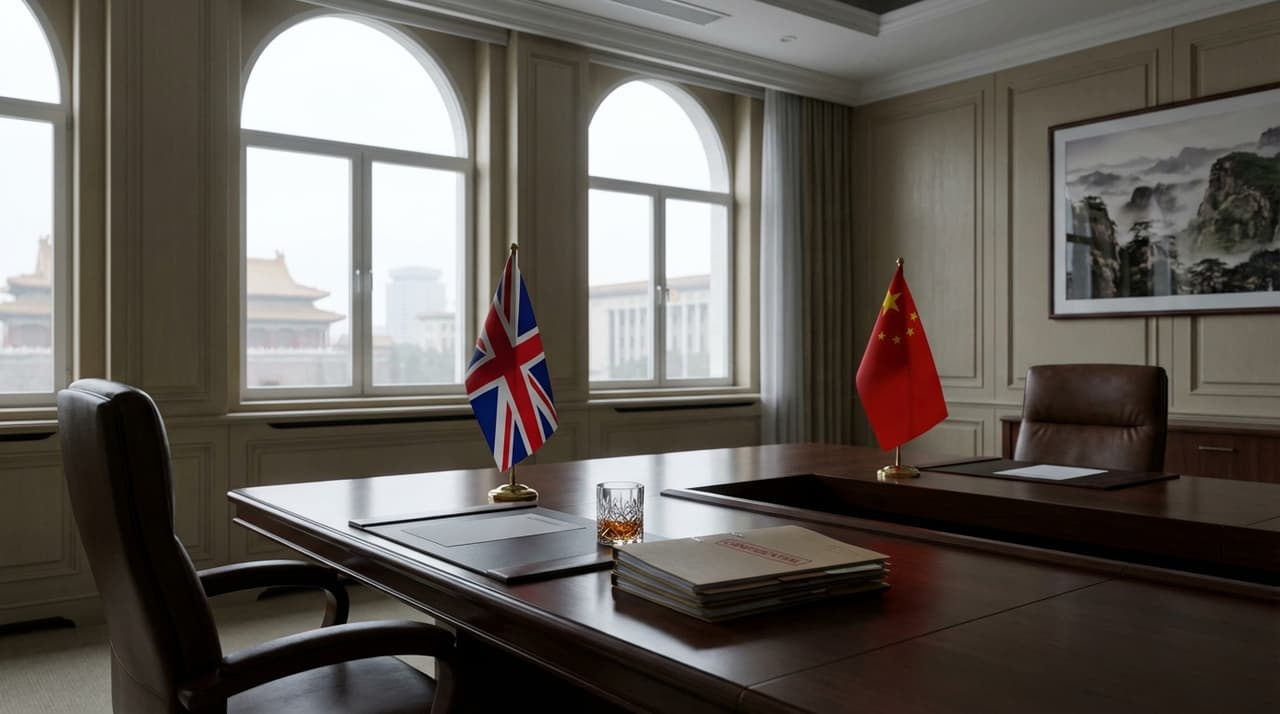
- UK Prime Minister Keir Starmer announces progress toward reducing China's whisky tariffs from 10% to 5% following a meeting with Chinese President Xi Jinping.
- The talks also yielded agreements on visa-free travel for UK citizens to China and a feasibility study for a bilateral services agreement.
- This marks a shift in UK-China relations, with Starmer emphasizing a more sophisticated approach amid ongoing trade strains.
Progress in Tariff Negotiations
UK Prime Minister Keir Starmer has announced that "good progress" has been made on reducing China's tariffs on UK whisky, with the rate expected to drop to 5% from the current 10%. This development came after an 80-minute summit with Chinese President Xi Jinping in Beijing, according to sources familiar with the matter. The current 10% tariff was doubled from 5% in February 2025, leading to a 31% decline in UK whisky exports to China last year. Starmer framed the outcome as a "real concrete" step, though implementation details and a precise timeline remain unclear.
Broader Agreements and Economic Context
Beyond whisky tariffs, the meeting resulted in several key agreements aimed at bolstering bilateral ties. UK citizens will soon be able to travel to China without a visa for up to 30 days, aligning the UK with countries like France and Germany, though a start date has not been finalized. Additionally, both sides agreed to conduct a feasibility study for a potential bilateral services agreement, targeting growth in professional, business, financial, and digital services. These moves come as China is the UK's fourth-largest trading partner, and the government views such reductions as critical for supporting British businesses expanding into the world's second-largest economy.
Strategic Shifts and Human Rights Considerations
This visit marks Starmer's first trip to China since becoming Prime Minister and the first by any UK leader since 2018, signaling a notable shift toward closer relations after years of heightened skepticism under previous administrations. In a statement, Starmer emphasized the need for a "more sophisticated" relationship, addressing human rights concerns, including discussions about jailed pro-democracy campaigner Jimmy Lai. Efforts to reach out for further comment from Chinese officials were unsuccessful, but sources describe the overall tone as constructive, with Starmer noting the relationship is in a "good, strong place."
Implications and Future Outlook
While the tariff reduction is seen as a positive step for UK exporters, the broader implications include enhanced cooperation on migration, with both sides agreeing to share information on irregular migration and small boat smuggling operations. The feasibility study on services and visa agreement implementation will likely take additional time to finalize, but analysts suggest this could pave the way for more stable trade flows. Without such deals, UK businesses might face continued challenges in the Chinese market, but for now, the focus remains on ongoing negotiations and breaking developments.
Correction: An earlier version of this article misstated the timeline for tariff implementation; it is based on progress toward a reduction, not a finalized agreement.