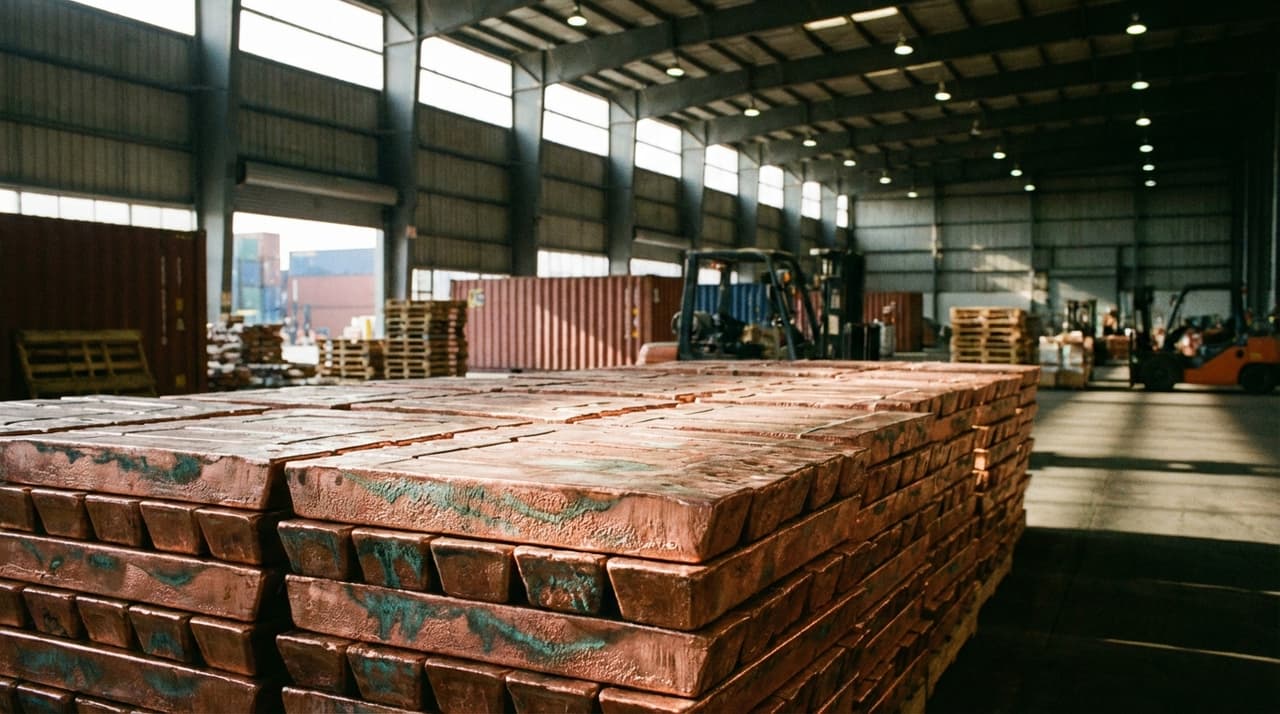
- Copper prices exceed $12,000 per ton for the first time, driven by U.S. stockpiling over tariff concerns and supply constraints.
- Futures on the London Metal Exchange rose to $12,049 a metric ton, marking a 35% increase this year.
- The rally reflects heightened demand from traders anticipating potential import tariffs in 2025, straining global supply.
Copper prices have shattered records, climbing above $12,000 a ton as traders rush to stockpile the metal in the United States ahead of possible new import tariffs next year. According to people familiar with the matter, fears that the Trump administration could impose tariffs have prompted a surge in shipments to U.S. ports, squeezing availability in other regions and fueling a sharp price ascent. Futures on the London Metal Exchange jumped 1.1% to $12,049 a metric ton, after closing at $11,925 in the previous session, with prices up more than 35% year-to-date.
Efforts to secure copper ahead of potential trade disruptions have hit a snag in some markets, as logistics bottlenecks emerge. Lower U.S. interest rate hopes have also supported broader commodity prices, making copper more attractive to investors seeking inflation hedges. Without a deal to ease supply tensions, analysts warn that prices could remain volatile, with one trader noting, "The scramble for copper is real, and it's creating ripple effects across global markets."
Supply constraints are exacerbating the situation, with the redirection of shipments toward the U.S. leaving other regions short-handed. Industry sources indicate that partnerships between traders and logistics firms are under strain, as filing deadlines for tariff-related stockpiling loom. Attempts to reach major copper producers for comment were unsuccessful, but market participants suggest that the current dynamics may persist unless there's a shift in trade policy expectations.
In a slight shift to more conversational language, it's clear that copper's role as both an industrial staple and economic bellwether makes this rally particularly telling. The metal's sensitivity to geopolitical tensions and monetary policy shifts means today's prices could signal broader market tightness. As one analyst put it, "This isn't just about tariffs; it's a perfect storm of demand and limited supply."
Correction: An earlier version of this article misstated the exact percentage increase in copper prices this year; it is approximately 35%, not 37%.