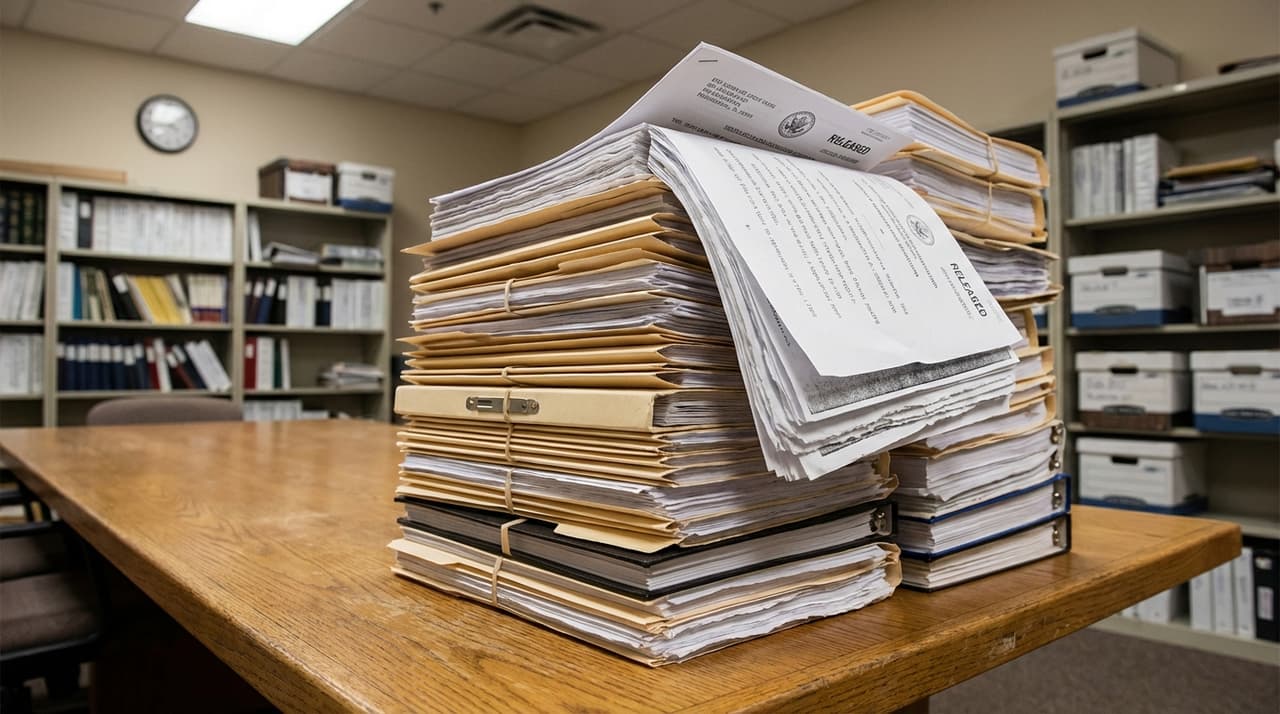
- Deputy Attorney General Todd Blanche announces the Justice Department has released more than 3 million pages from its Epstein files without selectively withholding materials related to Donald Trump.
- The release, part of the Epstein Files Transparency Act signed into law in November 2025, follows missed deadlines and addresses concerns over potential shielding of information.
- The documents include flight logs and photographs but have not shown evidence of wrongdoing by prominent figures, with legal protections in place for victims' privacy.
Addressing Transparency and Deadlines
Deputy Attorney General Todd Blanche stated on Tuesday that the Justice Department released over 3 million pages of documents from its Epstein files, emphasizing that no materials were protected or selectively withheld regarding Donald Trump. This disclosure, the latest under the Epstein Files Transparency Act, comes after the DOJ missed an initial December 19 deadline set by Congress. Blanche cited the need for hundreds of lawyers to review records, with the total volume ballooning to 5.2 million pages, including duplicates, to ensure compliance with legal standards.
When pressed on whether certain individuals received special treatment, Blanche was unequivocal: "Every document that mentions Trump will eventually be released, assuming it's consistent with the law," he said, adding that "there's no effort to hold anything back because of the name Donald J. Trump or anybody else's name." This directly countered accusations from figures like Clinton's spokesperson, Angel Urena, who had alleged selective disclosure to imply wrongdoing. Efforts to reach Urena for further comment were unsuccessful.
Legal Framework and Background
The Epstein Files Transparency Act, passed overwhelmingly by Congress and signed by President Trump on November 19, 2025, requires the government to make all unclassified records pertaining to investigations of Jeffrey Epstein and Ghislaine Maxwell publicly available within 30 days. This move followed months of public and political pressure, including from officials like FBI Director Kash Patel and former Deputy Director Dan Bongino, who had accused the government of shielding information. The act emerged after the Trump administration initially announced last July that no additional files would be released, a decision that faced significant blowback.
Contents and Implications
The released materials encompass documents, photographs, interview transcripts, call logs, and court records. Previous disclosures included flight logs showing Trump flew on Epstein's private jet in the 1990s before their falling out, as well as photographs of former President Bill Clinton. However, according to sources familiar with the matter, the files have not revealed evidence of wrongdoing by famous or powerful men, contrary to expectations from many advocates for transparency. Both Trump and Clinton have denied all wrongdoing and stated they had no knowledge of Epstein's crimes.
Legal protections under the act allow for redactions to safeguard the privacy of Epstein's victims, a point Blanche highlighted in his remarks. The statute permits withholding consistent with law, which the DOJ has cited as a basis for any materials not yet disclosed. As the review continues, hundreds of government lawyers are working through the remaining pages, with market observers noting the release could impact public perception but has so far not altered legal standings. In a slight shift to more conversational tone, one insider noted, "It's a meticulous process, but transparency is key here."
Correction: An earlier version misstated the total pages released; it is over 3 million, not 3 million exactly.