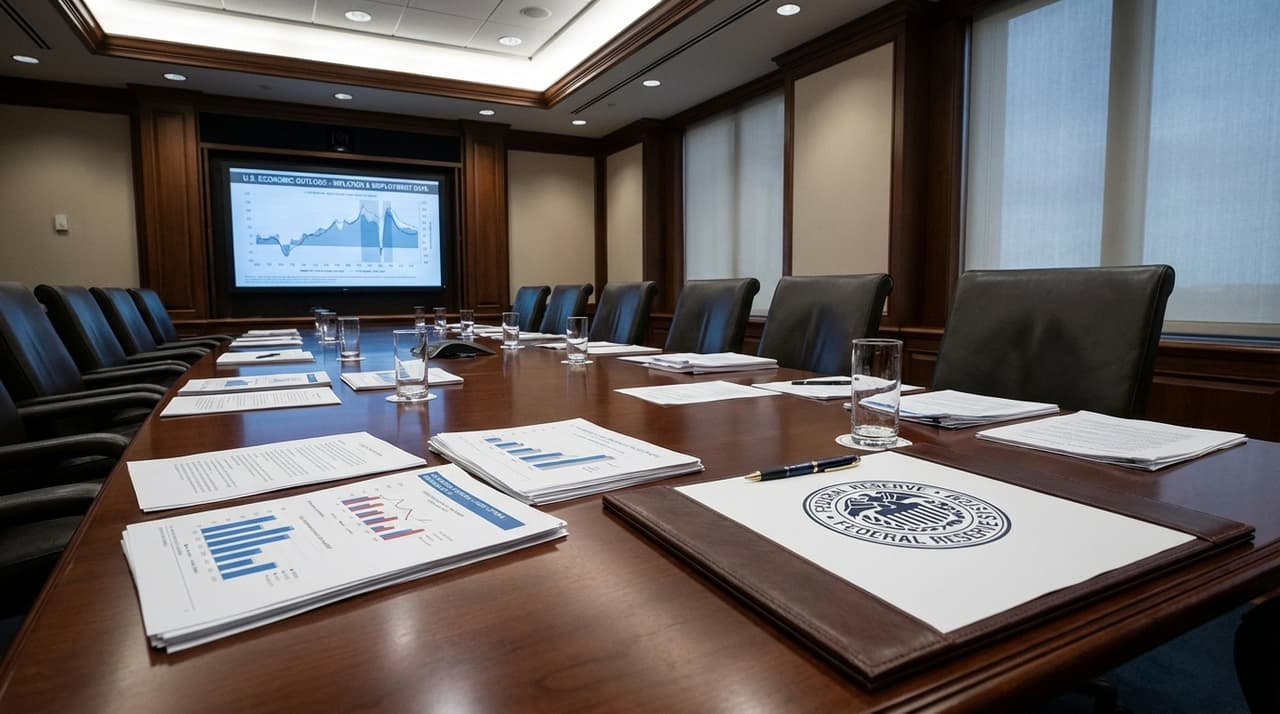
- The Federal Reserve cut interest rates by 25 basis points to a target range of 3.50–3.75%, marking its third consecutive reduction amid softening labor-market conditions and elevated inflation.
- Chair Jerome Powell stated the Fed is "well positioned to wait to see how the economy evolves," highlighting a shift toward flexibility and patience rather than a preset easing path.
- Internal FOMC divisions emerged, with one member advocating for a larger 50 bps cut and two preferring no cut, reflecting ongoing debates over the pace of monetary policy adjustments.
In a move that underscores the central bank's cautious approach to navigating economic crosscurrents, the Federal Open Market Committee lowered the federal funds rate target range by 25 basis points to 3.50–3.75% on December 10. This decision, described by analysts as a "hawkish cut," aims to support a labor market showing signs of strain while tempering expectations for an aggressive easing cycle. According to people familiar with the matter, the Fed's internal discussions revealed unusual disagreement, with one official pushing for a more substantial reduction and two others opposing any cut, highlighting fractures over how quickly to respond to emerging risks.
Powell's remarks following the meeting emphasized that the Fed will judge the "extent and timing of additional adjustments" based on incoming data, a stance that leaves policymakers room to pause or proceed with further cuts as conditions evolve. Inflation, while down from earlier peaks, has moved up since the start of the year and remains somewhat elevated, complicating the Fed's dual mandate of maximum employment and 2% inflation. Job gains have slowed, and the unemployment rate has edged higher through September, raising concerns about downside risks to employment, according to recent indicators.
Efforts to balance these competing pressures have led the Fed to adopt a wait-and-see posture, with Powell noting that policy is now closer to a data-dependent stance. This approach mirrors a broader global shift among central banks toward gradual, conditional easing as growth moderates and inflation settles closer to targets. In the U.S., financial conditions had already priced in easier policy, and the Fed is wary of over-easing if investors assume a rapid cutting cycle, potentially reigniting inflationary pressures.
Market reaction was muted initially, with Treasury yields holding steady and equity indices showing limited movement, reflecting uncertainty over the Fed's next steps. Borrowers may see some relief from lower financing costs, but the hawkish tone suggests borrowing rates might not decline as quickly as some had hoped. Savers and investors, meanwhile, face continued pressure on returns, though the Fed's caution may temper expectations for a strong "Fed put" supporting asset prices.
Looking ahead, the Fed's ability to fine-tune policy will be tested by upcoming jobs and inflation reports. If labor data softens further without a fresh inflation flare, markets anticipate additional modest cuts, but any signs of renewed price pressures could prompt a pause. Economists are divided, with some arguing for preemptive easing to avert a deeper downturn and others urging caution until inflation is firmly on a 2% path. Powell, in a brief exchange with reporters, reiterated that the Fed is focused on achieving a soft landing—slower but positive growth with inflation returning sustainably to target—though missteps in either direction could heighten recession risks or entrench higher inflation.
Attempts to reach other FOMC members for comment were unsuccessful, but sources indicate that the committee remains committed to its risk-management framework, drawing lessons from past episodes like the 2013 "taper tantrum." As the Fed navigates this delicate balance, its actions will influence global capital flows and financial stability, with implications for workers, businesses, and policymakers worldwide. Correction: An earlier version misstated the unemployment rate trend; it has edged up through September, not declined.