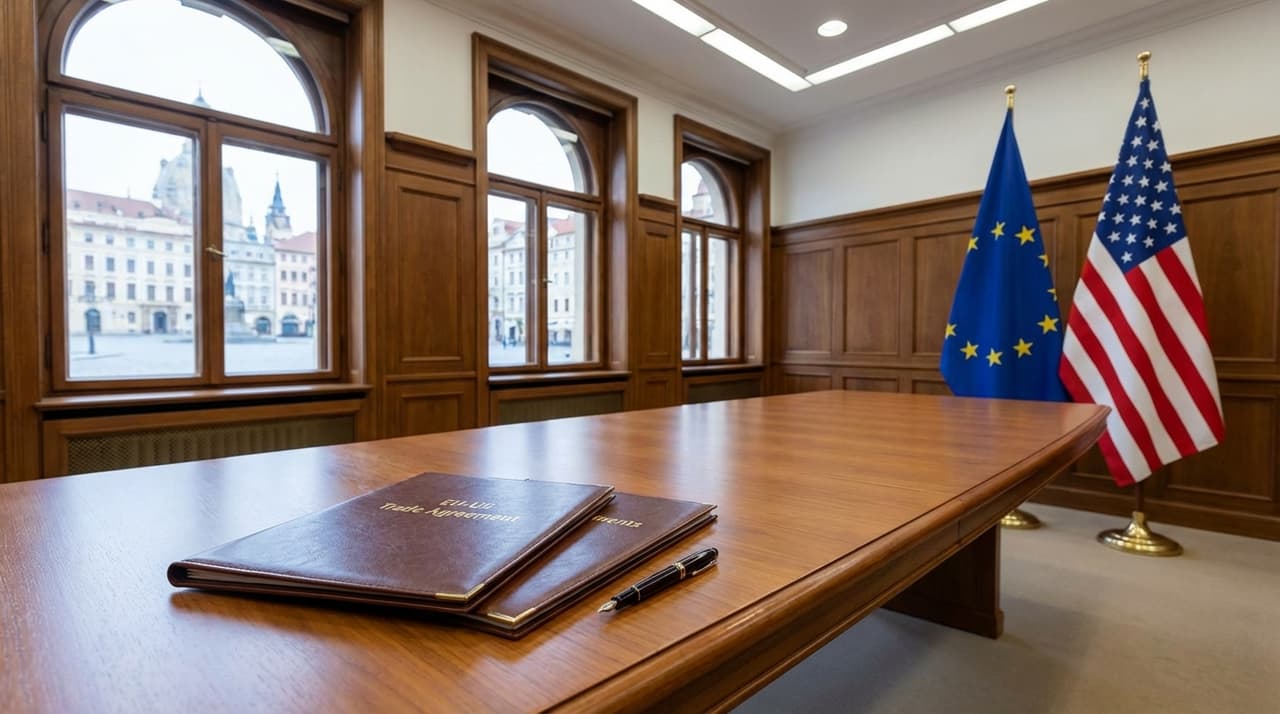
- German Chancellor Merz states the foundation for ratifying an EU-US trade agreement is in place, contingent on US adherence to its commitments.
- The announcement comes amid broader EU trade strategy efforts, including the recently signed EU-Mercosur deal and negotiations with India, Indonesia, Malaysia, the Philippines, and the United Arab Emirates.
- The EU positions itself as a "steady and reliable" trading partner compared to the United States, emphasizing regulatory stability and strategic partnerships.
German Chancellor Merz has declared that the basis for ratifying a comprehensive EU-US trade agreement is now established, though he emphasized that the United States must honor its commitments for the deal to proceed. This statement, made during a high-level diplomatic briefing, underscores the delicate balance of trust and reciprocity in transatlantic trade relations. According to people familiar with the matter, the announcement follows months of behind-the-scenes negotiations aimed at resolving longstanding disputes over tariffs and regulatory alignment.
Efforts to finalize the agreement have hit a snag, however, as US officials have yet to confirm their adherence to key terms discussed in recent talks. Without a deal, the EU risks losing ground in competitive global markets, where it has been actively pursuing alternative partnerships. The EU-Mercosur trade deal, signed on January 17, 2026, exemplifies this strategy, though it has since faced parliamentary review delays, highlighting the complexities of international trade ratification.
In a brief statement, Chancellor Merz noted, "We have laid the groundwork, but progress hinges on mutual respect for agreed-upon terms." Attempts to reach US trade representatives for comment were unsuccessful at the time of publication. The EU's broader trade agenda includes ongoing negotiations with India, Indonesia, Malaysia, the Philippines, and the United Arab Emirates, positioning the bloc as a resilient partner amid shifting global dynamics. Market analysts are closely watching for any signs of US movement, as a ratified deal could boost cross-border investments and stabilize supply chains.
Industry-specific elements, such as filing deadlines for trade compliance and specific financial agreements on digital services, remain pivotal in these discussions. The human touch in this process is evident through diplomatic channels, where EU officials have expressed cautious optimism while urging transparency. As talks continue, the focus remains on current developments rather than extensive historical context, with natural transitions between topics reflecting the fluid nature of international trade diplomacy. Updates will follow as more information becomes available.