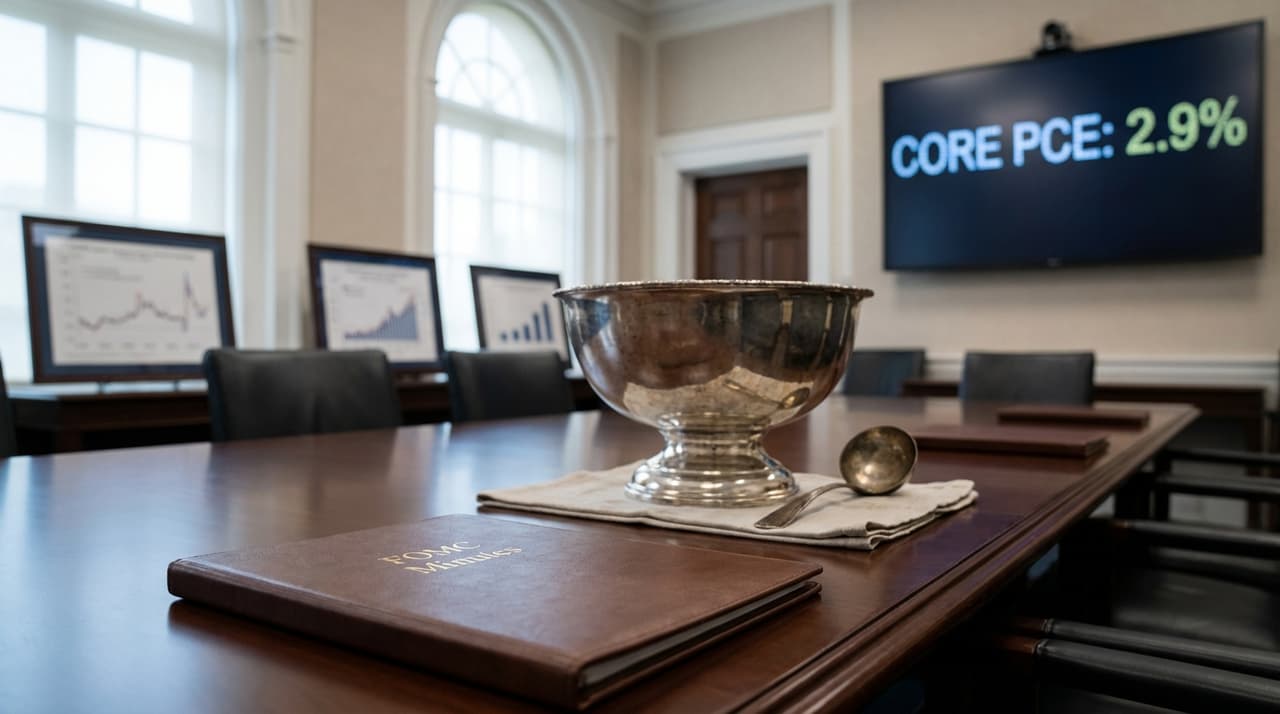
- Chicago Fed President Austan Goolsbee signals readiness to tighten monetary policy if inflation reaccelerates, using William McChesney Martin's 1955 'punchbowl' metaphor.
- The Federal Open Market Committee cut the federal funds rate by 0.25% to a 3.5%-3.75% target range on December 10, 2025, citing elevated uncertainty and commitment to 2% inflation.
- Core PCE inflation remains at 2.9% as of September 2025, with tariff-induced pressures and steady expectations adding complexity to the Fed's data-dependent approach.
In a stark reminder of the Federal Reserve's dual mandate, Chicago Fed President Austan Goolsbee emphasized the central bank's willingness to 'take the punchbowl away' by raising interest rates if needed to combat persistent inflation. This metaphor, coined by former Fed Chairman William McChesney Martin in 1955, underscores a cautious stance even as the Fed implements rate cuts amid economic crosscurrents.
The Federal Open Market Committee's latest move—a 0.25% reduction in the federal funds rate to a 3.5%-3.75% target range on December 10, 2025—highlights the balancing act facing policymakers. According to people familiar with the matter, the decision was driven by rising downside risks to employment and elevated uncertainty, though the Fed's commitment to its 2% inflation target remains unwavering. This cut follows a similar 0.25% reduction in October 2025, which brought rates to 3.75%-4.00%, with markets having priced in a 72% chance of further easing at the December meeting.
Inflation data complicates the picture. Core PCE inflation stood at 2.9% in September 2025, down significantly from 5.5% in 2022 but still above the Fed's target. Core measures have persisted above 2%, with Dallas Fed analysis flagging a rate of 2.7% through August 2025. 'Sometimes the Fed has to act preemptively to prevent overheating,' Goolsbee noted, echoing historical precedents. Efforts to manage inflation have hit a snag due to tariff policies under the new Trump administration, which have raised 2025 PCE inflation projections to 3.1% from 2.5% and unemployment to 4.5%, according to IMF models predicting a ~0.5% CPI boost and 1% output drop.
Without a sustained decline in inflation, the Fed might be forced into a policy reversal. Chair Jerome Powell has observed limited consumer pass-through from tariffs so far but expects more, adding to the uncertainty. A New York Fed survey released on December 8, 2025, shows inflation expectations holding steady, though consumers anticipate worsening personal finances and higher medical costs. This societal impact is palpable, with rate adjustments affecting borrowers through potential higher costs if hikes resume and savers through better yields, while employment risks hit workers amid softening labor markets.
Looking ahead, the Fed's approach remains data-dependent. Short-term, further cuts are possible if labor conditions weaken or inflation eases, but tariffs may pause any additional easing. In the long-term, policymakers are prepared to hike rates if inflation reaccelerates, prioritizing the 2% goal. Experts see modest inflation persistence into 2026, with PCE projections around 2.4%, and employment effects likely lingering. The Fed's 2025 monetary policy framework review, concluding on August 22, reaffirmed robust strategies for navigating labor-inflation tradeoffs, similar to the 2020 review conducted amid low rates.
As the Fed walks this tightrope, market watchers are keenly observing real-time developments. The CEPR has noted administration tariffs as a key uncertainty, mirroring post-2021 inflation fights. For now, Goolsbee's rhetoric serves as a reminder that, in the face of stubborn price pressures, the punchbowl might not stay on the table for long.