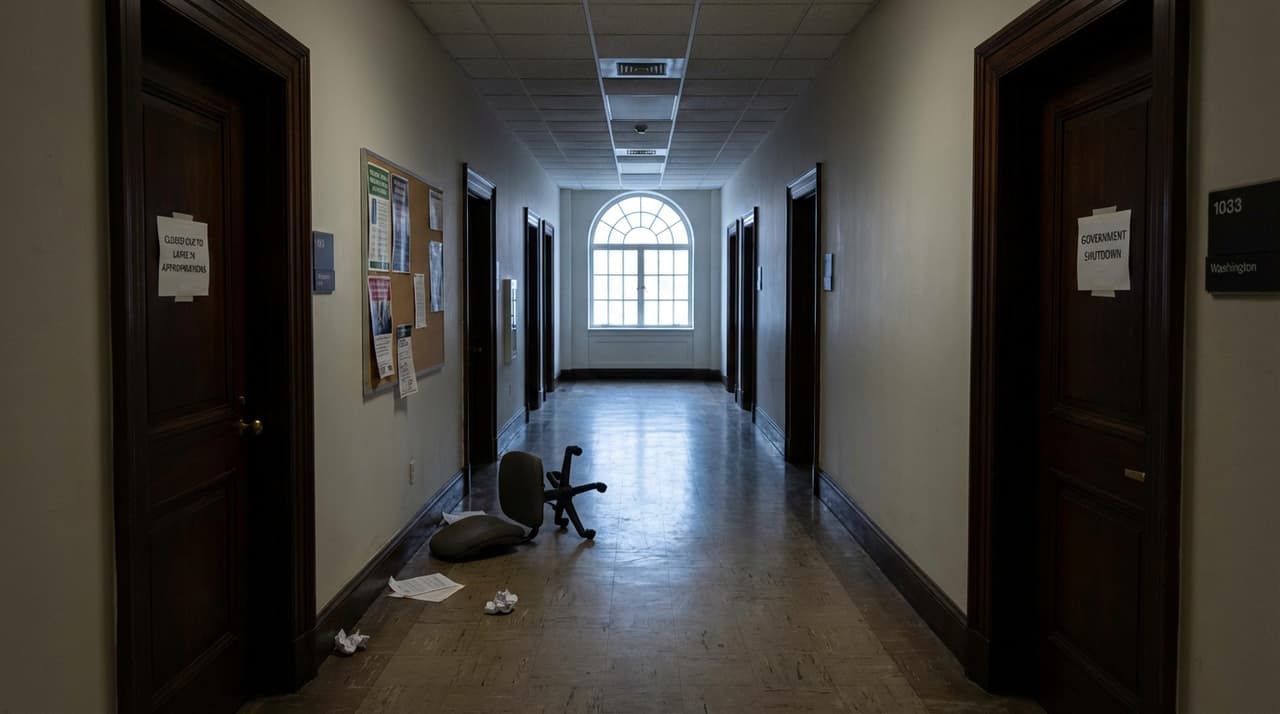
- Kevin Hassett, a senior White House economic adviser, asserts political and economic pressures will prevent another federal shutdown once the current impasse ends.
- The shutdown has resulted in an estimated 60,000 private-sector job losses and $15 billion per week in reduced economic output, with some damage likely permanent.
- Hassett anticipates a resolution "sometime this week," blaming Senate Democrats for the standoff while pushing for a clean continuing resolution to reopen the government.
Kevin Hassett, director of the National Economic Council, has been vocal in recent days about the ongoing federal government shutdown, expressing firm confidence that such a disruption will not recur after it concludes. In television appearances and interviews, Hassett has framed the shutdown as a "Democrat" or "Schumer" shutdown, placing primary responsibility on Senate Democrats for the budget stalemate. According to people familiar with the matter, Hassett has indicated to colleagues that the White House expects a deal before key fiscal deadlines, potentially as early as this week, to avoid further economic harm.
Efforts to reach a funding agreement have hit a snag, with Republicans and Democrats at odds over spending levels and specific policy riders, including health-care subsidies that lapsed post-COVID. Hassett insists the administration wants a clean continuing resolution to reopen the government while negotiations continue, but without a deal, the risk of prolonged closures and mass layoffs of federal workers looms. "What we're seeing is a political standoff that's causing real economic pain," Hassett said in a recent interview, paraphrasing his remarks. "But once this ends, the visible damage will make both parties think twice before letting it happen again."
The economic toll is already mounting. Hassett has cited internal estimates that the shutdown is costing the U.S. economy around $15 billion per week in reduced output, with about 60,000 private-sector jobs lost so far—a figure drawn from the historic 43-day Trump-era shutdown, the longest in U.S. history. Some of this damage, such as lost business travel and delayed projects, represents "permanent destruction" that cannot be recouped, he warned. Financial markets have remained relatively stable, but economists note that prolonged uncertainty could strain credit conditions and disrupt data releases, like the delayed October jobs report, which hampers labor market visibility.
In the background, Senate leaders from both parties have traded blame, with Republicans arguing Democrats "have the controlling card" and Democrats accusing Republicans of refusing meaningful negotiations. Hassett's comments reflect a broader administration strategy to pressure Democrats into a resolution, emphasizing the human toll on unpaid federal workers and small businesses near government facilities. Attempts to reach Democratic spokespeople for comment were unsuccessful, but sources indicate talks are ongoing behind the scenes.
Looking ahead, if resolved via a short-term funding bill, the fiscal fight would simply shift to a later deadline, but Hassett believes the political backlash from this episode will deter another full shutdown in the near term. Economists caution that while the broader economy remains fundamentally strong, with solid GDP growth and a narrowing deficit, the shutdown's ripple effects—from lost income to disrupted contracts—underscore the fragility of political brinkmanship. As one industry insider put it, "This isn't just about politics; it's about real people and businesses suffering." The White House has not provided updates on specific negotiation timelines, but Hassett's optimism suggests a breakthrough may be imminent, barring further setbacks.