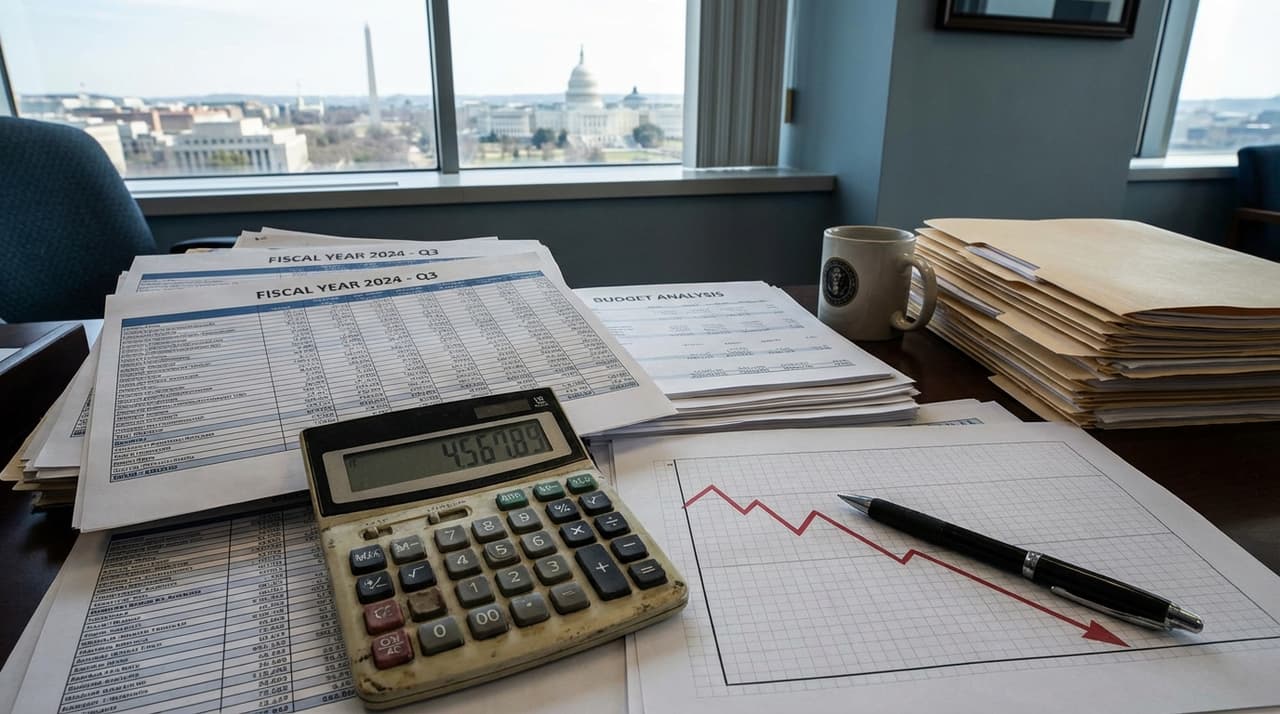
- Kevin Hassett emphasizes deficit reduction as crucial for economic health, aligning with Treasury Secretary Scott Bessent's goal to lower the deficit-to-GDP ratio to the low 3% range by the end of Trump's second term.
- The FY2025 deficit is projected at 5.9% of GDP, with public debt interest exceeding $1 trillion annually, while tariff revenues support deficit reduction despite rising spending.
- Debt ceiling concerns loom, with extraordinary measures initiated in January 2025 potentially delaying default until June, as political debates focus on fiscal sustainability versus spending priorities.
Kevin Hassett, a prominent economist and former White House economic advisor under Trump, has underscored deficit reduction as key to economic health in recent statements, injecting his voice into the ongoing U.S. fiscal debates. This aligns with Treasury Secretary Scott Bessent's comments in December 2025 that the FY2025 deficit-to-GDP ratio has dropped to around 5.9%, down from 6.4% in FY2024, with goals to reach the low 3% range by the end of Trump's second term. According to people familiar with the matter, Bessent's optimism is buoyed by tariff revenues, which have boosted record receipts, though corporate tax cuts and spending growth continue to offset gains.
Efforts to manage the deficit have hit a snag as higher interest rates strain borrowing costs in the post-low-rate era. The Congressional Budget Office projects the FY2025 deficit near $1.8 trillion at 5.9% of GDP, with public debt interest exceeding $1 trillion annually, a figure that underscores the urgency of fiscal restraint. Without a deal to curb spending, projections warn of a $3.5 trillion deficit in 2025, according to recent analyses, raising alarms among policymakers. Hassett's emphasis comes as the debt ceiling was hit at $36.1 trillion on January 2, 2025, with Treasury Secretary Janet Yellen initiating extraordinary measures on January 21, potentially delaying default until June 2025. In a statement, Yellen urged Congress to act, expressing regret over insufficient progress amid higher rates, a sentiment echoed by some economists who note the performative nature of fiscal rhetoric amid unchecked spending.
Political context adds complexity, with Biden-era policies like the Fiscal Responsibility Act of 2023 and the Inflation Reduction Act having cut deficits by approximately $2.3 trillion over a decade through measures such as drug price negotiations and corporate minimum taxes. Meanwhile, Trump policies include tax changes, such as tip exemptions and lower Social Security taxes, expected to trigger larger refunds in 2026, benefiting lower-income groups. These shifts highlight the partisan divides, with Bessent's path to deficit reduction sparking debate over fiscal sustainability versus spending priorities. Market trends reflect this tension, as tariff hikes have provided a revenue boost, but corporate tax cuts and spending growth threaten to undermine gains, according to sources close to the discussions.
Looking ahead, the short-term outlook includes more refunds in 2026 from tax changes and a potential government shutdown that could delay economic data. The debt limit X-Date, possibly in June 2025, requires congressional action to avert default, with Yellen's extraordinary measures offering a temporary reprieve. In the long-term, Bessent targets a deficit below 3% of GDP by 2029 through tariffs and cuts, but risks persist, including higher rates inflating debt service costs. Experts like those at the CBO stress that rising interest is a primary driver of fiscal challenges, emphasizing the need for decisive action. As debates rage, stakeholders from households to federal retirees feel the impact, with lower deficits potentially easing inflation and interest burdens, while rising debt risks higher taxes or cuts to services like Medicare. Attempts to reach Hassett for further comment were unsuccessful, but his message resonates in a climate where economic health hinges on tough fiscal choices.