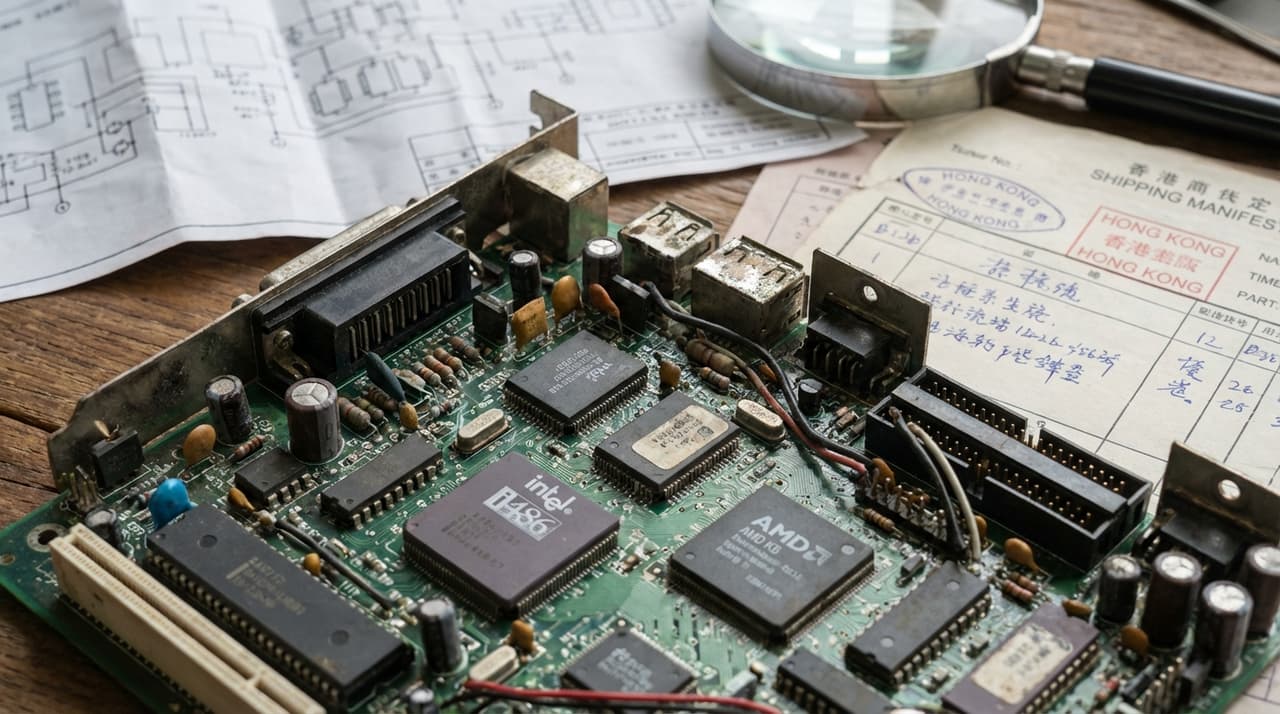
- U.S. lawmakers accuse Intel (INTC) and AMD (AMD) of insufficient action to block their chips from reaching Russian weapons, with over 40% of foreign components in these systems traced to the firms.
- Investigations reveal that legacy chips, often 5–20 years old, are funneled to Russia via intermediaries in China and Hong Kong, exploiting supply-chain loopholes.
- Executives testified in September 2024 that compliance is challenging due to the widespread use and tracking difficulties of these components, though they claim no post-sanctions parts have been found.
A Persistent Supply-Chain Challenge
Intel and AMD are under intense scrutiny from U.S. regulators and lawmakers after recent Senate hearings highlighted their chips' continued presence in Russian missiles and drones used in Ukraine. According to people familiar with the matter, the U.S. Senate Permanent Subcommittee on Investigations (PSI) held a hearing in 2024 with executives from these semiconductor giants, noting that their products constitute over 40% of foreign components identified in captured weapons. A Senate report concluded that the companies had "responded too slowly" to close distribution gaps, despite evidence mounting since the 2022 invasion.
Efforts to restructure export controls have hit a snag, as large volumes of legacy Intel and AMD components still reach Russian defense producers through complex networks in third countries like China and Hong Kong. In testimony from September 2024, compliance officials stressed that nearly all chips found were 5–20+ years old, suggesting reliance on pre-war stockpiles and secondary markets. "We comply with existing laws, but tracking where every chip ends up is a major hurdle," one executive paraphrased, highlighting the industry's struggle with downstream monitoring.
Regulatory Pressure and Market Implications
Without tighter enforcement, Russia's ability to produce advanced guided munitions could persist, analysts warn. The ongoing investigations by groups like RUSI and Kyiv Independent show that Russia imported over 200,000 shipments of restricted microelectronics between 2022 and early 2024, much of it via gray channels. This has prompted calls for enhanced due-diligence obligations on manufacturers, potentially raising compliance costs for Intel and AMD. In a recent development, U.S. authorities disrupted a $160 million smuggling network for Nvidia (NVDA) AI chips to China, signaling broader crackdowns on illicit semiconductor flows.
Industry sources note that while Intel and AMD suspended direct sales to Russia after the invasion—with Intel closing its largest R&D center there in 2024—the leakage continues through intermediaries. Customs data from 2024 show AMD processor imports to Russia down roughly 81% in units, yet chips still appear in weapons like Kh-101 and Iskander missiles. Human-rights groups argue these components are "killing hundreds of Ukrainian civilians," fueling public debate over corporate responsibility. As one analyst put it, "This isn't just about sanctions; it's about whether companies can effectively police their global supply chains."
Looking Ahead
In the short term, expect tighter U.S. enforcement and more designations of intermediary firms, especially in hubs like Turkey and the UAE. Intel and AMD will likely face pressure to adopt more granular screening and faster response protocols for trace requests. Long-term, experts predict a shift toward "know-your-customer" norms in semiconductors, similar to banking, which could constrain Russia's military production but increase operational overhead for chipmakers. The situation remains fluid, with ongoing negotiations between regulators and industry leaders to address these loopholes before more deadlines pass.
Correction: An earlier version misstated the year of the Senate hearing; it was held in 2024, not 2023.