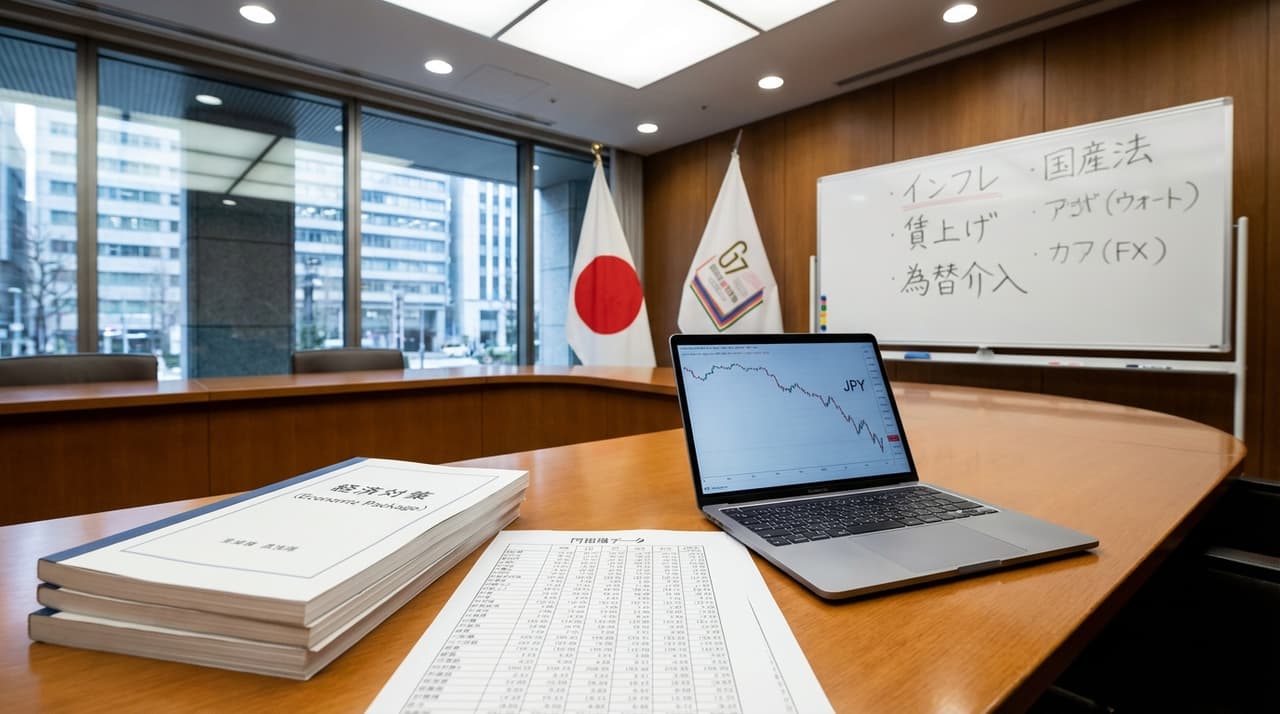
- Japan's Finance Minister Satsuki Katayama warns of potential intervention or policy steps to counter speculative yen weakness.
- The government emphasizes coordination with the Bank of Japan and G7 partners, while pushing fiscal measures to address inflation concerns.
- Market participants interpret the remarks as political cover for further monetary tightening, amid rising living costs and household debt.
Japan’s finance minister Satsuki Katayama is signaling readiness to intervene or take policy steps against “excessive” currency moves, primarily targeting the rapid, speculative weakening of the yen. In late November, Katayama said the yen’s rapid fall was “clearly not driven by fundamentals” and warned against “erratic” FX swings, adding that currency intervention remains possible to respond to excessively volatile, speculative moves. This stance is consistent with Japan-U.S. understandings that exchange rates should be market-determined but disorderly moves can be addressed.
She has emphasized that there is no major disagreement between the government and the Bank of Japan on the economic outlook, and she expects the BOJ to conduct monetary policy to achieve the 2% inflation target with wage growth, including considering a rate hike. Public comments also tie FX concerns to domestic conditions: inflation has been outpacing wage growth, and she is pushing a large extra budget and economic package to support households while promising to “take steps quickly to address inflation concerns.”
A prolonged weak yen has been a major driver of imported inflation, particularly in energy and food, and is cited domestically as a reason to accept a BOJ rate hike to curb price pressures. The BOJ has already begun a gradual normalization after a prior hike and is openly discussing another rate increase; markets interpret Katayama’s remarks as signaling political cover for further tightening to support the currency. The government submitted a fiscal 2025 supplementary budget of about ¥18.3 trillion in general-account spending to fund an economic package aimed at easing the impact of inflation and shoring up growth.
Katayama, who serves as Minister of Finance and Minister of State for Financial Services, operates in a Cabinet led by Prime Minister Sanae Takaichi, who historically favored strong monetary easing but has recently toned down pressure on the BOJ. Takaichi’s Cabinet is now seen as having effectively accepted a BOJ rate hike, in part because of public concern over yen-driven inflation. Katayama stresses coordination with the BOJ and adherence to G7 norms and the Japan-U.S. joint statement that FX rates should be market-determined, while allowing action against “excessive” volatility.
Inflation outpacing wages has weakened real incomes; Katayama explicitly frames the extra budget and anti-inflation steps as protecting “people’s lives” and turning “anxiety toward the future into hope.” Rising living costs and higher borrowing needs have contributed to an increase in multiple debtors to 1.47 million as of March 2025; the ministry and Financial Services Agency are stepping up monitoring and support, including consultation services and surveys of borrowing behavior. Exporters benefit from a weaker yen, but energy-intensive and import-reliant sectors face higher costs; financial markets closely watch her warnings as signals of possible FX intervention or policy tightening.
Japan has a long history of FX intervention when yen moves are judged disorderly; finance ministers routinely state they will “take appropriate action” against excessive currency moves as a verbal tool to deter speculation. Katayama’s language closely mirrors past Japanese statements that preceded, or at least prepared the ground for, yen-supporting interventions and/or closer coordination with the BOJ on rate policy. Her approach also follows precedent in maintaining G7-consistent rhetoric—affirming market-determined rates while reserving the right to smooth volatility.
In the short term, markets are likely to interpret “appropriate action” as a mix of verbal intervention, the threat of direct FX intervention, and tacit support for a near-term BOJ rate hike if yen weakness and inflation persist. Volatility around BOJ meetings and major U.S. policy announcements should remain elevated. Over the long term, if the BOJ gradually raises rates and global conditions stabilize, the yen could strengthen, easing imported inflation but raising financing costs for the government and firms. Persistent weakness in real wages and rising multiple debts may push the government toward more targeted fiscal support and potentially further regulatory scrutiny of consumer lending.
Commentaries around her recent speeches suggest investors see the government as moving from a stance of pure stimulus toward a more balanced mix of fiscal support and cautious monetary normalization, primarily to restore price stability and FX credibility. Katayama is simultaneously managing political scrutiny over her relations with financial-sector stakeholders, such as refunds for party tickets to avoid conflicts of interest, underscoring sensitivity about the ministry’s independence and integrity while it considers market-moving actions. The ministry and FSA are responding to other shocks, like recent earthquakes, by ensuring continuity of financial services, highlighting the broader financial-stability mandate alongside FX concerns.