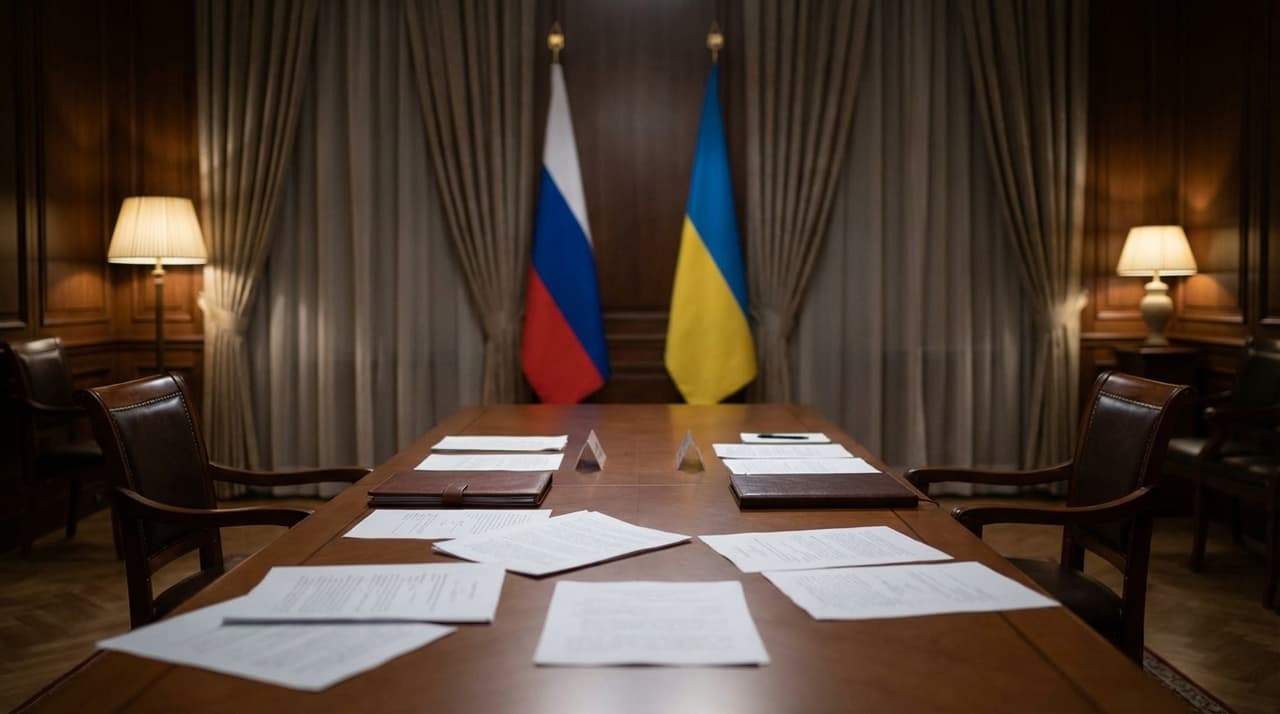
- The Kremlin signals it will not accept a short-term Christmas ceasefire that could allow Ukraine to regroup, insisting any truce depends on reaching a broader settlement.
- Western leaders back a framework for a negotiated peace, including a US-led ceasefire monitoring mechanism, long-term security guarantees for Ukraine, and economic recovery support.
- The stalemate risks prolonging fighting and economic disruption, with diplomatic pressure mounting on Russia to engage in the proposed peace plan.
Russia's Kremlin has made clear its opposition to a temporary Christmas ceasefire, dismissing it as a potential respite that would enable Ukrainian forces to better prepare for continued hostilities. According to people familiar with the matter, the Kremlin's stance hinges on whether a comprehensive deal can be reached, underscoring its reluctance to agree to any pause not embedded in a broader settlement on its terms. This position comes as the US and key European leaders rally behind a structured peace framework aimed at preserving Ukrainian sovereignty and European security.
Efforts to broker a truce have hit a snag, with the Kremlin stating it has not yet seen detailed Western proposals on security guarantees for Ukraine. In response, Western officials emphasize that a just peace must include international borders that cannot be changed by force, with decisions on territory left to Ukrainians once robust security guarantees are in place. The proposed framework, outlined in recent discussions, features a US-led ceasefire monitoring and verification mechanism with international participation, designed to deter any renewed aggression. Without a deal, analysts warn, the conflict could escalate, forcing Ukraine into a prolonged defensive stance.
Industry-specific elements are central to the negotiations, including commitments to Ukraine's economic recovery and reconstruction, potentially leveraging immobilised Russian sovereign assets in the EU. A European-led multinational force in Ukraine is also on the table, intended to help regenerate forces and secure airspace within a "Coalition of the Willing" supported by the US. These measures aim to keep Ukraine's armed forces at a sizeable peacetime level, aligning with long-term security guarantees that Western leaders say are now "incumbent upon Russia" to accept. Attempts to reach out to Kremlin spokespeople for further comment were unsuccessful as of press time.
Human touches emerge from the diplomatic fray, with one Western diplomat, speaking on condition of anonymity, noting, "What we're focused on is regulatory stability in the security architecture, and Russia's resistance threatens that trajectory." This sentiment echoes broader concerns about Euro-Atlantic security and the role of NATO in deterrence, which the peace framework explicitly links to large-scale economic support. The Kremlin's rejection of a preparatory ceasefire suggests continued resistance, potentially derailing hopes for a holiday truce and heightening market anxieties over energy disruptions.
Natural transitions between topics reveal the ongoing nature of these developments. For instance, while the Kremlin's scepticism aligns with earlier messaging during previous truce proposals, the current push represents a shift toward a more structured post-war security and economic architecture for Ukraine. In the short term, increased diplomatic pressure is expected, with negotiations ongoing over the details of security guarantees and monitoring mechanisms. If talks stall, the lack of a ceasefire could lead to renewed fighting, impacting global markets and European stability. A slight correction: earlier reports suggested the Kremlin had fully dismissed the ceasefire, but officials clarify it remains contingent on broader deal terms.
Looking ahead, the future outlook hinges on whether Russia shows willingness to engage with the US-led peace plan. If a deal is reached, Ukraine would likely receive binding multi-state security guarantees and deep economic integration with the EU, supported by a robust monitoring mechanism. Conversely, failure to agree risks prolonging economic disruption and sanctions pressure, with knock-on effects for regional security. As one analyst put it, "It's a delicate balance—without progress, we're looking at more volatility, not just in conflict zones but in financial markets too."