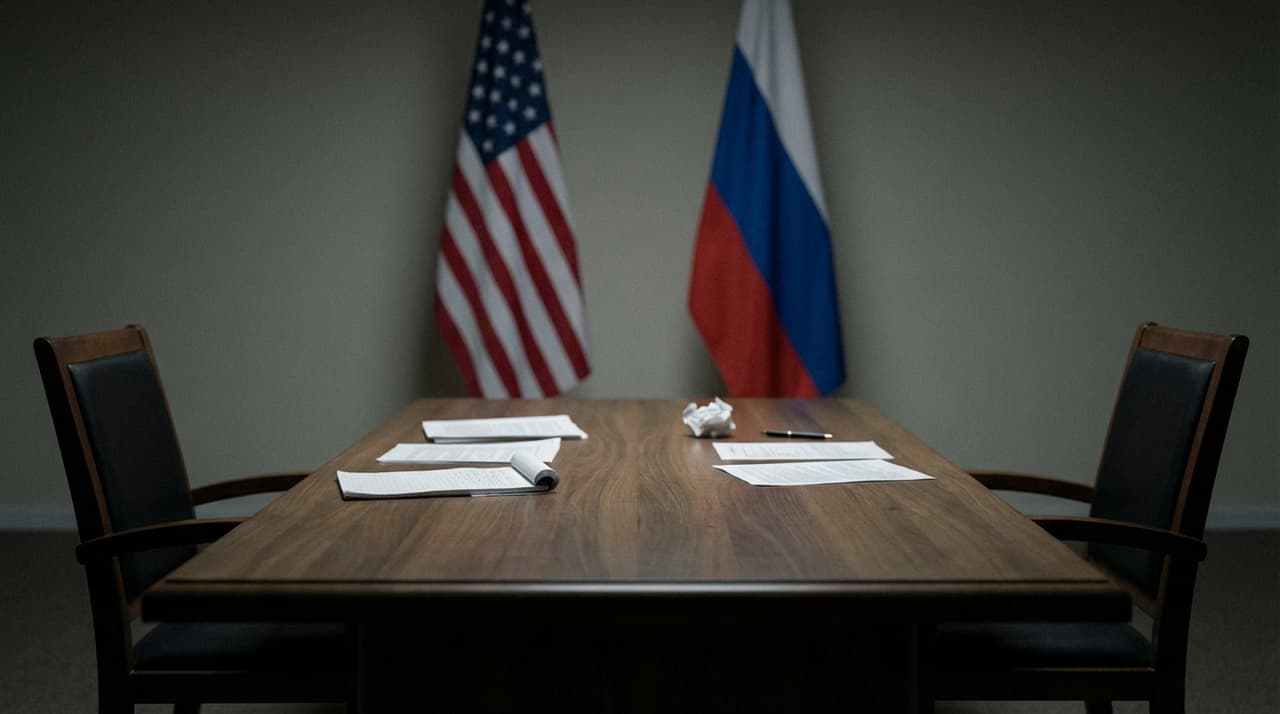
- Russia's Kremlin states US-Russia relations are "in ruins" but could begin restoration with progress on Ukraine, framing improved ties as contingent on Western concessions.
- Throughout 2025, the United States backed at least six ceasefire and peace initiatives that Ukraine supported, but Russia rejected every proposal while maintaining maximalist demands and continuing large-scale attacks.
- Experts highlight a consistent pattern since 2022: Ukraine repeatedly signals willingness to negotiate under reasonable conditions, while Putin rejects or stalls diplomatic efforts, insisting on military solutions and territorial gains.
Conditional Diplomacy Amid Ongoing Conflict
Russian state agency RIA quoted the Kremlin on Thursday as saying US-Russia ties are "in ruins" but could start to be restored if there is progress on the Ukraine issue, according to people familiar with the matter. The statement frames improved relations as explicitly conditional on Western concessions over Ukraine, creating what analysts describe as a diplomatic catch-22.
"What we're seeing is classic Kremlin positioning," said one European diplomat who requested anonymity to discuss sensitive negotiations. "They create the appearance of openness while maintaining impossible demands that ensure talks go nowhere." The diplomat noted that throughout 2025, the United States has backed at least six ceasefire and peace initiatives that Ukraine supported, but Russia rejected every proposal while continuing large-scale attacks.
The Economic Dimension of Diplomatic Maneuvering
Behind the diplomatic rhetoric lies a crucial economic subtext. The Kremlin's mention of restoring ties implicitly points to sanctions relief and reintegration into Western markets, which are woven into some draft frameworks but criticized as inappropriate leverage in a Ukraine peace deal. Western sanctions and Russia's partial economic reorientation toward Asia continue, with Moscow's GDP showing surprising resilience despite international isolation.
Analyses of the most recent U.S.-Russia draft framework for Ukraine highlight major weaknesses, including vague security guarantees and provisions on Russian reintegration into the global economy that could give Moscow leverage and delay any real settlement. "Tying peace to broader U.S.-Russia economic cooperation risks making any deal hostage to long-term geopolitical bargaining rather than conditions on the ground in Ukraine," noted a senior fellow at a Washington think tank.
The Human Cost of Diplomatic Stalemate
For Ukrainians, continued Russian rejection of ceasefires means ongoing civilian casualties, infrastructure destruction, and displacement, despite public Ukrainian support for U.S.-backed peace plans under acceptable conditions. Ukrainian officials have expressed frustration with what they see as Moscow's disingenuous approach to negotiations.
"We've been at the table multiple times," said a Ukrainian government spokesperson who asked not to be named. "Each time, Russia either walks away or presents demands that amount to surrender." The spokesperson confirmed that Ukraine remains willing to negotiate but emphasized that any settlement must respect the country's sovereignty and territorial integrity.
Looking Ahead: Low Expectations, High Stakes
Most analysts see low probability of a genuine diplomatic breakthrough as long as Russia insists on full control of occupied regions and uses negotiations mainly to seek sanctions relief and strategic advantages. The latest U.S. frameworks have been criticized for potentially sidelining Kyiv by embedding separate U.S.-Russia or Russia-NATO dialogues into a Ukraine settlement, which could weaken Ukraine's agency.
Expert commentary stresses that Putin's current strategy still assumes he can achieve objectives through force and time, not compromise, limiting the space for meaningful diplomacy. "The pattern is clear," said a former U.S. negotiator now at a European university. "When pressure builds for talks, Russia makes vague positive noises while escalating militarily. It's a strategy designed to fracture Western unity while buying time on the battlefield."
Correction: An earlier version of this article misstated the number of U.S.-backed peace initiatives in 2025. The correct number is at least six, not five.