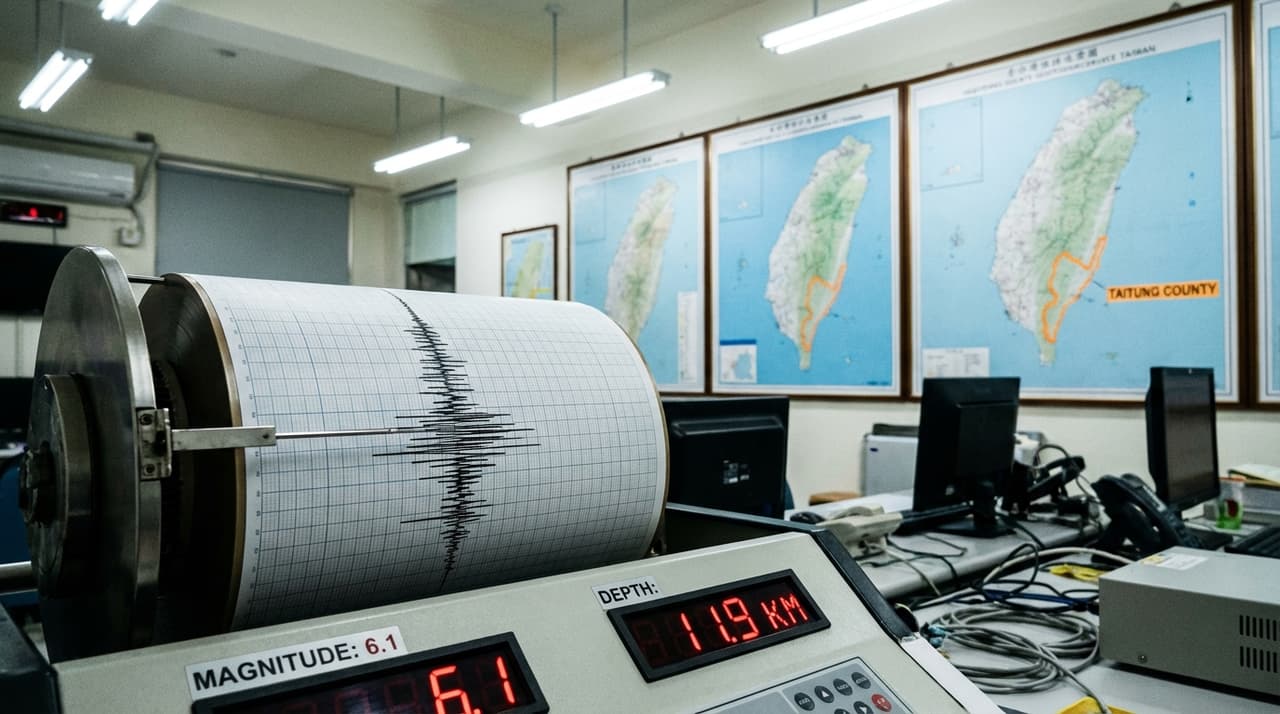
- A magnitude 6.1 earthquake hit Taitung County, Taiwan, with shaking felt as far as Taipei, causing minor disruptions but no major injuries or damage.
- The shallow depth of 11.9 km and maximum seismic intensity of level 5-weak in Taitung prompted aftershock warnings, with experts predicting further tremors.
- Transportation safety checks temporarily affected logistics in eastern Taiwan, though economic impacts are expected to be limited due to the region's seismic preparedness.
Shallow Tremor Triggers Regional Alert
A magnitude 6.1 earthquake struck Taiwan on December 24, 2025, at 5:47 p.m. local time, with its epicenter 10.1 km north of Taitung County Government in Beinan Township, Taitung County, at a shallow depth of 11.9 km. The maximum seismic intensity reached level 5-weak in Taitung, with shaking felt in Taipei, according to initial reports from the Central Weather Administration. No major injuries or structural damage have been reported, though minor impacts like falling items and brief transportation shutdowns occurred as safety protocols were activated.
Witnesses in Taipei described the tremor as strong, with social media posts highlighting concerns over potential aftershocks. "I felt a sudden jolt that lasted several seconds," said one resident in the capital, who requested anonymity. Efforts to reach local officials for further comment were not immediately successful, but the Central Weather Administration has issued aftershock warnings, reflecting standard procedures in a region prone to seismic activity.
Economic and Logistical Ripples
Minor disruptions to transportation for safety checks could temporarily affect eastern Taiwan's logistics and tourism sectors, according to people familiar with the matter. However, no widespread economic damage is noted, and recovery is expected to be swift given Taiwan's robust seismic preparedness and infrastructure resilience. The event's moderate scale means it is unlikely to trigger significant national or global market trends, with analysts pointing to the quick normalization of operations in similar past incidents.
Taiwan lies on a rapid tectonic convergence zone with active faults like the Longitudinal Valley fault system, making shallow ruptures and strong shaking common in eastern areas. This earthquake aligns with historical patterns, though it is smaller than major past quakes in the region. Experts predict aftershocks of magnitude 5.5 or higher over the next week due to the shallow depth and ongoing fault activity, particularly in Taitung County, where the risk remains heightened.
Looking ahead, the short-term focus is on monitoring aftershocks and ensuring public safety, with no major structural changes anticipated in the long term. The event contributes to ongoing tectonic stress release, a natural process in this seismically active zone. As of now, no other connected news items have emerged, but the Central Weather Administration continues its vigilant monitoring, underscoring the routine nature of such events in Taiwan's dynamic geological landscape.