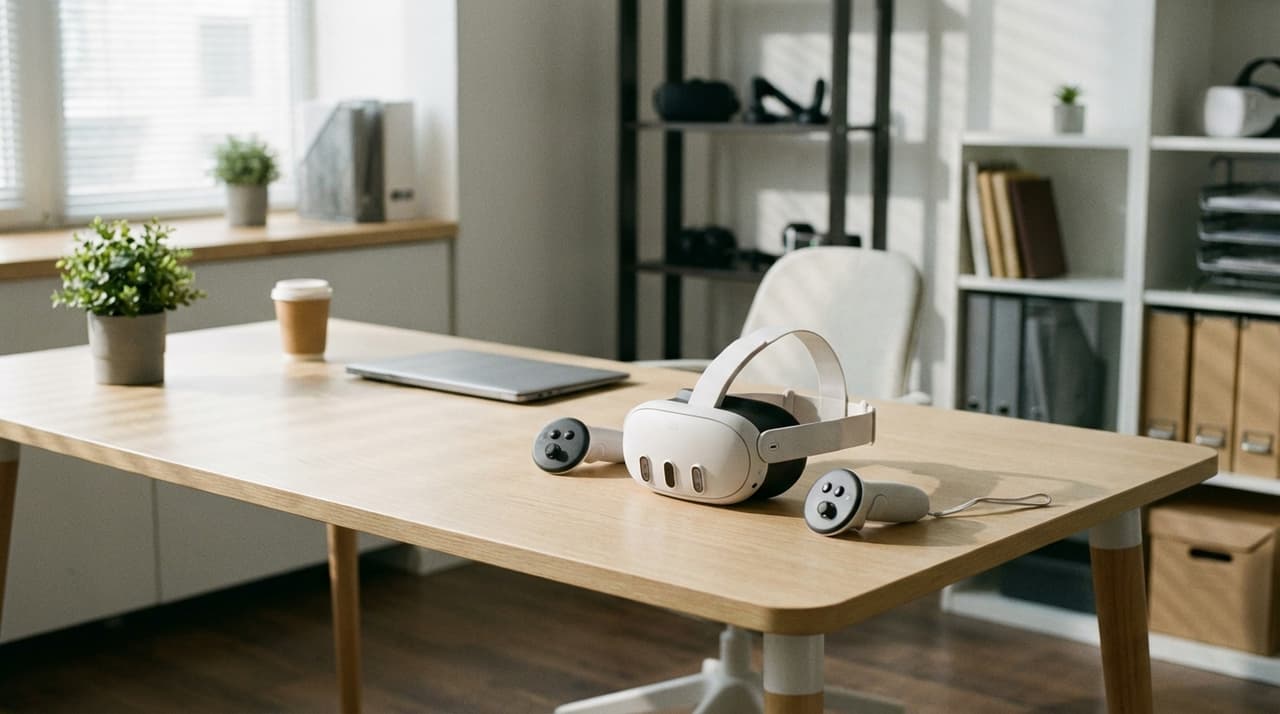
- Meta (META) will raise prices on its VR devices, including Quest models, and slow hardware releases to focus on long-term sustainability.
- The move, detailed in an internal memo from leaders Gabriel Aul and Ryan Cairns, is driven by tariffs, subsidies, and a push to extend device replacement cycles.
- This follows internal strategy meetings with CEO Mark Zuckerberg and CTO Andrew Bosworth, alongside planned budget cuts of up to 30% at Reality Labs.
Meta Platforms is set to increase prices for its virtual reality headsets and adjust its hardware strategy, according to an internal memo from Reality Labs executives Gabriel Aul and Ryan Cairns. The document, reported by Business Insider, outlines a shift toward making the metaverse division financially sustainable in the face of rising costs and new tariffs. Executives cited factors such as subsidies for content and go-to-market efforts, as well as a desire to extend device replacement cycles, as key reasons for the change.
In the memo, Aul and Cairns indicated that Meta's VR devices will become "more premium in price" going forward, with the company potentially shipping new hardware at a slower cadence. This strategic pivot follows discussions with CEO Mark Zuckerberg and CTO Andrew Bosworth, and comes as Meta reportedly plans significant budget reductions at Reality Labs, its division responsible for VR and AR hardware. The current flagship Meta Quest 3 retails at about $499.99, while the entry-level Quest 3S is around $299.99, though prices are expected to rise.
Efforts to restructure Reality Labs have hit a snag, with the memo highlighting that Meta has been "carrying costs like tariffs and subsidies" and now aims to "bend the curve" rather than continue subsidizing hardware. According to people familiar with the matter, the company is responding to external pressures, including trade policies that have increased import duties on electronics. This aligns with broader market trends, where competitors like Sony (SONY)'s PSVR 2 have seen price drops to around $399, while rumors suggest Valve's upcoming "Steam Frame" could be priced well above $500, indicating a premium shift in the high-end VR segment.
Without a deal to manage these costs, Meta would face continued financial strain in its metaverse ambitions. The memo emphasizes a focus on "world-class" software experiences over frequent hardware updates, a move that may benefit developers but could constrain market growth. In a brief statement paraphrased from the memo, executives noted they no longer feel "existential about any singular device's success," signaling a departure from growth-at-all-costs strategies. Attempts to reach Meta for further comment were unsuccessful at the time of writing.
This development comes as Meta delays its mixed-reality glasses, codenamed "Phoenix," from late 2026 to early 2027, reflecting longer development cycles. Analysts view the price discipline as positive for margins but potentially negative for near-term hardware adoption, with consumers likely to see higher list prices and slower refresh cycles. The broader implications include possible room for cheaper competitors to gain traction among cost-sensitive users, even as Meta seeks to establish a more sustainable ecosystem.
Correction: An earlier version of this article misstated the timing of the "Phoenix" glasses delay; it has been updated to reflect the shift from H2 2026 to H1 2027.