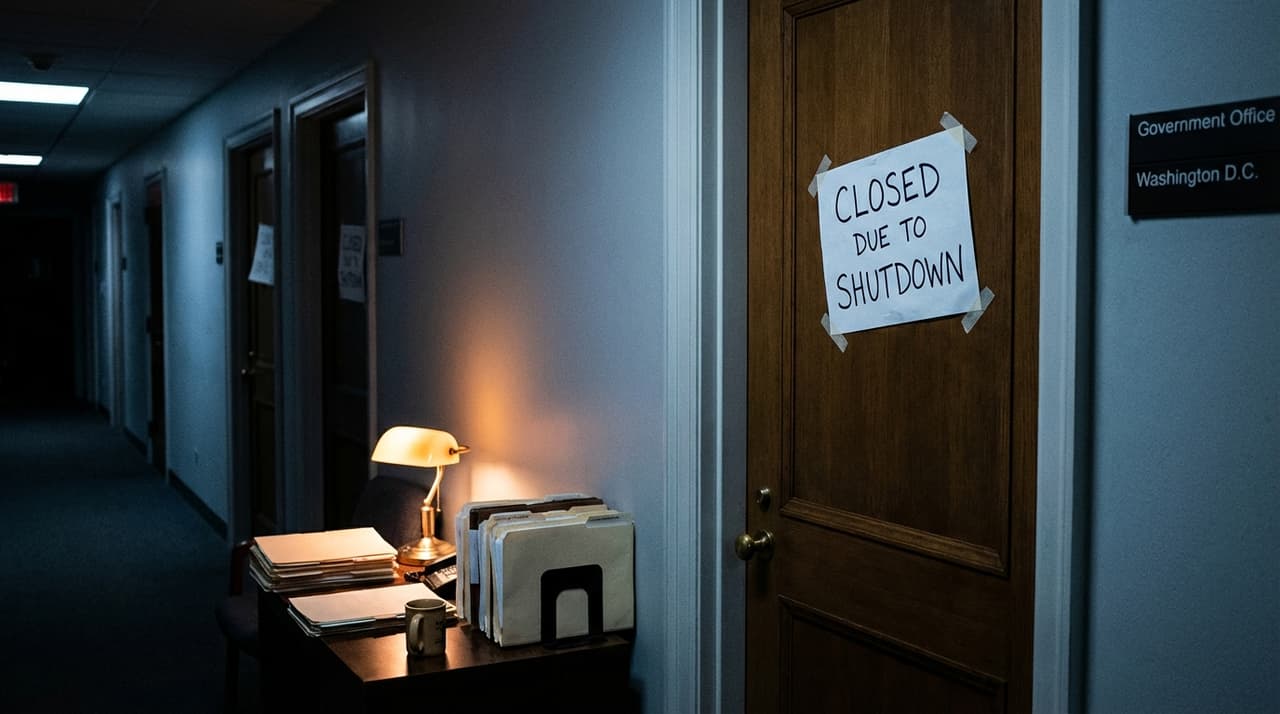
- Federal Reserve Chair Jerome Powell projects a Q1 2026 GDP rebound from the recent government shutdown, citing delayed federal spending as a key driver.
- The U.S. faces a potential second partial shutdown on January 30, 2026, after Congress failed to pass six major appropriations bills, risking renewed furloughs and service disruptions.
- The prior 43-day shutdown ending November 2025 lowered Q4 2025 GDP growth by 1.3-1.5 percentage points, with $11 billion in permanent losses projected, but analysts expect most effects to reverse by mid-2026.
Federal Reserve Chair Jerome Powell stated that the economic effects of the recent U.S. government shutdown should reverse this quarter, aligning with analyses projecting a GDP rebound from delayed federal spending. His remarks come as the nation braces for a potential second partial shutdown at midnight January 30, 2026, following Congress's failure to pass six major appropriations bills. The prior record 43-day shutdown ending November 2025 caused widespread furloughs, unpaid wages for essential workers, and service disruptions, with President Trump signing short-term funding extensions to avert further immediate crises.
Efforts to restructure federal operations have hit a snag, with key agencies like those handling student loans and border security at risk of lapses affecting millions of paychecks. According to people familiar with the matter, the shutdown lowered Q4 2025 GDP growth by 1.3-1.5 percentage points, resulting in $11 billion in permanent losses, but Powell emphasized that the rebound should materialize in Q1 2026. Market trends indicate a post-shutdown spending surge could boost GDP by around 3 points before turning restrictive, though data delays from the event have created a "data fog" complicating Fed decisions amid sluggish hiring.
Without a deal, the government would be forced into another shutdown, exacerbating strains on households and businesses. Federal unions warn of cash-flow crises, with economists highlighting amplified effects on low-income families, while travel and tourism sectors lost $6.1 billion during the 43-day event. In a brief statement, Powell noted, "We anticipate a reversal of shutdown impacts this quarter," though attempts to reach congressional leaders for comment on the January 30 deadline were unsuccessful.
Industry-specific elements include filing deadlines for appropriations bills and projections that cumulative GDP losses of $7-14 billion may be permanent due to unworked furlough hours. Experts from institutions like the CBO and Brookings predict most effects will reverse by mid-2026, barring a prolonged lapse, with short-term boosts from resuming spending expected to drive 1.4-2.2 points of growth in Q1. This story has been updated to clarify that the $11 billion loss refers to permanent GDP impacts, not total costs.