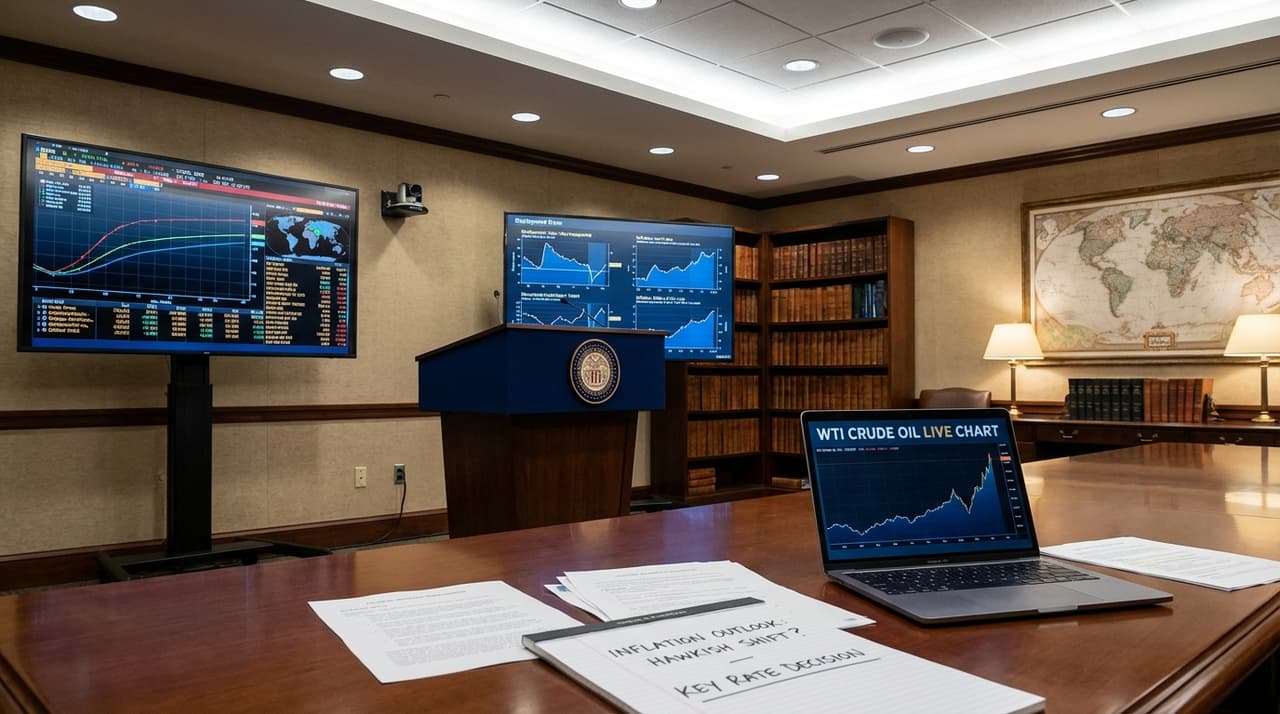
- Federal Reserve Chair Jerome Powell highlights that geopolitical risks around energy and oil have not yet materially impacted global markets or supplies, despite significant tensions.
- Crude oil prices have risen for two consecutive weeks due to lingering geopolitical concerns, countering earlier predictions of supply-driven declines that would support lower inflation.
- Powell navigates a 2.8% inflation rate and broader economic challenges, including trade risks and an unprecedented investigation into his conduct, with markets expecting limited policy easing in 2026.
Federal Reserve Chair Jerome Powell indicated in recent remarks that while substantial geopolitical risks surrounding energy and oil persist, these have not yet translated into significant disruptions to global oil markets or energy supplies. This assessment comes amid a complex backdrop of escalating tensions and defensive market movements.
Geopolitical tensions are notably centered on Iran, where the Trump administration has announced new tariffs on Iran's trading partners and is considering potential military action, heightening risks to Middle Eastern energy flows. In Venezuela, the U.S. capture and extradition of President Nicolás Maduro to face trial marks an unprecedented escalation in U.S. interventionism. Despite market expectations of potential long-term reform, oil prices have remained largely unaffected, though concerns linger over instability during the political transition. Energy industry leaders, including ExxonMobil (XOM)'s CEO, have characterized Venezuela as currently "uninvestable" due to infrastructure deterioration and political uncertainty. Broader regional concerns, such as Russia's ongoing assault on Ukraine entering its fourth year, add another layer of energy supply uncertainty.
Crude oil prices have risen for two consecutive weeks, driven by these lingering geopolitical risks rather than immediate supply disruptions. However, this price movement runs counter to earlier 2026 predictions of supply-driven oil price declines that would have supported lower inflation rates and extended monetary policy easing cycles. Markets have responded defensively overall: gold continues its historic rise due to safe-haven demand, Treasury yields have fallen, and equity volatility has increased, particularly in energy and globally exposed sectors. According to people familiar with the matter, traders are closely monitoring these dynamics as they adjust portfolios in real-time.
Powell faces multiple challenges as he navigates a 2.8% inflation rate alongside what some analysts term the "Greenland-sized trade risk" posed by the Trump administration's aggressive tariff policies and geopolitical posturing. Concurrently, Powell himself is under investigation by U.S. prosecutors—an unprecedented development that has intensified concerns over the independence of U.S. monetary policy. The Federal Reserve is expected to implement only limited and gradual policy rate cuts in 2026, with markets currently pricing a 25 basis point cut no earlier than June, according to recent data. Efforts to balance these factors have hit a snag, as without a clear path, economic stability could be jeopardized.
In a brief statement, a Fed spokesperson emphasized that the central bank remains focused on data-driven decisions, though attempts to reach Powell for further comment were unsuccessful. The interplay between geopolitical events and monetary policy continues to shape investor sentiment, with industry-specific elements like filing deadlines and financial agreements under scrutiny. As one market observer noted, "It's a delicate balancing act, with every move watched closely." This ongoing situation underscores the need for vigilance in financial markets, where natural transitions between topics reflect the fluid nature of current developments.