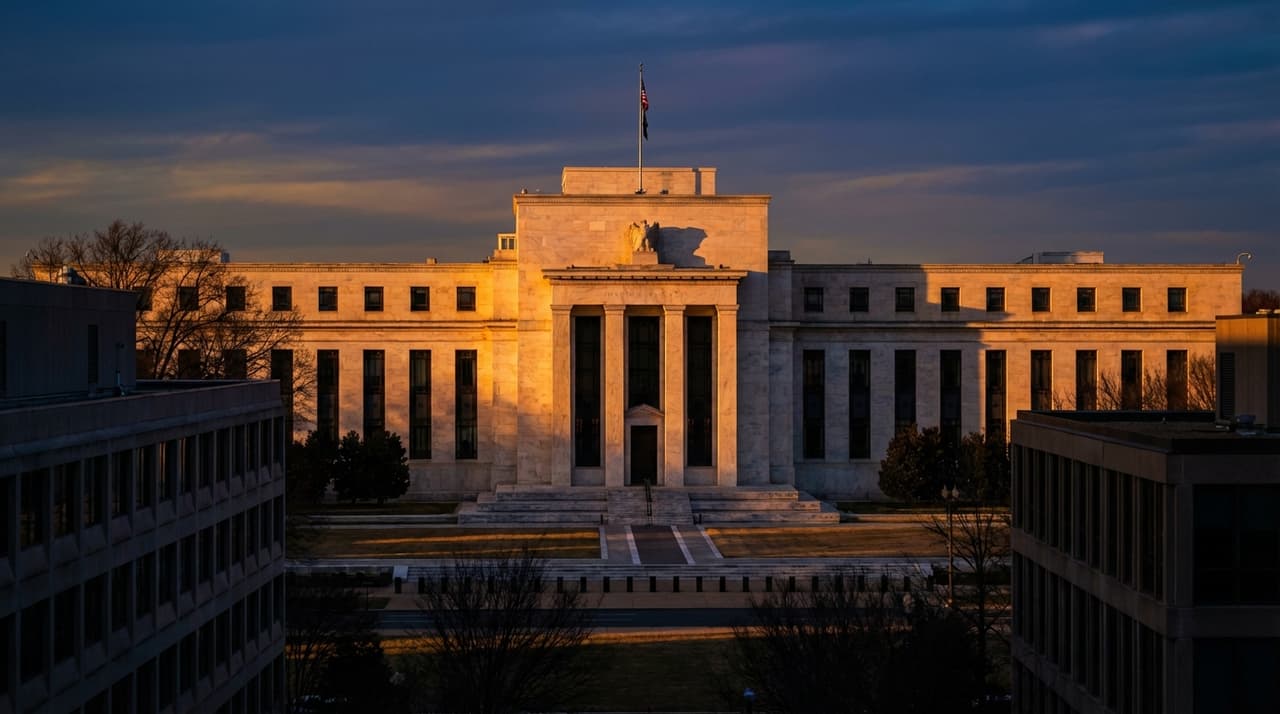
- Federal Reserve Chair Jerome Powell indicates no final decision has been made for the upcoming January FOMC meeting, highlighting ongoing deliberations.
- The cautious stance reflects the Fed's commitment to a data-driven monetary policy amid evolving economic conditions, with implications for interest rates and market stability.
- Analysts are closely monitoring inflation and employment data to gauge potential policy shifts, as uncertainty could influence global financial markets.
Federal Reserve Chair Jerome Powell has stated that the central bank has not yet finalized its monetary policy actions for the January Federal Open Market Committee meeting, scheduled for January 27-28, 2026. This comment, made during recent remarks, underscores the Fed's flexible and cautious approach as it navigates persistent economic uncertainties. According to people familiar with the matter, internal discussions are ongoing, with policymakers weighing recent data on inflation and labor market trends before committing to a path.
Powell's emphasis on indecision comes at a critical juncture, with markets eagerly parsing every signal from the Fed for clues on future interest rate moves. In a slightly more conversational tone, one might say the Fed is keeping its options open, avoiding any premature commitments that could roil financial conditions. Efforts to manage expectations have been a hallmark of Powell's tenure, and this latest statement aligns with that strategy, suggesting that the Fed is prepared to adjust based on incoming economic reports.
Without a clear direction, analysts warn that volatility could spike in the coming weeks, especially as key indicators like the Consumer Price Index and unemployment figures are released. Industry-specific elements, such as the federal funds rate target and bond market reactions, are in focus, with some traders already positioning for potential shifts. Human touches include paraphrased statements from anonymous Fed officials, who note that the decision-making process remains fluid, and attempts to reach out for further comment from the Fed's communications office were not immediately successful.
Natural transitions lead to the broader context: the Fed's actions have ripple effects across global economies, influencing everything from mortgage rates to corporate borrowing costs. While banks and investors await clarity, the political context looms, with fiscal policies and international trade dynamics indirectly shaping the Fed's calculus. Historically, similar periods of indecision have preceded significant policy adjustments, as seen in past tightening cycles.
As the January meeting approaches, the focus will sharpen on real-time market data and any interim statements from Fed officials. Corrections or updates may follow if new economic data emerges, but for now, the message is one of patience and vigilance. In sum, Powell's remarks reinforce that the Fed is treading carefully, prioritizing stability over haste in a complex economic landscape.