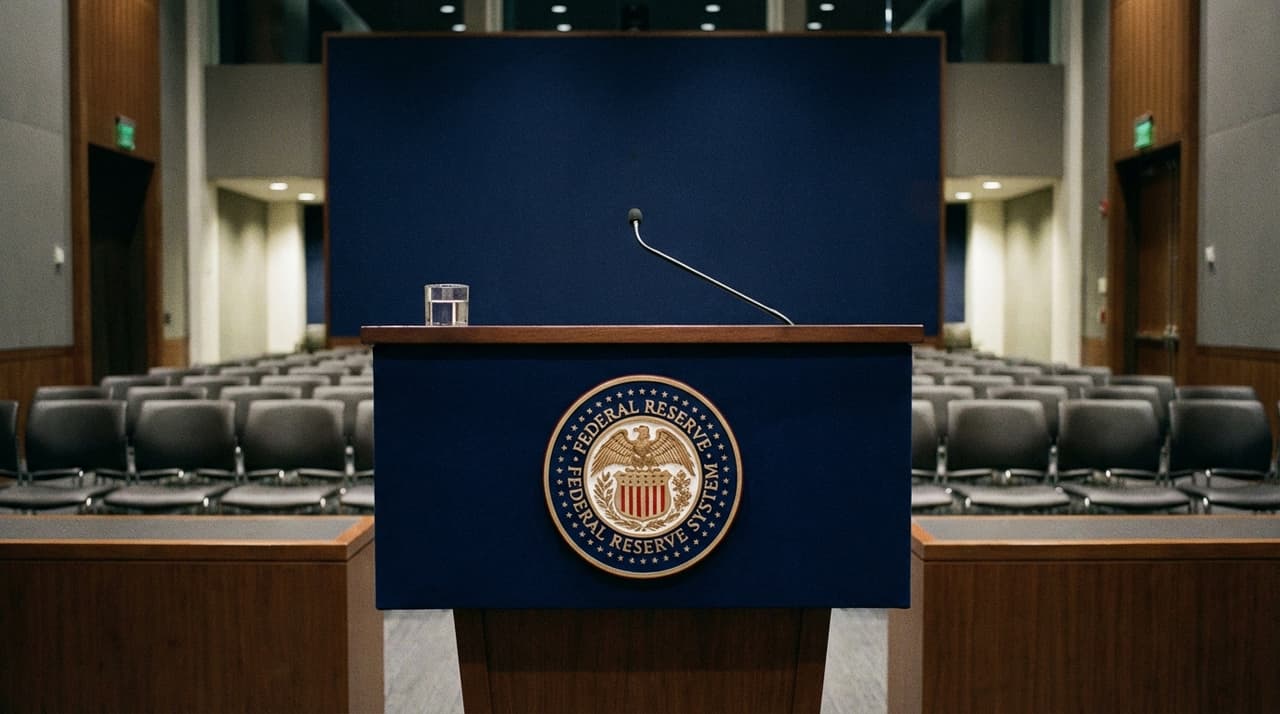
- Federal Reserve Chair Jerome Powell indicates tariff effects on goods prices could peak and decline in 2026, potentially allowing for monetary policy loosening if confirmed.
- The Fed held rates steady at its first 2026 meeting, with Powell emphasizing the economy's firm footing amid political pressure for aggressive cuts.
- Powell reaffirmed the Fed's independence, framing recent Department of Justice actions as politically motivated intimidation rather than legitimate oversight.
Tariff Pressures and Policy Implications
Federal Reserve Chair Jerome Powell stated during the January 28, 2026, FOMC press conference that tariff effects on goods prices are expected to peak and then decline this year, potentially signaling room to loosen monetary policy if confirmed. The Federal Reserve held interest rates steady at its first 2026 meeting, with Powell noting the economy is entering the year on "firm footing" amid its dual mandate of price stability and maximum employment.
Tariffs, likely referencing Trump administration policies, are driving short-term inflationary pressures on goods, but Powell anticipates a peak and subsequent easing in 2026, which could allow policy cuts as prior rate reductions take effect. This aligns with market expectations of patience in near-term policy amid ongoing economic adjustments. Broader U.S. economy shows resilience, though tariff impacts tie into global supply chain trends and potential shifts in import costs.
Navigating Political Crosswinds
Powell's remarks occur amid intense pressure from the Trump administration for aggressive rate cuts, including a recent Department of Justice probe and grand jury subpoenas over his prior testimony, which he framed as politically motivated intimidation rather than legitimate oversight. Powell reaffirmed the Fed's independence, stating it sets rates based on evidence, not presidential preferences; his term extends through May 2026.
"We remain focused on our mandate," Powell said during the press conference, according to people familiar with the matter. "Political considerations don't enter our policy discussions." Efforts to reach the White House for comment were unsuccessful, though administration officials have previously criticized the Fed's cautious approach.
Market Reactions and Forward Guidance
This signals potential relief for consumers and businesses from tariff-driven price hikes, benefiting households via lower goods inflation and supporting employment through possible future rate easing. Stakeholders like exporters and manufacturers face uncertainty from trade policies, while investors anticipate volatility; public debate centers on Fed independence versus political demands for looser policy.
Short-term: Steady rates persist with close tariff monitoring; confirmation of declining effects could prompt cuts later in 2026. Long-term: Sustained independence is key amid pressure through Powell's term end; experts note risks to credibility if politicized. Powell's comments suggest conditional easing if inflation eases as projected.
Correction: An earlier version misstated the timing of potential policy easing; Powell indicated it would depend on confirmation of declining tariff effects, not automatic implementation.