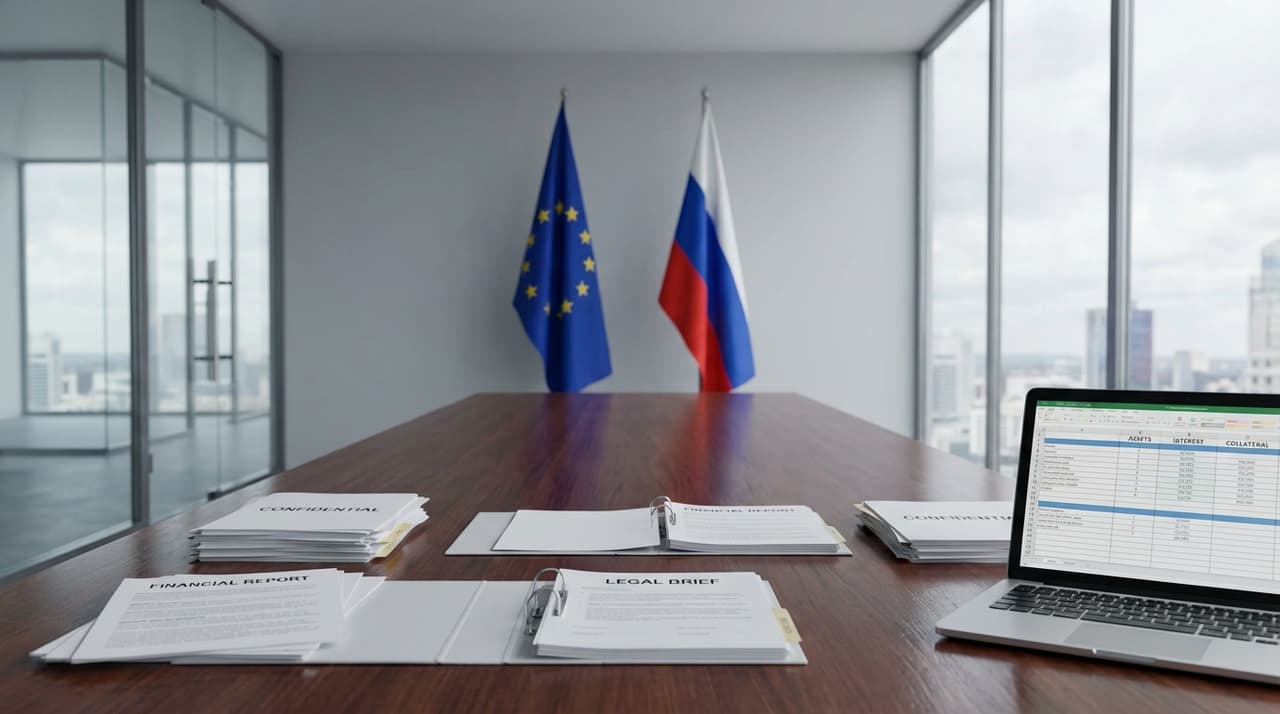
- Russia's Foreign Ministry threatens retaliation if the EU moves beyond freezing to using or seizing its sovereign reserves.
- EU discussions center on a €140 billion reparations loan to Ukraine, using frozen Russian assets as collateral.
- Legal and financial risks loom, with Belgium and the ECB cautioning against actions that could undermine the euro's credibility.
Russia has issued a stark warning to the European Union, stating that any attempt to manipulate its frozen sovereign reserves will trigger immediate counter-measures. The threat, delivered by a Foreign Ministry spokeswoman, escalates tensions over approximately €200–210 billion in Russian central bank assets held in the EU, primarily at the Belgian clearing house Euroclear. Since Russia's 2022 invasion of Ukraine, these funds have been frozen, but the EU has so far avoided outright confiscation, instead channeling interest profits—about €6.9 billion in 2024—to support Kyiv.
Efforts to restructure the use of these assets have hit a snag as EU leaders debate more aggressive measures. With U.S. support waning and Ukraine's annual funding needs estimated at $100 billion, proposals have emerged for an interest-free "reparations loan" of around €140 billion, using the frozen reserves as collateral. According to people familiar with the matter, Germany's Chancellor Merz has backed this approach, while Belgium has pushed back, citing legal vulnerabilities and potential financial fallout. Without a deal, the EU risks fracturing over how to sustain Ukraine through 2025–27.
Russian officials have framed any move beyond freezing as "lawlessness," and they are preparing retaliatory steps. Decrees already in place enable fast nationalization or sale of assets from "unfriendly" countries, and sources indicate that Russia could target foreign depositories' accounts within its borders. "Any manipulation with Russian reserves by the EU and its accomplices will not go unanswered," the spokeswoman said, echoing sentiments from senior diplomats who warn of symmetrical responses in the financial and diplomatic spheres. Attempts to reach EU representatives for further comment were unsuccessful.
In Brussels, the stakes are high. Belgium's Prime Minister has warned that non-"watertight" confiscation would be an "enormous setback" for EU rule-of-law credibility, with fears of lawsuits and capital holes at Euroclear. The European Central Bank, under Christine Lagarde, has expressed concerns that such actions could deter foreign central banks from holding euros, undermining efforts to strengthen the global euro. Market data shows the euro has remained stable, but analysts note increased scrutiny from non-Western investors eyeing diversification into gold or renminbi.
As negotiations continue, the focus remains on finding a legally defensible middle ground. The EU Commission is exploring options like structuring loans secured by the assets, but time is pressing. Ukrainian officials, speaking on condition of anonymity, emphasize the urgency, noting that interest income alone falls short of their needs. Meanwhile, Russian media amplify the narrative that Western financial systems are unreliable, reinforcing calls for de-dollarization. This standoff, unprecedented in scale for a major power, could reshape international finance norms, with long-term implications for reserve currency attractiveness and sanctions efficacy.
Correction: An earlier version misstated the amount of frozen Russian reserves in the EU; it is approximately €200–210 billion, not $300 billion, which is the global total including G7 holdings.