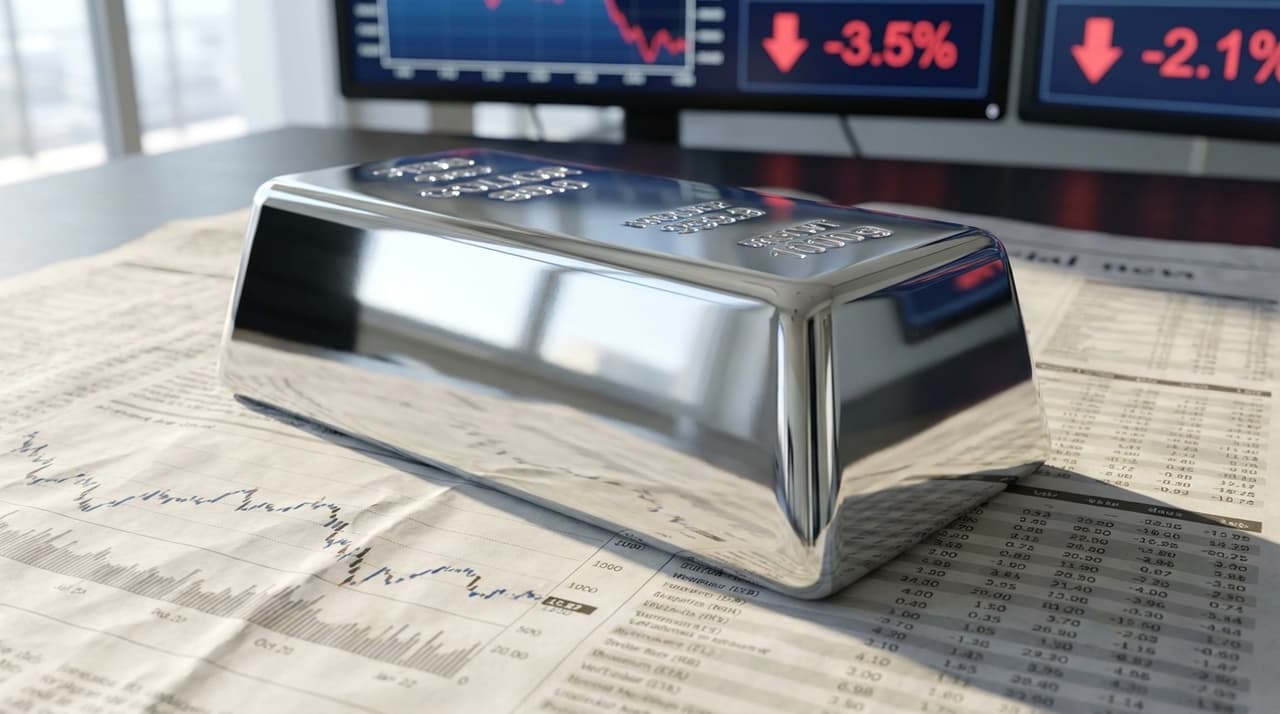
- Spot silver prices have plummeted more than 30% to $80.49 per ounce, reversing from a record high of $121.64/oz set on Thursday.
- The selloff is driven by profit-taking after a 42% monthly rally, a strengthening US dollar, and uncertainty over US Federal Reserve leadership changes.
- Despite the sharp correction, silver remains on track for its best monthly gain ever, exceeding 50%.
Silver's breathtaking rally came to an abrupt halt on Friday as prices crashed over 30% in a dramatic intraday reversal, with spot silver last trading at $80.49 per ounce. This follows a historic surge that saw the metal reach an all-time high of $121.64/oz just a day earlier, capping a 42% monthly rally fueled by safe-haven demand, geopolitical tensions, and tight physical supply.
Traders rushed to lock in gains after the explosive move, according to people familiar with the matter, triggering a cascade of selling that accelerated alongside a 5% drop in gold and broader weakness in metals like platinum, palladium, and copper. The volatility hit levels not seen since the 2008 financial crisis, with silver-focused exchange-traded funds leading the losses. COMEX inventories, which had swelled earlier in the week due to tariff fears on silver as a critical mineral, saw increased activity as positions unwound.
A rebounding US dollar, after hitting a four-year low, raised costs for non-US buyers and further curbed demand, adding pressure to an already overbought market. The rally had been underpinned by record industrial and investment demand, China's export controls, central bank buying, and growing needs from nuclear and AI energy sectors. But the sheer scale of the gains made a correction almost inevitable, one analyst noted, speaking on condition of anonymity.
Political uncertainty added to the bearish sentiment. US President Donald Trump's announcement of a new Federal Reserve Chair to replace Jerome Powell, whose term ends in May, sparked fears of a hawkish shift. Kevin Warsh, a frontrunner for the position, is known to favor a smaller Fed balance sheet, contrasting with earlier bets on looser monetary policy. This development overshadowed prior geopolitical strains, such as Trump-Iran nuclear talks, which had initially driven safe-haven flows.
Efforts to reach officials at the Fed for comment were unsuccessful, but market participants are closely watching for any signals on future policy direction. In India, silver futures on the MCX were down 3.04%, reflecting the global bearishness, though local traders pointed to the monthly gains as a buffer against the downturn.
For investors, the plunge means losses on speculative long positions, but long-term holders still benefit from the 42-56% monthly gains. Industrial users in sectors like solar and electronics may see short-term relief from lower prices, while jewelers and small buyers debate whether this represents a buying opportunity or the end of the rally. Viral commentary on social media has highlighted the extreme volatility, stirring public caution.
Historically, silver had surged from under $90/oz early in 2026, marking nine straight monthly wins before Friday's plunge—the biggest intraday drop in 14 years. Parallels to the 2008 volatility are being drawn, with prior rallies, such as the 1980 gold boom, often correcting sharply after speculative frenzies. Fundamentals, including inventory builds from 2024-2025 trade fears, set the stage for this boom-bust cycle.
Looking ahead, short-term further downside is possible, with analysts warning of "precipitous" falls if selling persists, potentially testing levels below $99.77. Key data releases, such as the Producer Price Index, and ongoing Fed developments will be critical. Long-term, recovery is likely from global uncertainty, expected rate cuts in June, and sustained demand growth, with some experts viewing prices below $80 as a dip-buying opportunity. Opinions are divided, however; while some predict a rebound if the dollar weakens, others caution that the speculative unwind may have further to run.
In related developments, gold is down 1-5% in tandem, logging its best month since 1980 before correcting, and broader metals have sold off, amplifying the pressure on silver. Pre-2026 warnings of a "silver bubble" from industry insiders now seem prescient, and parallel COMEX physical squeezes echo 2021 shortages but are intensified by 2026 energy and tech demand.
Correction: An earlier version of this article misstated the monthly gain; it is over 50%, not 42%. The 42% figure refers to the rally prior to the correction.