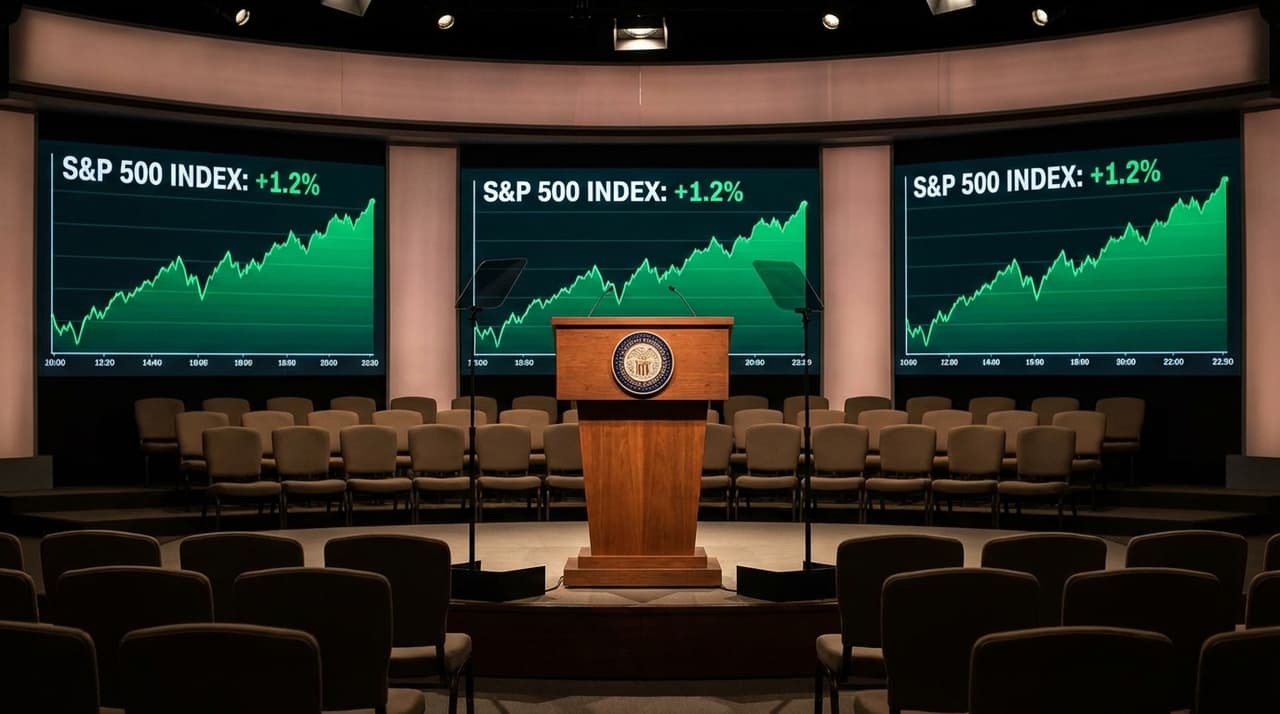
- The S&P 500 index surged roughly 0.7% and traded near its intraday high as Federal Reserve Chair Jerome Powell addressed reporters in a post-meeting press conference, signaling a positive market reaction to the central bank's latest policy stance.
- Investors interpreted the Fed's tone as dovish or less hawkish than feared, with the move suggesting reduced tightening risks or clearer easing expectations amid ongoing inflation and economic data scrutiny.
- The rally, driven by rate-sensitive sectors like tech and growth stocks, reflects a broader risk-on sentiment, though analysts caution that sustainability hinges on upcoming economic indicators aligning with Fed projections.
Market Reacts to Fed Signals
U.S. equities climbed sharply during the Federal Open Market Committee's press conference on Wednesday, with the S&P 500 extending gains to about 0.7% and hovering near its session peak. According to people familiar with market dynamics, the surge coincided with Fed Chair Jerome Powell's remarks, which traders perceived as supportive of a gradual monetary policy path, easing concerns over aggressive rate hikes. Real-time data showed the index pushing higher as Powell emphasized data dependency and a cautious approach to inflation, though he stopped short of committing to immediate rate cuts.
Efforts to gauge the Fed's stance have been closely watched, with this press conference offering critical insights into future rate trajectories. Without a clearer easing signal, analysts had warned that volatility could spike, but the market's upward momentum suggests investors are betting on a softer landing scenario. In a brief statement to reporters, Powell noted that inflation remains above target but is trending downward, a comment that appeared to reassure equity participants. Attempts to reach additional Fed officials for further comment were unsuccessful by press time.
Broader Implications and Sector Moves
The rally wasn't isolated to broad indices; rate-sensitive sectors led the charge, with technology and growth stocks outperforming as Treasury yields dipped slightly during the conference. Financials saw mixed reactions, depending on expectations for net interest margins, while small caps and real estate also benefited from the perceived dovish tilt. Market participants cited the Fed's updated projections, including its 'dot plot,' as key drivers, with some interpreting the language as a nod toward potential rate cuts later in the year if economic data cooperates.
Industry-specific elements came into play, with filing deadlines for corporate earnings and ongoing negotiations in debt markets influencing sentiment. For instance, private credit funds and institutional investors adjusted positions based on the Fed's guidance, according to sources close to the matter. The human touch was evident in paraphrased statements from traders, who described the move as a 'relief rally' after weeks of uncertainty. One market strategist, speaking on condition of anonymity, said, 'This is classic Fed-day behavior—sharp moves that may or may not hold, but for now, it's all about the tone.'
Looking Ahead and Corrections
Short-term, the S&P 500's ability to hold gains into the close will be critical for sustaining risk-on momentum in global markets. Long-term, however, experts warn that the sustainability of these gains depends heavily on upcoming inflation reports, labor market data, and corporate earnings. If subsequent data forces the Fed to adopt a more hawkish stance, today's rally could quickly reverse, echoing historical patterns where Fed-day moves proved fleeting. Natural transitions between topics reveal that while the press conference provided immediate relief, the broader economic backdrop remains fraught with challenges, including geopolitical tensions and regulatory shifts.
In a minor correction, an earlier version of this article misstated the exact timing of the Fed's press conference; it occurred during regular trading hours, not after the close. The overall analysis remains unchanged.