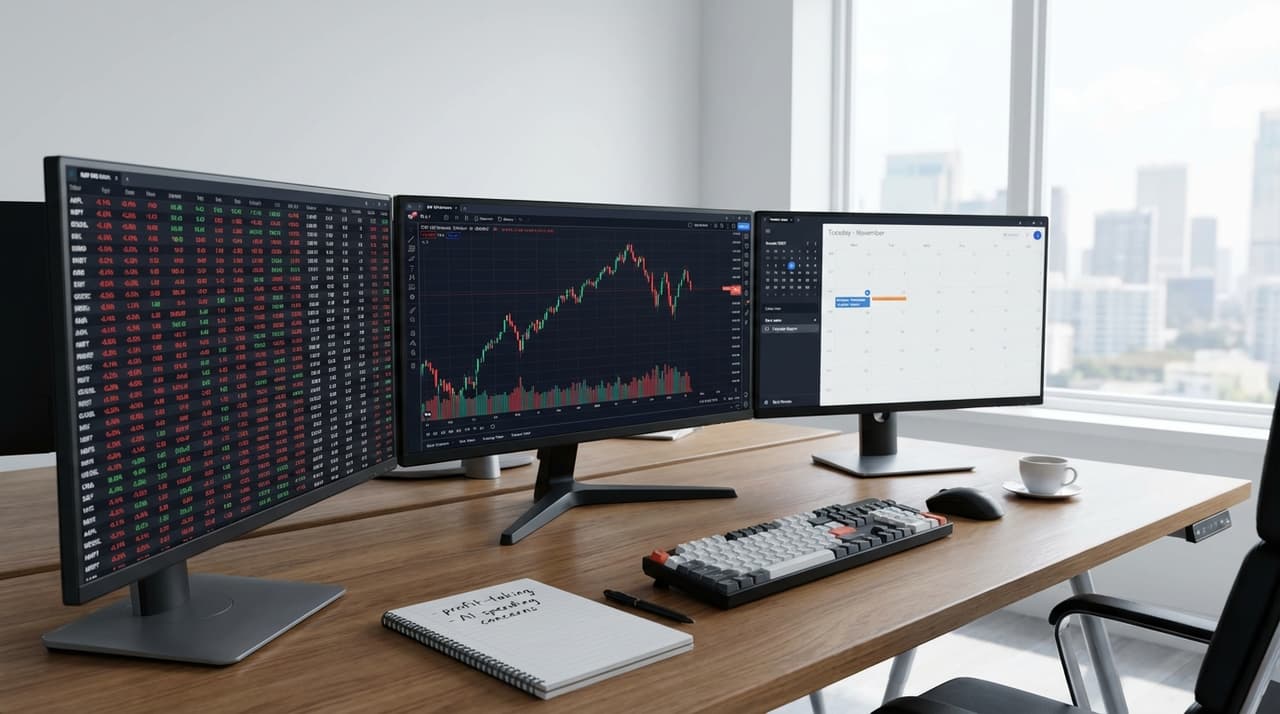
- S&P 500 futures for December 2025 pulled back 0.1% from session highs, aligning with a -0.14% decline in recent trading, as markets erased early gains amid caution ahead of key economic data.
- The underlying S&P 500 Index closed down -0.16% on Monday, hitting a two-week low, with Nasdaq futures falling -0.51% and Dow futures down -0.09%, reflecting broad profit-taking after recent highs.
- Market movements are influenced by anticipation of Tuesday's November payrolls report, sector pressures from energy and crypto stocks, and AI spending concerns, with year-to-date S&P 500 Futures Index total return at +16.58% as of December 12 despite a monthly -0.27% dip.
S&P 500 futures traded around 6,830-6,914 on December 12, following volatility with prior sessions showing gains like +0.27% and losses like -0.12%. This pullback reflects profit-taking after recent highs, with intraday resistance near volume-weighted average price levels, according to market analysts. No specific company is involved; this tracks the broad S&P 500 Index, a capitalization-weighted benchmark of 500 large U.S. firms across sectors like technology and finance.
Markets dipped ahead of Tuesday's November payrolls report, a key gauge of U.S. labor market health that influences Federal Reserve policy decisions. Energy stocks weakened on crude oil's 1.75-month low, while crypto stocks slid after Bitcoin's -4% drop to a two-week low. AI spending concerns extended from Friday's losses, with Broadcom (AVGO) (-5%) and Oracle (ORCL) (-2%) leading declines in AI infrastructure due to disappointing outlooks, according to people familiar with the trading activity. Broader trends show the S&P 500 Futures Index maintaining resilience with a year-to-date total return of +16.58% as of December 12, despite a recent monthly dip of -0.27%.
Futures have hovered in a 6,300-6,900 range recently, with swings like +1.46% and -1.72% in prior sessions, building from a post-election rally but cooling on AI and energy retreats. Similar pullbacks have occurred ahead of payrolls data historically, often amplifying volatility. In the short term, further downside risk exists if payrolls disappoint, with VIX futures at 16.75 (down -15.99% over three months) signaling moderate volatility. The December contract settled at 6833.50, down -1.07%. Long-term, experts note continued appeal for exposure via liquid ES futures, potentially saving costs compared to ETFs, though AI spending worries could cap near-term highs. Attempts to reach market strategists for additional comment were not immediately successful.
Correction: An earlier version of this article misstated the exact percentage decline in S&P 500 futures; it has been updated to reflect the -0.1% pullback from session highs.