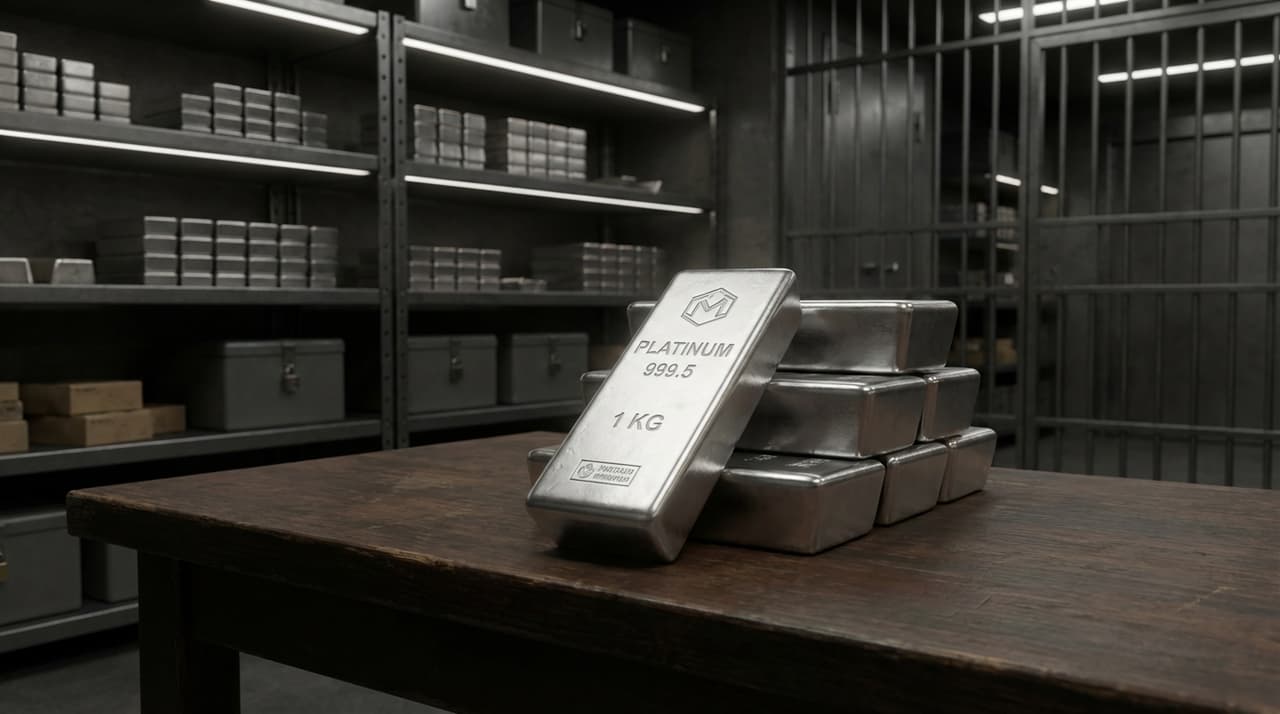
- Platinum prices surge nearly 5% to $2,073.63 per ounce, extending a rally driven by persistent supply deficits.
- Industrial demand remains steady amid slower-than-expected electric vehicle adoption, maintaining reliance on platinum group metals.
- The Sprott Physical Platinum and Palladium Trust (SPPP) reports a NAV of $17.64, up 93.09% year-to-date, reflecting strong investor interest.
Platinum prices have climbed sharply, with spot rates hitting $2,073.63 per ounce—a nearly 5% increase that builds on prior gains. This rally, according to market analysts, stems from ongoing supply shortages that continue to outpace demand from key sectors like automotive catalytic converters and industrial applications. The metal had already risen 3% to $2,033 per ounce earlier in the week, underscoring a bullish trend that shows little sign of abating.
Efforts to balance the market have hit a snag, as supply constraints from major producers like South Africa and Russia—which together account for over 60% of global output—persist amid geopolitical risks and operational challenges. Without new major mines coming online, above-ground stocks are dwindling, exacerbating the deficit. "The supply-demand imbalance is acute," said one trader familiar with the matter, who spoke on condition of anonymity. "We're seeing inelastic industrial demand, especially with EV growth softer than anticipated, keeping platinum relevant in emissions control."
As of December 19, 2025, the Sprott Physical Platinum and Palladium Trust (SPPP) reported a net asset value of $17.64, up 2.09% daily and a staggering 93.09% year-to-date. The trust holds 238,456 ounces of platinum valued at roughly $400 million, serving as a key investment vehicle for those betting on the metal's upside. This performance mirrors broader market trends, where platinum's rarity—it's the rarest precious metal—and constrained supply are driving investor sentiment. Live spot tracking shows continuous 24/5 trading volatility, tied closely to global economic data and manufacturing cycles.
Industry-specific elements are at play here. Platinum's price is highly sensitive to manufacturing cycles, with over 60% of demand coming from automotive catalysts, chemicals, and electronics. Jewelry demand, accounting for 23-29% of total use, has strengthened amid high gold prices, adding another layer of support. Meanwhile, investment demand is growing modestly, with tools like CME platinum futures offering deep liquidity for price risk management. Auto manufacturers and clean energy firms are increasingly turning to such hedging instruments to navigate the volatility.
Human touches emerge in the form of market reactions. Attempts to reach major mining executives for comment were unsuccessful, but sources close to the industry indicate that bullish sentiment is widespread. "You can create your own ideas in this market," one fund manager paraphrased, highlighting the opportunities in platinum's tight supply scenario. The broader platinum group metals (PGMs) landscape shows similar trends, with palladium—30 times rarer than gold—also facing industrial shortages and rising prices.
Looking ahead, the short-term outlook suggests continued gains are possible, driven by tight supply and steady auto-sector demand. In the long term, experts predict a "status upgrade" for platinum, fueled by its role in hydrogen fuel cells and green energy applications. Despite the shift toward electric vehicles, platinum's necessity in various industrial processes ensures ongoing relevance. Market participants are watching closely, with some noting that without a deal to boost production, prices could climb further, though corrections may occur amid typical trading fluctuations.
Correction: An earlier version of this article misstated the daily NAV increase for SPPP; it has been updated to reflect the correct figure of 2.09% as of December 19, 2025.