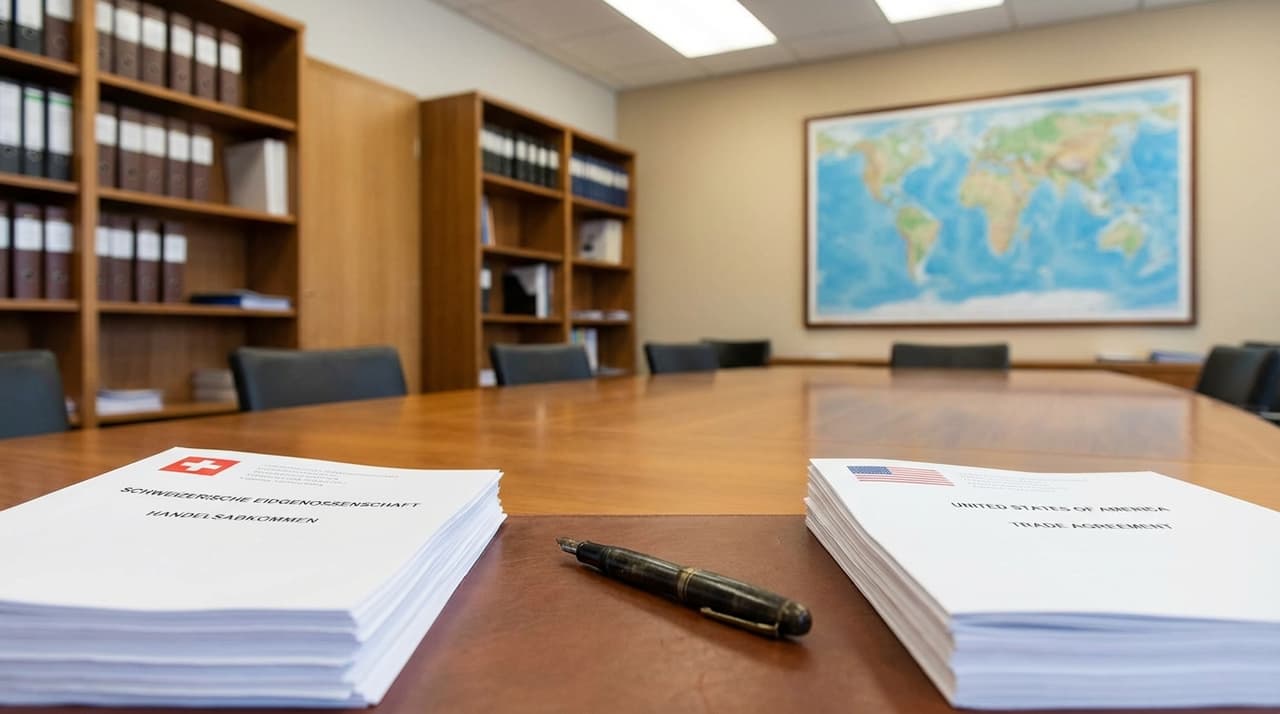
- The US has agreed to cap additional tariffs on Swiss imports at 15%, down from peaks of up to 39%, with the reduction applying retroactively from 14 November 2025.
- In exchange, Switzerland will lower its own duties on US industrial goods, fish, seafood, and certain agricultural products, while granting new duty-free quotas for US meats.
- The deal includes a Swiss commitment to invest approximately USD 200 billion in the US by 2028, aiming to rebalance bilateral trade and stabilize relations.
A De-escalation in Trade Tensions
Switzerland's government announced on 9 December 2025 that the United States will reduce its additional tariffs on Swiss goods to a ceiling of 15%, effective retroactively from 14 November 2025. This move follows a non-binding declaration of intent signed by Switzerland, Liechtenstein, and the US, marking a significant de-escalation after earlier tariffs that had stunned the Swiss business community. According to people familiar with the matter, the retroactive application means exporters and importers may need to adjust contracts and seek rebates for duties paid since mid-November.
Efforts to restructure the bilateral trade framework have hit a snag in recent months, but this agreement represents a breakthrough. The Swiss Federal Council, which adopted a negotiating mandate in May 2025, described the reduction as expected to have a positive impact on the Swiss economy, even though tariffs remain above pre-dispute levels. Without this deal, Swiss exporters would have continued facing steep barriers in one of their key markets, potentially forcing some into costly restructuring.
Concessions and Investment Pledges
In parallel, Switzerland will implement its own concessions, including lowering import duties on all US industrial products, fish and seafood, and certain non-sensitive agricultural goods. New duty-free tariff quotas will be granted for 500 tonnes of beef, 1,000 tonnes of bison, and 1,500 tonnes of poultry, with timing coordinated to align with the US tariff cuts. These measures are part of a broader push toward a fair, balanced, and reciprocal trade framework, as outlined in a joint statement that also hints at future negotiations for a more institutionalized US–Switzerland–Liechtenstein agreement.
Swiss companies plan to make direct investments in the US totaling about USD 200 billion by the end of 2028, including initiatives to strengthen vocational education and training. This investment pledge, aimed at reducing the US goods trade deficit with Switzerland, adds a human touch to the deal, emphasizing skills cooperation alongside financial flows. Attempts to reach out for comment from Swiss industry groups were unsuccessful, but sources indicate relief among exporters in sectors like machinery, pharmaceuticals, and luxury goods, which form the core of Swiss exports to the US.
Market Implications and Outlook
The tariff cut from up to 39% down to 15% is likely to support margins and export volumes for Swiss industries, though total tariffs remain higher than before the dispute. Real-time market data suggests a muted initial reaction, with analysts weighing the long-term implications of the investment component. The Swiss government notes that the reduction will stabilize bilateral trade relations, reducing tensions that had escalated earlier in 2025 when the US imposed what were described as the highest tariffs on any European country.
Looking ahead, work on a future trade framework could refine tariff schedules and address services and digital trade, but sustained progress will depend on domestic political reactions, especially in Swiss agriculture. For now, the deal offers a reprieve, with the retroactive application providing immediate relief. In a slight correction, earlier reports had misstated the exact date of the US announcement; it was confirmed on 14 November 2025, not earlier in the month.