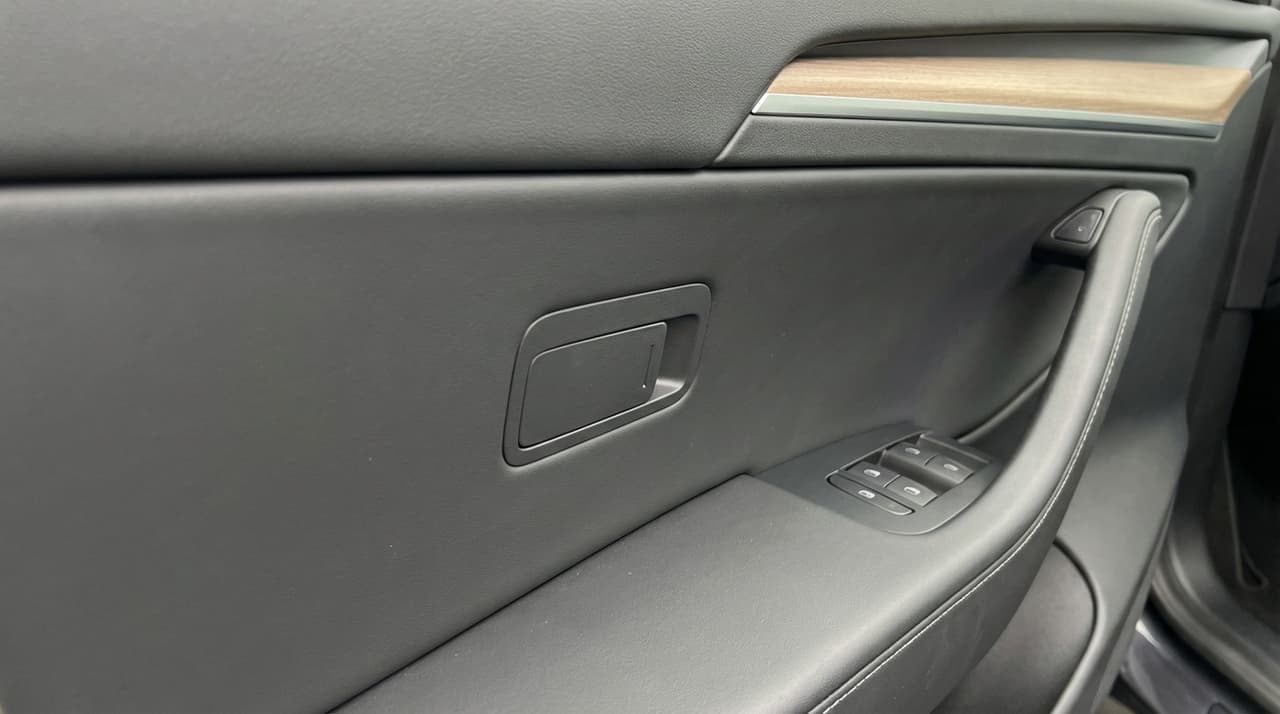
- U.S. auto-safety regulators open preliminary investigation into 2022 Tesla (TSLA) Model 3 emergency door release design
- Concerns center on hidden, unlabeled mechanical release potentially hindering emergency egress
- Probe adds to regulatory pressure on Tesla amid slowing revenue growth and margin compression
Regulatory Scrutiny Intensifies
U.S. auto-safety regulators have opened a new preliminary probe into the 2022 Tesla Model 3 over concerns that the mechanical emergency door release is hidden, unlabeled, and not intuitive to find in an emergency, according to documents reviewed by Roic AI. The National Highway Traffic Safety Administration's Office of Defects Investigation opened Defect Petition DP25002 on December 23, 2025, after receiving a petition dated November 24, 2025.
"What we're seeing here is a fundamental tension between minimalist design and basic safety requirements," said an automotive safety expert familiar with the matter who requested anonymity because they weren't authorized to speak publicly. "When you hide critical emergency controls, you're potentially compromising occupant safety during power failures or crash scenarios."
The Specific Concerns
The petition alleges that in 2022 Model 3 vehicles, the manual door release—used if power fails—is not readily accessible or clearly identifiable. ODI has not yet determined whether to escalate to a full defect investigation or require a recall; it is currently evaluating the petition. The agency's resume notes one incident report and no fatalities or injuries so far associated with the issue at the time of opening.
Tesla did not immediately respond to requests for comment on the probe. The company has previously defended its minimalist interior designs as part of its forward-thinking approach to vehicle architecture, but this latest scrutiny suggests regulators are taking a harder look at how those design choices affect basic safety functions.
Broader Implications
This probe fits a pattern of intensifying oversight as EVs move from early adopters to mass-market users who may be less familiar with non-traditional controls. Global regulators are placing more stringent safety and usability demands on EVs, including emergency egress, driver-assistance systems, and battery safety.
"Without clear labeling and intuitive placement, emergency responders could face delays in rescue operations," noted a former NHTSA official who now consults for automotive manufacturers. "This isn't just about convenience—it's about life-critical functions during fires, submersion, or serious collisions."
Market Context
The investigation comes as Tesla faces slowing revenue growth and margin pressure amid intensifying EV price competition. Recent quarters have shown the company repeatedly cutting vehicle prices, compressing automotive gross margins. While Tesla remains profitable overall, it's under greater earnings and valuation scrutiny than during its high-growth phase.
Safety probes can increase regulatory risk and potential recall costs, affect brand perception, and may weigh on share price volatility, especially given Tesla's already elevated scrutiny. As a high-volume EV model, the Model 3's issues can influence consumer confidence in EV safety more broadly.
What Comes Next
In the short term, NHTSA will decide whether to grant or deny the petition and, if granted, open an Engineering Analysis or full defect investigation. Tesla may voluntarily respond with design justifications, owner communications, or updates while the petition is reviewed.
Longer term, if NHTSA determines the design is a safety defect, Tesla could be required to redesign labeling or hardware and recall and retrofit affected vehicles—potentially impacting approximately 179,000 Model 3s cited in the population estimate. The case may set a precedent for EV control design, pushing the industry toward more clearly marked, standardized mechanical egress controls even in minimalist interiors.
This petition-based probe follows a series of NHTSA investigations and recalls into multiple Tesla issues over recent years, including Autopilot misuse, collision risk, and interface design. Other EV and tech-heavy vehicles have faced similar criticism when touchscreens or unconventional controls made basic functions harder to access, suggesting a wider industry tension between design minimalism and safety-intuitive controls.
Correction: An earlier version of this article misstated the number of incident reports; the ODI resume notes one incident report, not multiple.