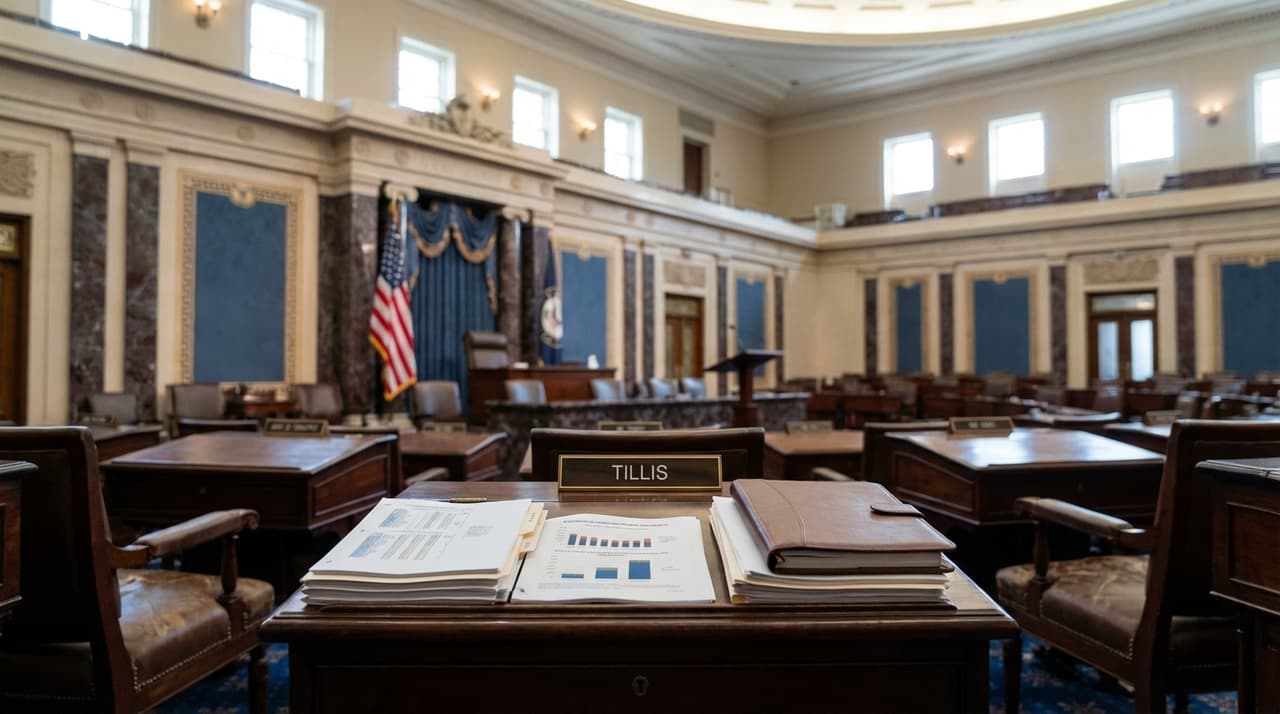
- Senator Thom Tillis will not seek reelection in 2026 following his vote against President Trump's spending bill.
- The legislation's Medicaid cuts could increase the uninsured population by 11.8 million by 2034, raising concerns for North Carolina residents.
- Trump has threatened to back primary challengers against Tillis, highlighting GOP fractures on spending and immigration.
North Carolina Senator Thom Tillis announced on Sunday that he will not seek reelection in 2026, a decision that comes just hours after he voted against President Trump's "One Big Beautiful" spending bill. The legislation passed the Senate 51-49 overnight Saturday amid significant backlash from Trump, who praised supportive senators like Rick Scott, Ron Johnson, Mike Lee, and Cynthia Lummis on social media while targeting Tillis with threats to back primary challengers.
Tillis opposed the bill due to its Medicaid cuts, which a Congressional Budget Office analysis projects would increase the uninsured population by 11.8 million by 2034, particularly risking coverage for North Carolina residents. In his statement, Tillis criticized partisan gridlock and hypocrisy in valuing bipartisanship only from opponents, emphasizing that elected officials should prioritize constituents over politics. He also expressed frustration with Trump advisors like Stephen Miller and DHS Secretary Kristi Noem over immigration enforcement backlash, including ICE handling disapproved by 63% in a recent New York Times/Siena poll and incidents like federal agents killing two U.S. citizens in Minneapolis.
Public reactions have been swift, with Trump accusing Tillis of "grandstanding" and making a "BIG MISTAKE," while GOP internal discussions reveal blame-shifting on immigration destroying Republican advantages. Tillis referenced recent Democratic retirements after refusing to nuke the filibuster, underscoring a pattern of shunning independent thinkers in today's political climate. This fits broader 2025-2026 tensions under Trump's second term, including aggressive border policies reversing "Biden Border Crisis" approaches that fueled his 2024 win.
Looking ahead, Tillis's exit opens North Carolina's Senate seat for a competitive 2026 Republican primary, potentially influenced by Trump's involvement. Short-term, it highlights GOP fractures on spending and immigration, with Democrats threatening Noem's impeachment. In related developments, Trump's administration touts record-low illegal border crossings since 1970 and deportations of criminal migrants, though criticized by figures like Apple (AAPL)'s Tim Cook and OpenAI's Sam Altman for excess. Congressional records note 2025 Republican accomplishments under Trump and Speaker Mike Johnson, but Tillis's retirement signals ongoing turmoil within the party as key votes loom.
Efforts to reach Tillis's office for further comment were unsuccessful, but sources close to the senator say his decision was driven by a desire for family time over another term, amid what he described as a toxic political environment. Without a deal on issues like Medicaid, analysts warn that low-income North Carolinians could face severe coverage gaps, adding urgency to the ongoing debates in Washington.