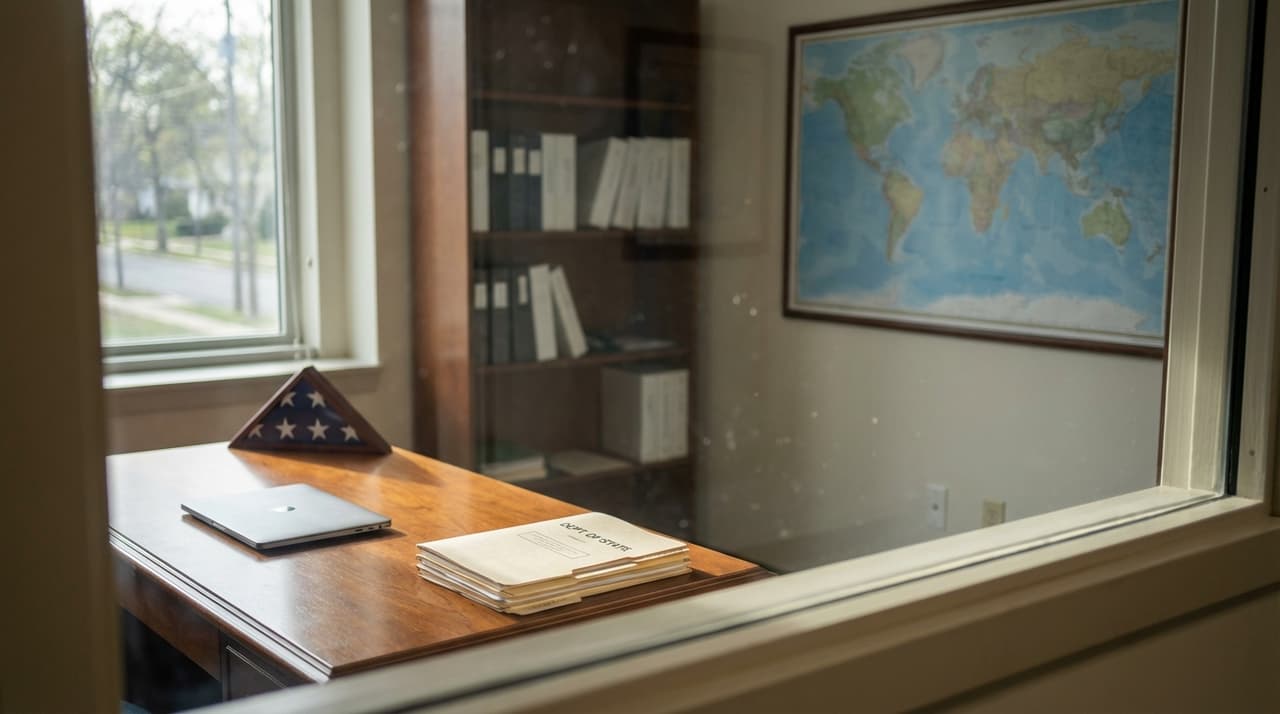
- The Trump administration has recalled approximately 48 U.S. ambassadors and senior diplomats appointed by former President Joe Biden, an unusual move aimed at reshaping America's diplomatic posture with personnel aligned with 'America First' priorities.
- The recall affects ambassadors across multiple regions, with the largest concentration in African nations, followed by Asia-Pacific, Europe, and other areas, with chiefs of mission in at least 29 countries notified their tenures will end in January.
- Critics argue the timing and scope are problematic, potentially undermining U.S. leadership during global political transitions, while the State Department characterizes it as a routine administrative process.
In a sweeping diplomatic overhaul, the Trump administration has recalled dozens of U.S. ambassadors stationed at embassies and missions worldwide, according to people familiar with the matter. This action, targeting approximately 48 ambassadors and senior diplomats appointed under the Biden administration, represents a significant shift in America's foreign policy apparatus, designed to install personnel fully supportive of President Trump's 'America First' agenda. The move, which began with notifications last week, has sparked debate over its implications for U.S. global influence amid ongoing geopolitical tensions.
Ambassadors across multiple regions have been affected, with the largest number of replacements set for African nations—thirteen ambassadorships are involved—followed by six in the Asia-Pacific region, four in Europe, and two each in the Middle East, South Asia, and the western hemisphere. Specific ambassadors being recalled include Kristina Kvien, the U.S. Ambassador to Armenia appointed in 2023, and Dean Thompson, the serving U.S. Ambassador to Nepal appointed in March 2022. In East Asia and the Pacific, ambassadors received phone calls instructing them to depart by January 15 or 16 without detailed explanation, according to sources close to the situation.
The U.S. State Department has downplayed the recalls, characterizing them as part of a routine administrative process. However, critics have voiced concerns about the timing and scale. Senator Gene, in a statement cited in reporting, noted, 'We have about 80 ambassadorial vacancies… yet President Trump is losing America's leadership to China and Russia by removing qualified career ambassadors who serve loyally regardless of who is in power.' John Dinkelman of the American Foreign Service Association similarly expressed unease, highlighting potential disruptions to diplomatic continuity.
This action coincides with significant political transitions in several countries, adding complexity to the diplomatic landscape. For instance, Nepal is experiencing dramatic political changes and preparing for parliamentary elections scheduled for March 5, 2025. The simultaneous departure of ambassadors from major powers like the United States and China underscores the broader reshuffling occurring during this period. Thompson, the recalled ambassador to Nepal, had over 28 years of experience in U.S. diplomacy before his assignment in Kathmandu, raising questions about the loss of seasoned expertise.
Efforts to restructure America's diplomatic corps have hit a snag as some ambassadors scramble to wrap up ongoing negotiations and hand over responsibilities. Without a smooth transition, there are fears that key bilateral relationships could face temporary strains. The administration has not provided a comprehensive list of all affected ambassadors, but sources indicate that the recalls are part of a broader strategy to align foreign postings with Trump's policy priorities, which emphasize economic nationalism and reduced international commitments.
In response to inquiries, a State Department spokesperson reiterated that such changes are standard during presidential transitions, but declined to comment on specific individuals or timelines. Attempts to reach several recalled ambassadors for comment were unsuccessful, with some citing confidentiality protocols. The move has drawn mixed reactions from foreign policy analysts, with some viewing it as a necessary reset and others warning of instability in critical regions like Africa and Asia, where U.S. influence is increasingly contested by rivals like China.
As the January deadlines approach, the focus shifts to how quickly replacements can be confirmed and deployed, a process that could be delayed by Senate confirmations. The recalls highlight the administration's push for a more centralized and ideologically cohesive diplomatic team, but also risk creating vacuums in key posts during a time of global uncertainty. Updates on specific ambassador replacements are expected in the coming weeks, with further clarifications likely as the situation evolves.