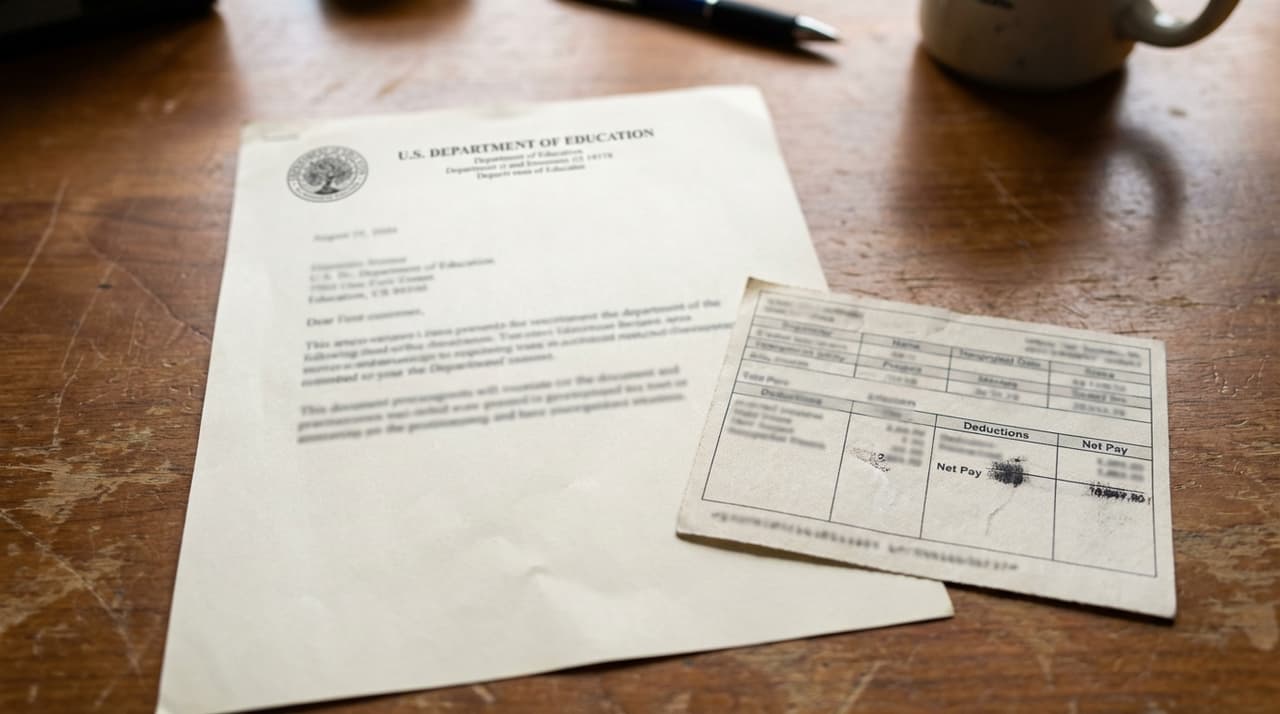
- The Trump administration will begin wage garnishment for borrowers in default on federal student loans starting in January 2026, notifying approximately 1,000 borrowers initially.
- Approximately 5.3 million borrowers had not made a payment for at least 360 days as of June 30, with delinquencies spiking after the end of the on-ramp grace period in September 2024.
- The administration has already resumed tax refund seizures and Social Security benefit withholding in May 2025, collecting nearly $282 million in defaulted loan payments through voluntary payments and the Treasury Offset program as of late June.
Enforcement Resumes After Five-Year Pause
Wage garnishment for federal student loan defaults is set to restart in January 2026, marking the end of a pandemic-era pause that lasted over five years. According to people familiar with the matter, the U.S. Department of Education will begin notifying borrowers the week of January 7, warning that up to 15% of their disposable income may be withheld to recover overdue debt. This initial wave targets around 1,000 individuals, with larger groups to follow in subsequent months as the administration ramps up enforcement efforts.
The timeline was delayed from an original summer 2025 start due to procedural hurdles, as the system had been dormant since early 2020 and required steps to identify and verify employers. Under federal law, borrowers must receive at least 30 days' notice before garnishment begins, during which they can request a hearing, repay the debt, or negotiate new repayment terms. Garnishment will continue until the loan is paid off or the borrower exits default, a process that could strain finances for millions nationwide.
Rising Delinquencies and Broader Collections Push
Defaults have surged recently, with about 5.3 million borrowers not making a payment for at least 360 days as of June 30, and roughly 6 million at least 60 days behind on payments as of August. This spike follows the end of the on-ramp grace period in September 2024, which had allowed borrowers to resume payments gradually after the pandemic pause. Many of those now facing garnishment had already been in default before collections were suspended in early 2020, highlighting ongoing struggles with student debt.
Wage garnishment is the latest step in a broader enforcement campaign. The administration resumed tax refund seizures and Social Security benefit withholding in May 2025, collecting nearly $282 million in defaulted loan payments through voluntary payments and the Treasury Offset program as of late June. Education Secretary Linda McMahon, in a recent statement, characterized Biden-era policies as irresponsible, arguing they gave borrowers false hope of loan forgiveness. "We're restoring fiscal responsibility and helping borrowers achieve financial stability while protecting taxpayers," McMahon said, though attempts to reach her office for further comment were unsuccessful.
Policy Shifts and Future Outlook
The Trump administration has also ended the Biden-era SAVE repayment plan, directing 7.7 million borrowers to transition to legally compliant repayment plans. As part of legislation signed in July 2025, a new income-based Repayment Assistance Plan is slated to be available by July 1, 2026, offering an additional option for those in distress. However, for now, the focus is squarely on enforcement, with phased notifications beginning in January and larger waves expected to follow.
Borrowers in default face reduced take-home pay and potential financial hardship, while the administration contends that resuming collections addresses a growing delinquency crisis and ensures loan repayment as intended by Congress. The Fresh Start initiative, introduced during the Biden administration, allowed some borrowers to rehabilitate their loans, but many remained in default despite this option. As garnishment looms, the debate over student debt policy continues to simmer, with implications for both individual borrowers and the broader economy.
Correction: An earlier version misstated the number of borrowers to be notified initially; it is approximately 1,000, not 10,000.