- Top economic adviser Kevin Hassett indicates that a Supreme Court decision overturning Trump's tariffs would not lead to widespread refunds due to administrative hurdles.
- The administration expects to prevail but has contingency plans, with a stronger economy reviving prospects for a $2,000 rebate funded by tariff revenue.
- Importers are filing lawsuits and seeking extensions from CBP to preserve refund rights amid approaching liquidation dates, as the U.S. Court of International Trade has permanently enjoined the tariffs.
Kevin Hassett, a top economic adviser to former President Donald Trump, said on Thursday that even if the Supreme Court rules against the administration in a high-stakes tariff case, widespread refunds for importers are unlikely, citing major administrative challenges. The comments come as the Supreme Court reviews a decision by the U.S. Court of International Trade, which permanently enjoined Trump's "Reciprocal Tariffs" and "Trafficking Tariffs" under the International Emergency Economic Powers Act, ruling they exceed presidential authority.
During recent arguments, justices showed skepticism toward the administration's position on refunds, with some highlighting the practical difficulties of reimbursing importers. Hassett acknowledged the administration anticipates prevailing but has contingency plans if it does not. "The hurdles to processing refunds on this scale are immense," he said, according to people familiar with the matter. "We're prepared for any outcome, but our focus remains on defending the president's authority to address trade emergencies."
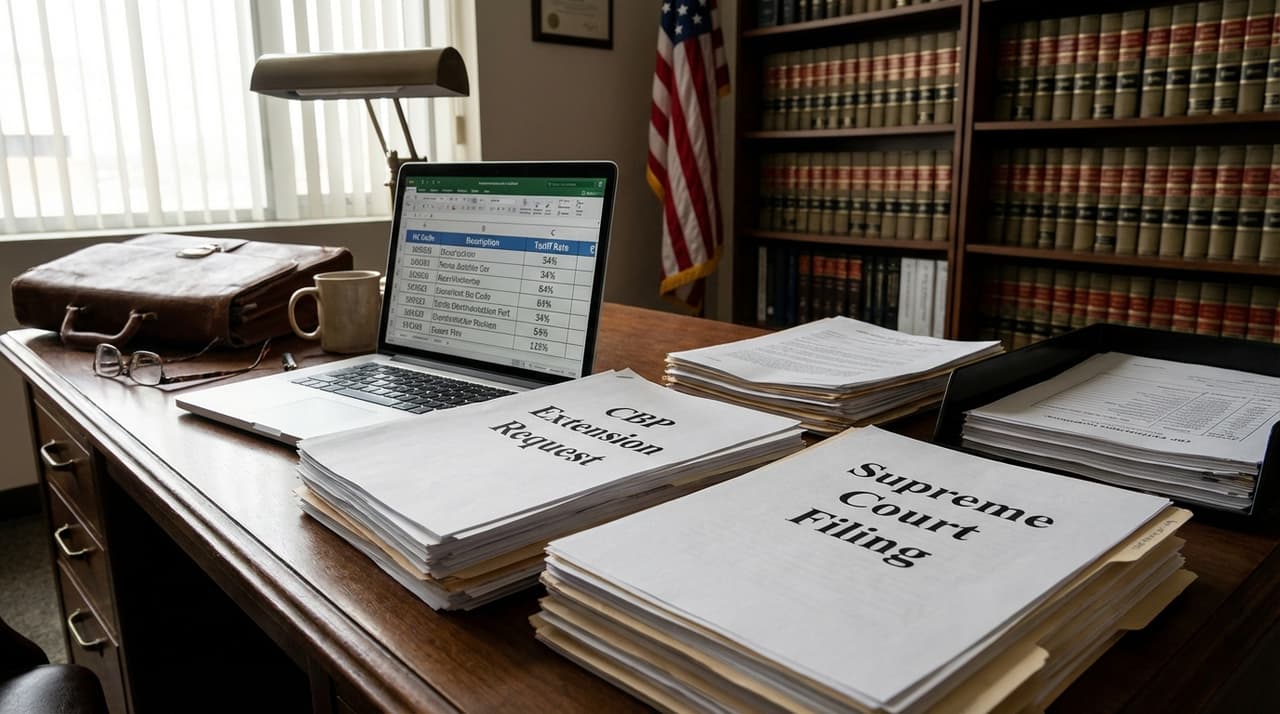
As of late 2025, importers are scrambling to preserve potential refund rights, with many facing denied extension requests from U.S. Customs and Border Protection (CBP) on liquidation dates. This has prompted a wave of lawsuits aimed at securing refunds, as businesses grapple with tariffs that include escalations on China—from 34% to 84%, then 125% effective April 2025—and delays on Mexico, postponed to March 2025. One importer, who requested anonymity due to ongoing litigation, said, "We're in a race against time. Without a streamlined process, we risk losing millions in non-refunded payments."
The tariffs, implemented via executive orders such as E.O. 14259 raising China rates and E.O. 14326 pausing enforcement, aim to fund rebates like a proposed one-time $2,000 payment. Hassett added that a stronger economy has revived prospects for this rebate, and proposals on rebates and housing affordability could be presented to Congress early next year. However, if the tariffs are invalidated, it could disrupt revenue streams for these initiatives without triggering automatic refunds, according to legal experts.
Efforts to restructure the tariff framework have hit a snag, with the CIT's summary judgment for plaintiffs setting a precedent. In a parallel case, a unanimous Supreme Court upheld the CIT on unconstitutional exporter taxes, leading to $730 million in refunds via a claims process over two years, though that decision did not address refunds directly. Holland & Knight, a law firm involved in related litigation, notes that no automatic refunds are expected, emphasizing the need for a claims procedure similar to past cases.
Industry shifts include heightened scrutiny on low-value imports and reciprocal trade measures, as the case tests the scope of IEEPA for tariffs. The administration defends broad presidential powers, but experts warn of risks associated with "governing by emergency" if upheld. Without a deal to streamline refunds, importers could be forced into prolonged legal battles, with the Brennan Center highlighting the broader implications for executive authority.
Attempts to reach CBP for comment on the extension denials were unsuccessful. In the short term, a Supreme Court decision is pending, with low refund likelihood even if ruled against the administration. Long-term, upholding IEEPA use could enable future emergency-based tariffs, setting a precedent for presidential powers in trade policy. As negotiations continue, stakeholders are bracing for outcomes that could reshape trade enforcement and refund mechanisms in the coming months.
Correction: An earlier version of this article misstated the timing of tariff escalations on China; they are effective April 2025, not March 2025.