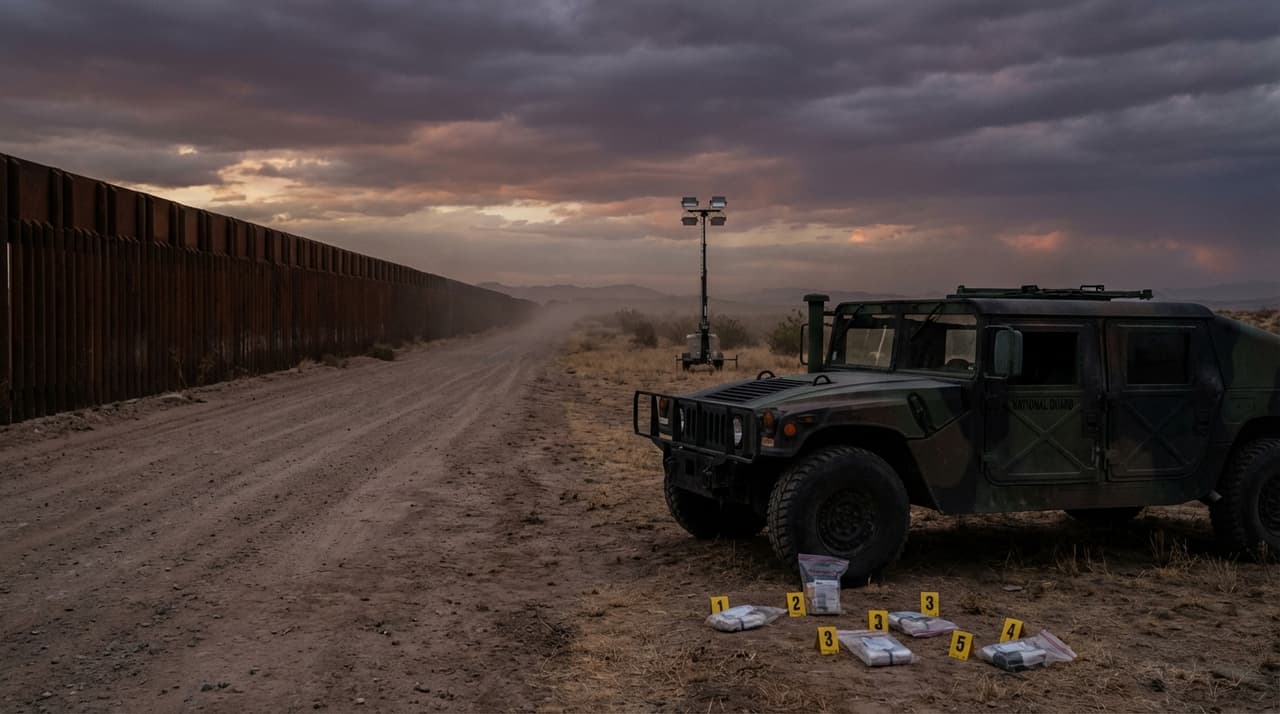
- President Trump signals intensified U.S. efforts to combat land-based drug trafficking, primarily fentanyl from Mexico, through tariffs, diplomatic pressure, and expanded enforcement under his second term starting January 2025.
- Mexican President Claudia Sheinbaum reports a 50% drop in fentanyl trafficking at the U.S.-Mexico border, backed by record seizures and transfers of high-level criminal suspects to U.S. custody since February 2025.
- U.S. Immigration and Customs Enforcement (ICE) has deported about 540,000 people since January 2025, with workforce expansion via $170 billion in funding and transfers from other agencies, amid ongoing USMCA trade negotiations.
President Trump's recent statement heralding attacks on drugs entering by land marks a sharp escalation in enforcement tactics, with immediate implications for cross-border trade and economic security. According to people familiar with the matter, this push aligns with ongoing actions like tariff impositions and bilateral concessions, as detailed in recent analyses. Efforts to restructure drug interdiction have gained momentum, with Mexico deploying National Guard troops, allowing U.S. surveillance drones, and enabling coordinated border patrols, reducing unauthorized U.S.-Mexico border crossings to 1960s lows.
On the economic front, Trump has imposed 25% tariffs on non-USMCA-compliant goods via the International Emergency Economic Powers Act, citing drugs and migrants as a national emergency, alongside 50% Section 232 tariffs on global steel and aluminum. A paused 10% global reciprocal tariff looms, with Mexico and Canada facing 30-35% threats, partially enacted for Canada. These measures, according to sources, aim to protect U.S. economic security but risk higher costs for North American trade, especially as the USMCA review in July 2026 ties market access to drug and migration controls and trade balances.
In a move that underscores the administration's focus, ICE has expanded its workforce with $50,000 signing bonuses and transfers from the FBI, DEA, ATF, and Department of Defense, targeting 1 million annual deportations. Without a deal, the company—or in this case, the trade framework—would be forced into renegotiation, with potential for painful extensions. Tariffs and rhetoric pressure Mexico and Canada for fentanyl and migration action ahead of the USMCA review; Mexico has pursued quiet diplomacy with concessions, while Canada boosted border surveillance and NATO commitments.
Political context adds layers to this financial narrative. Trump federalized the National Guard for enforcement, drawing critiques under the Posse Comitatus Act, while ICE training shifted to tactical drills with reduced language requirements. Enhanced U.S. regional engagement under an America First approach echoes the Monroe Doctrine, focusing on migration and drug enforcement alongside trade. A presidential determination prioritizes punishing drug smugglers, as seen in recent legislative actions like the Trafficking Survivors Relief Act signed on January 23, 2026, to aid human trafficking victims.
Societal impacts ripple through markets and communities. Stakeholders, including U.S. citizens, benefit from reduced fentanyl and migration but face enforcement risks, such as the January 7, 2026, ICE shooting of U.S. citizen Renee Nicole Good in Minneapolis, ruled a homicide. Public reactions include calls for ICE accountability, with body cameras and de-escalation training proposed in DHS bills, and judicial restrictions on protester retaliation. Democratic opposition risks a shutdown, adding uncertainty to fiscal policies.
Looking ahead, the short-term outlook hinges on the USMCA review in July 2026, which may yield a painful extension with concessions, tariff reductions, and security alignments like joint inspections. Long-term, North America could gain competitiveness tools but face unequal partnerships, with experts predicting stabilized migration and trafficking via U.S. partnerships, though accountability gaps persist. Related developments include Joint Task Force Alpha strengthening against human and drug trafficking, a DOJ plan to dismantle drug organizations, and a Canada-U.S. strike force on fentanyl and money laundering.
Correction: An earlier version misstated the timeline for tariff impositions; they are ongoing under current enforcement actions.