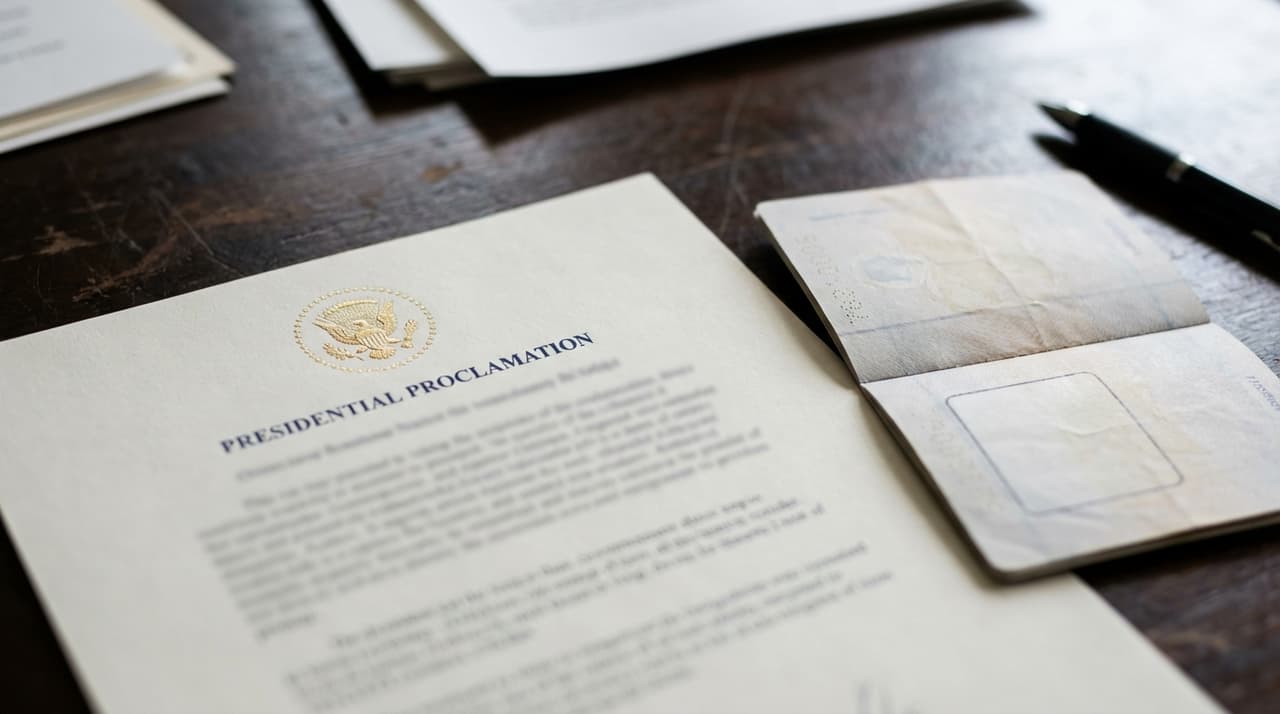
- The Trump administration has expanded visa restrictions to nationals from 39 countries, effective January 1, 2026.
- The proclamation increases full visa suspensions from 12 to 19 countries and adds partial restrictions for 19 others.
- Legal challenges are anticipated, mirroring past court battles over similar immigration policies.
Sweeping Visa Restrictions Take Effect
President Trump issued a presidential proclamation on December 16, 2025, significantly expanding his June 2025 travel ban to impose full or partial visa restrictions on nationals from 39 countries. The new measures, set to take effect at 12:01 a.m. ET on January 1, 2026, cite national security and public safety concerns related to what the administration describes as inadequate vetting practices in the designated nations.
According to people familiar with the matter, the proclamation builds on the prior ban by increasing full suspensions—which bar both immigrant and nonimmigrant visas—from 12 to 19 countries. Partial suspensions, affecting immigrant visas plus limited nonimmigrant categories like B, F, M, and J visas, now apply to 19 countries as well, up from 7 previously. The restrictions also include limitations on Palestinian Authority travel documents, though they do not revoke existing valid visas or apply to individuals physically present in the U.S. on the effective date.
Efforts to restructure immigration enforcement have hit a snag with this latest move, which fulfills Trump's campaign promises on stricter border controls. The administration is targeting countries with what it calls deficient identity management and information-sharing protocols, mandating periodic reviews every 180 days by the Secretaries of State, Homeland Security, the Attorney General, and the Director of National Intelligence to assess or adjust restrictions. Without a deal for improved compliance, affected nations could face prolonged visa suspensions.
Immediate Impacts and Legal Precedents
The expansion affects foreign nationals outside the U.S. without valid visas on January 1, 2026, potentially stranding travelers, students, workers, and families. Exemptions cover green card holders, dual nationals traveling on non-designated passports, diplomats, athletes for major events like the Olympics, certain Iranian minorities, and rare national interest cases. Employers are already facing travel disruptions for international staff, with advisories urging returns before the deadline, according to sources briefed on the matter.
This action mirrors Trump's 2017-2021 "Muslim ban" iterations, which were upheld by the Supreme Court after extensive legal battles. The current proclamation broadens the focus beyond religious criteria to vetting deficiencies, but experts anticipate similar court challenges. "We expect legal pushback akin to past bans, with narrow exceptions for national interest," said an immigration attorney who requested anonymity due to ongoing consultations.
Short-term, the travel halts are prompting urgent returns and visa processing rushes at consulates, which may hesitate on new issuances despite no formal prohibition. Long-term, biennial reviews could add or remove countries based on compliance improvements. The proclamation does not specify direct international relations implications beyond required U.S. engagement with affected nations, but it echoes first-term policies that strained diplomatic ties.
Attempts to reach the White House for additional comment were unsuccessful as of press time. Public reactions have been limited in initial reports, focusing more on legal analyses than broad societal debates, though advocacy groups are preparing responses. The move comes amid separate Trump actions involving Venezuela-related military strikes and accusations against Nicolás Maduro, potentially influencing future regional designations.
Correction: An earlier version misstated the number of countries with partial suspensions; it is 19, not 20.