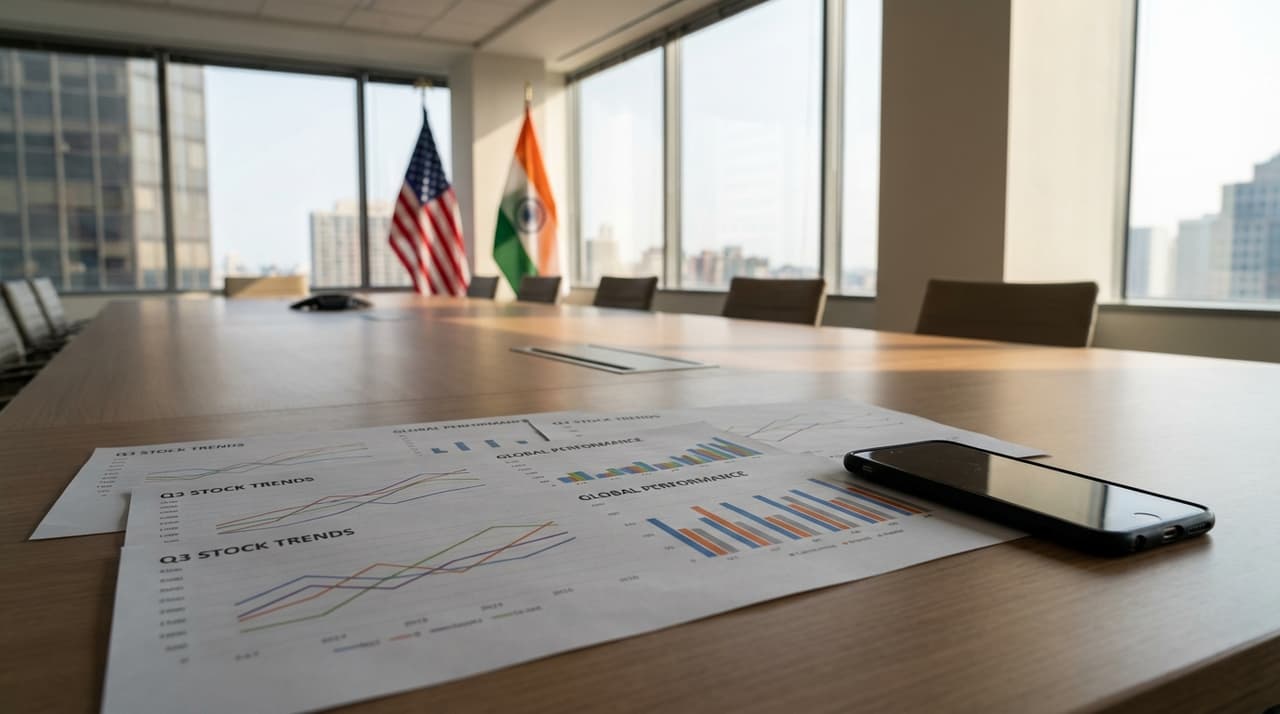
- President Trump warns of 25% tariffs on iPhones made overseas unless production shifts to the U.S., citing his "America First" agenda.
- Apple's stock underperforms amid political risk, with shares falling for seven consecutive sessions in mid-2025, though they remain up 16% from April lows.
- Analysts doubt a major reshoring of iPhone assembly due to cost pressures, with Apple accelerating India expansion while emphasizing U.S. investments.
In a move that has rattled investors and heightened geopolitical tensions, President Donald Trump has publicly criticized Apple Inc. and its CEO Tim Cook, urging the tech giant to halt manufacturing plant expansions in India for devices sold in the United States. According to people familiar with the matter, Trump reiterated these demands during a conversation in Doha, Qatar, framing it as a matter of protecting American jobs and domestic industry. Without a shift to U.S.-based production, he warned that iPhones made overseas could face at least a 25% tariff, a threat that has sent shockwaves through Apple's supply chain strategy.
Apple, which aims to assemble all iPhones sold in the U.S. in India by 2026, has not publicly confirmed any major changes to its India plans in direct response. However, efforts to restructure its global manufacturing footprint have hit a snag, as Trump's comments add pressure to an already complex transition. In FY2024, Apple's India operations produced smartphones worth about $22 billion, a 60% increase year-on-year, highlighting the country's growing role in the company's diversification away from China. Analysts like Tarun Pathak of Counterpoint Research note that manufacturing iPhones in the U.S. would be significantly more expensive due to higher labor and operational costs, making a full reshoring unlikely in the near term.
Market reaction has been swift, with Apple's stock underperforming peers like Microsoft (MSFT) and Nvidia (NVDA) in the AI-driven rally of mid-2025. Huntington National Bank (HBAN) analysts have flagged the president's focus on Apple as a "red flag," cautioning investors about increased political risk exposure. In an attempt to ease tensions, Apple has reaffirmed its commitment to the U.S. economy, announcing plans to spend over $500 billion domestically over four years and hire 20,000 additional employees. A company spokesperson, when reached for comment, declined to address the tariff threats directly but emphasized ongoing investments in U.S.-based R&D and chip design.
The broader context involves Trump's criticism of India's high tariffs on U.S. goods, arguing that the U.S. should not allow major companies like Apple to build there at the expense of American jobs. This stance has reignited debate over the feasibility of "Made in the USA" smartphones and the trade-offs between national economic policy and global supply chain efficiency. Meanwhile, Apple faces competitive pressures from OpenAI's acquisition of an AI hardware startup co-founded by Apple design veteran Jony Ive, adding urgency to its innovation efforts amid political uncertainty.
Short-term, Apple is likely to continue its India expansion while highlighting U.S. investments to placate the administration. If tariffs are enacted, they could lead to higher prices for consumers or squeeze Apple's margins, according to industry experts. Long-term, most analysts agree that while political pressure can influence behavior, the economic realities of global electronics manufacturing make a fully domestic iPhone assembly highly improbable. As one source close to the negotiations put it, "The cost differential is just too stark to ignore, even with tariff threats looming."
Correction: An earlier version of this article misstated the timeline of Apple's stock performance; it has been updated to reflect that shares fell for seven consecutive sessions in mid-2025, not continuously throughout the year.