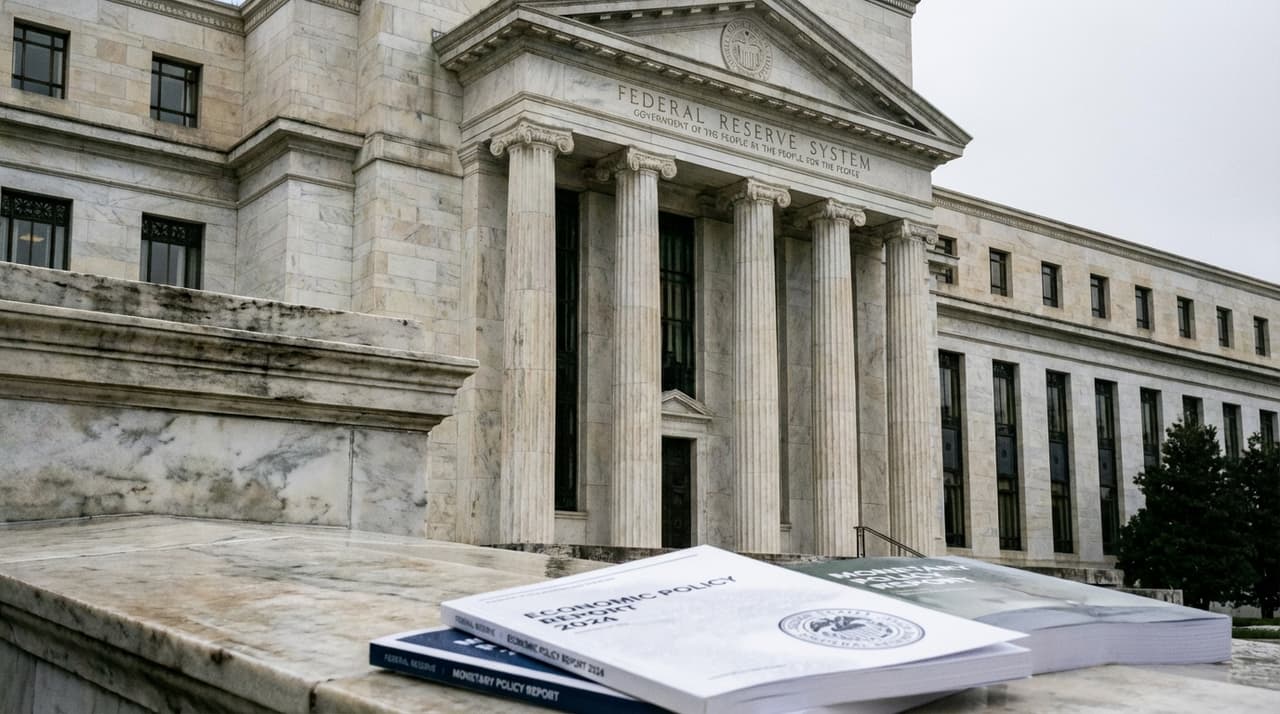
- Trump expected to name successor to Federal Reserve Chair Jerome Powell next week, signaling desire for leadership more aligned with his economic agenda.
- The administration has escalated pressure through a criminal investigation into Powell and public attacks, challenging Fed independence.
- Markets struggle to price future policy amid unpredictability, with trade actions now dominating investor attention more than traditional Fed policy.
Political Pressure Intensifies as Announcement Looms
President Trump is expected to announce a successor to Federal Reserve Chair Jerome Powell next week, according to people familiar with the matter, amid an escalating confrontation between the administration and the central bank over monetary policy and governance. The White House is actively considering Christopher Waller, a Federal Reserve Board member who recently dissented in favor of a rate cut, as a potential successor to Powell, signaling Trump's desire for Fed leadership more aligned with his economic agenda.
Efforts to reshape the Federal Reserve have hit a new intensity. On January 29, 2026, Trump publicly attacked Powell as a "moron" after the Fed held interest rates steady rather than cutting them further. Trump argued that with inflation no longer a threat and significant tariff revenues flowing into the government, interest rates should be the lowest among all countries. The Fed's decision to pause rate cuts came as officials assess the effects of three previous cuts made in 2025.
Criminal Investigation and Institutional Implications
The administration's pressure campaign has escalated dramatically. The Justice Department launched a criminal investigation into Powell over his congressional testimony regarding the Federal Reserve's renovation of its headquarters buildings. Powell characterized this action as "unprecedented" and framed it as political intimidation designed to pressure the Fed into abandoning its data-driven approach to monetary policy.
Powell's statement emphasized that the core issue is whether the Federal Reserve can maintain independence in setting interest rates based on evidence and economic conditions, or whether monetary policy will be "directed by political pressure or intimidation." This represents an unprecedented challenge to Fed autonomy during Powell's eight-year tenure as chair. The Supreme Court is also weighing the president's authority to remove sitting Federal Reserve Board member Lisa Cook, adding another layer of institutional uncertainty.
Market Impact and Economic Consequences
Markets are increasingly struggling to price in future policy actions given the administration's unpredictability, with Trump's actions on trade and tariffs now dominating investor attention more than traditional Fed policy. The administration's economic actions are creating mixed effects on financing costs. While moves to purchase mortgage-backed securities may have lowered mortgage rates by approximately 0.1 percentage points, threatened tariffs on Europe have pushed rates higher by a larger margin, potentially offsetting administration efforts.
Without a deal to resolve these tensions, the Federal Reserve could face continued political interference that undermines its credibility. Attempts to reach the White House for comment on the timing of the announcement were unsuccessful, but sources indicate preparations are underway for a formal announcement next week. The ongoing institutional conflict raises questions about central bank independence and the precedent being set for executive-legislative-Fed relations, with implications extending beyond monetary policy to broader governance norms.