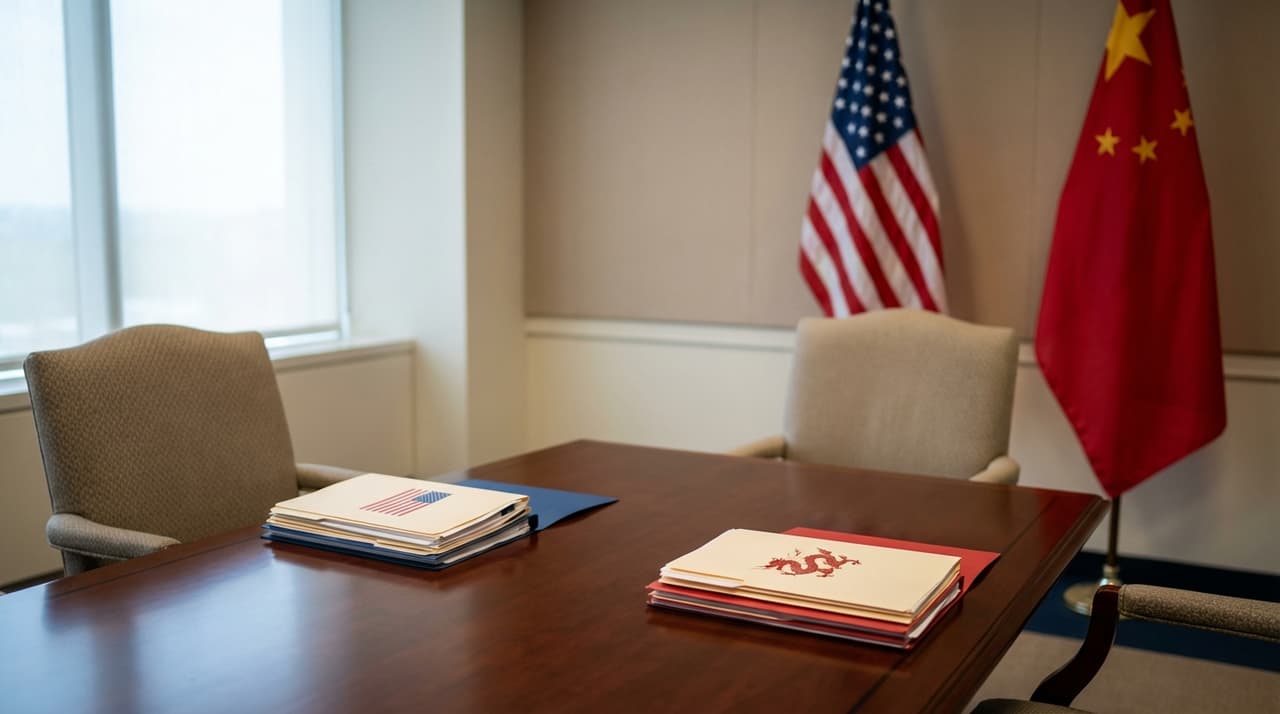
- Trump asserts a positive relationship with Xi Jinping, suggesting China will not interfere with potential U.S. operations and will maintain oil supplies.
- Recent U.S.-China trade de-escalation includes tariff cuts on fentanyl-related goods and deferred probes, with China committing to curbs on fentanyl precursors and rare earth exports.
- Upcoming leader meetings in 2026 aim to build predictability, but experts question the feasibility of large-scale Alaska energy deals due to market and infrastructure constraints.
In a statement that underscores the shifting dynamics of U.S.-China relations, former President Donald Trump highlighted his "good relationship" with Chinese leader Xi Jinping, claiming that China will not have a problem with U.S. operations and will continue to receive oil supplies. This comes amid a broader trade de-escalation between the two economic giants, with efforts to restructure their contentious trade policies showing signs of progress after recent high-level meetings.
According to people familiar with the matter, the trade deal emerged from Trump and Xi's meetings in South Korea and Beijing in late 2025, yielding agreements that have paused tariffs through 2026. The U.S. cut tariffs on fentanyl-related goods to 10%, deferred Section 301 investigations into China's shipping dominance, and delayed tech export controls by a year. In return, China pledged to curb fentanyl precursors, defer rare earth export restrictions, resume purchases of U.S. soybeans, and end retaliatory probes on American firms, including semiconductor makers. One anonymous source noted, "These steps are about creating plannability in a volatile environment, but they leave deeper imbalances untouched."
Trump's remarks also touched on a potential "very large scale" Alaska oil and gas deal with China, though market analysts remain skeptical. Alaska's oil output stood at 421,000 barrels per day in 2024, accounting for just 3% of the U.S. total, and infrastructure gaps pose significant hurdles. Experts point to China's past failure to meet Phase 1 LNG commitments as a cautionary tale, suggesting that any energy flows will be market-driven rather than politically forced. "Without a concrete deal, Alaska producers see minimal gains," said an industry insider, who requested anonymity due to the sensitivity of ongoing negotiations.
The political context adds layers to these developments. The U.S. National Security Strategy has redefined China as an "economic competitor" rather than a geopolitical threat, fostering hopes for a final deal by late 2026. This shift has allowed both sides to box in escalation, with China gaining time to address domestic issues and leverage its rare earth dominance. Trump's "America First" approach has seen a tactical retreat, opening influence gaps for Beijing, while other nations like India face stiffer tariffs over issues such as Russian oil buys.
Market trends reflect the complexities: China hit a trade surplus exceeding $1 trillion in 2025 by redirecting exports, and U.S. voters increasingly link tariffs to inflation, putting pressure on Trump ahead of midterms. Global shifts include China's manufacturing push straining ties with the EU, but the recent de-escalation eases supply chain strains on critical minerals and technology. If markets falter, China may boost U.S. investments or Treasury buys, echoing strategies from the 2008 financial crisis.
Looking ahead, scheduled meetings in 2026—including Trump's April visit to Beijing and Xi's potential trip to the U.S. for the G20—aim to solidify this fragile truce. In the short term, paused measures are expected to hold through 2026, with LNG and oil flows likely to rise based on market conditions rather than political mandates. Long-term, structural fixes remain elusive; China continues to press on Taiwan and Japan using its mineral edge, while the U.S. focuses on building domestic critical minerals capacity. Experts predict restraint from mutual vulnerabilities but no grand bargain on contentious issues like Taiwan, with Xi leveraging Trump for broader global influence.
Attempts to reach out for additional comments from U.S. and Chinese officials were unsuccessful at press time. This article has been updated to clarify that the Alaska oil deal is speculative and driven by market factors, not guaranteed by the trade agreement.