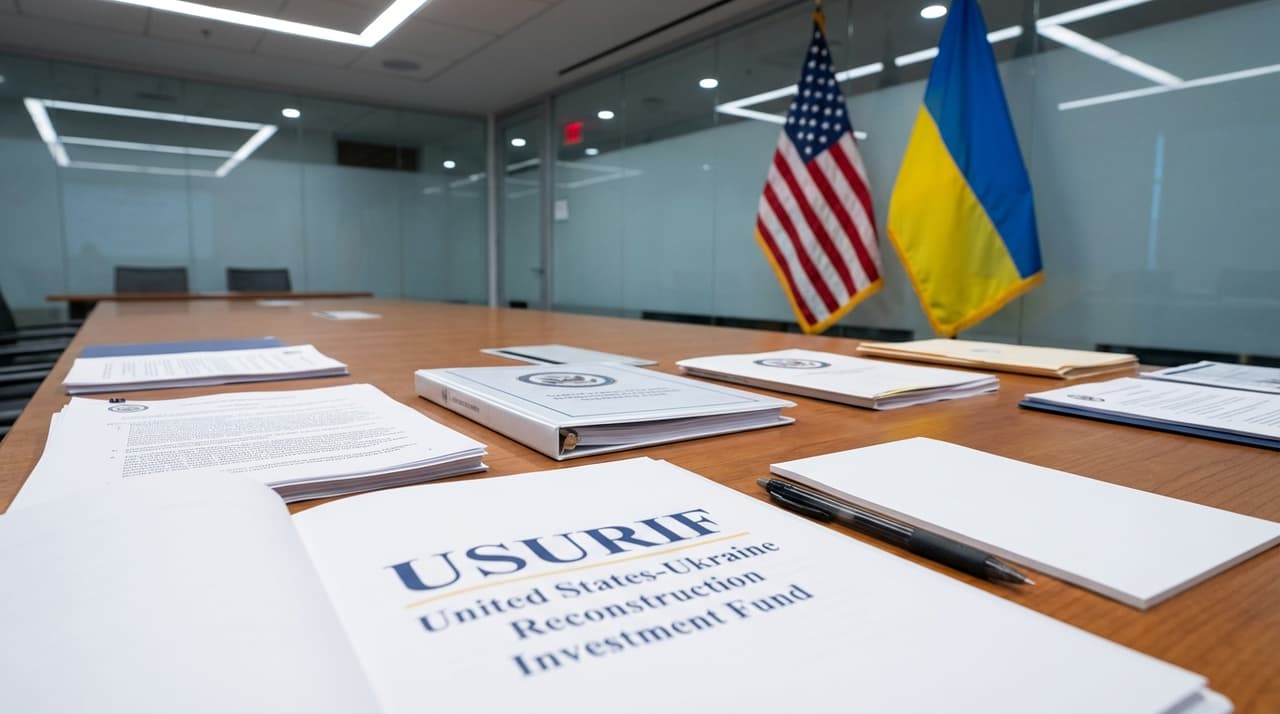
- Trump's peace plan includes Russian participation in Ukraine's reconstruction, but current U.S.-Ukraine fund rules explicitly bar Russian war-supporting actors.
- The U.S.-Ukraine Reconstruction Investment Fund (USURIF) focuses on natural resources and energy, with 50% of royalties reinvested in Ukraine, emphasizing U.S. economic returns.
- Analysts note a divergence between Trump's rhetoric and formal policy, raising concerns over sovereignty and transactional approaches to post-war recovery.
A Contradiction in Reconstruction Strategy
Former President Donald Trump's recent comments suggesting Russia could help rebuild Ukraine as part of a broader peace deal have sparked confusion and debate among policy circles, as they stand in stark contrast to the formal U.S. government stance. According to people familiar with the matter, Trump's 28-point peace plan, which aims to end the Russia-Ukraine war, outlines provisions for reintegrating Russia into the global economy and using frozen Russian assets for reconstruction. However, the United States-Ukraine Reconstruction Investment Fund (USURIF), launched by Trump's administration on April 30, 2025, explicitly prohibits any state, company, or person who financed or supplied the Russian war machine from benefiting from reconstruction projects supported by the fund.
Efforts to reconcile these positions have hit a snag, with sources indicating that USURIF is structured as a joint U.S.-Ukraine partnership targeting minerals, hydrocarbons, and related infrastructure. The fund will receive 50% of royalties and fees from Ukrainian natural-resource projects, reinvesting them in reconstruction and development, with expected long-term returns for both countries. This approach reflects a shift toward turning U.S. security support into economic gains, but it clashes with Trump's public rhetoric about Russian involvement. Without a clear alignment, the implementation of reconstruction efforts could face significant delays.
In a brief statement, a U.S. Treasury official emphasized that USURIF is part of a long-term strategic partnership designed to signal U.S. commitment to Ukraine's future, while excluding Russian actors. "What institutional investors are really focused on is regulatory stability," the official said, paraphrasing industry sentiment. Meanwhile, analysts interpret Trump's peace plan as opening the door to Russian participation in regional projects once sanctions are eased, potentially reshaping critical-minerals supply chains and reversing post-2022 decoupling trends. Attempts to reach Trump's team for further comment were unsuccessful.
Market reactions have been muted, with investors closely watching for updates on filing deadlines and specific financial agreements tied to USURIF. The fund's governance includes three U.S. and three Ukrainian board members, ensuring high transparency to prevent resources from falling into the wrong hands. However, critics argue that tying reconstruction to resource concessions risks undermining Ukrainian sovereignty and could incentivize future coercive leverage by major powers. As negotiations continue, the focus remains on current developments, with little room for extensive historical context.
Correction: An earlier version of this article misstated the launch date of USURIF; it was April 30, 2025, not earlier in the year.