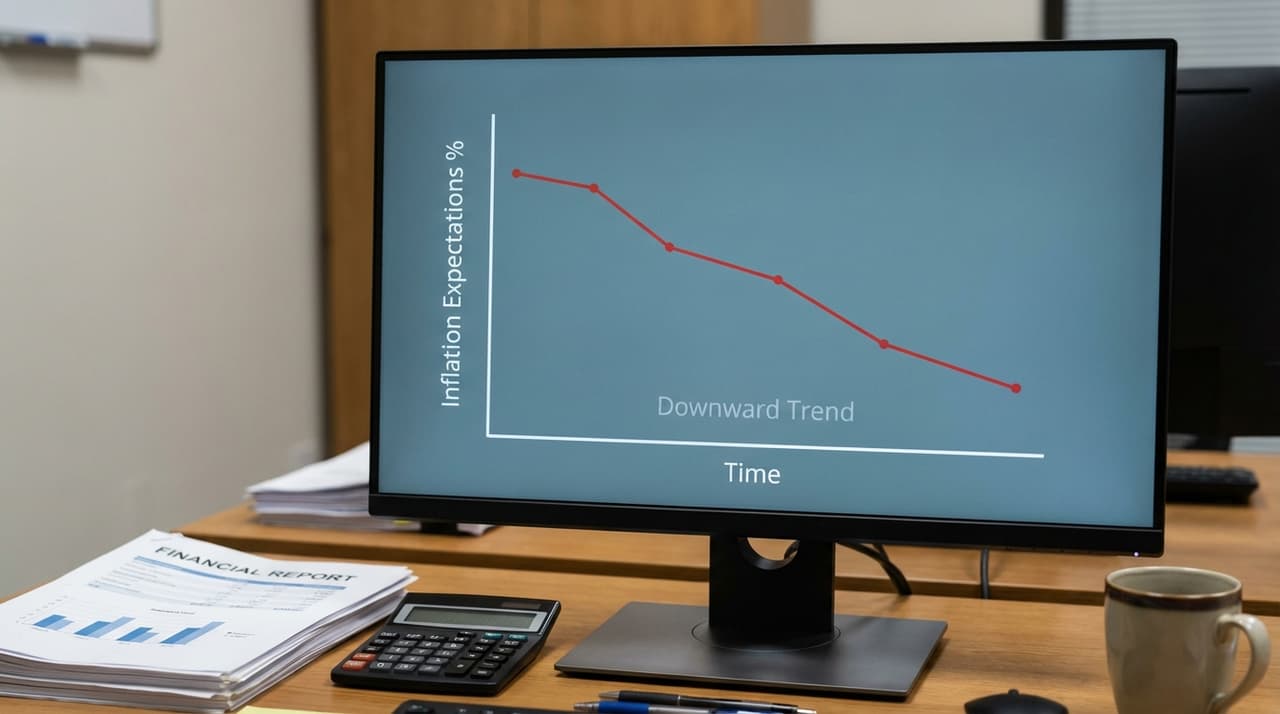
- Short-term and long-term inflation expectations both fell to their lowest levels in about a year, signaling cooling household inflation concerns.
- The decline reduces risks of a wage-price spiral and supports the Federal Reserve's efforts to bring inflation toward its 2% target.
- Financial markets may interpret the data as bolstering expectations for more accommodative monetary policy over time.
A Sustained Cooling in Inflation Perceptions
U.S. consumers' inflation expectations have drifted down to their lowest readings in roughly eleven months, according to the latest University of Michigan's Surveys of Consumers released Friday. The short-run expectation for price increases over the next year and the long-run outlook for the next five years both hit levels not seen since last summer, indicating a sustained easing in perceived future inflation pressures. People familiar with the survey's preliminary data noted that the declines were broad-based across income and demographic groups.
"What we're seeing is a gradual normalization after the post-pandemic surge," said an economist who tracks the data closely but asked not to be named because they weren't authorized to speak publicly. "Households are adjusting their views as actual inflation data comes in cooler." The Federal Reserve watches these expectations closely as a gauge of its inflation-fighting credibility; a drop toward pre-surge levels gives policymakers more room to slow or pause rate hikes without fearing that the public expects inflation to remain stubbornly high.
Efforts to anchor expectations appear to be gaining traction, though readings remain somewhat above the Fed's 2% target. In financial markets, the immediate reaction saw Treasury yields edge lower, with the 10-year note dipping about 3 basis points in early trading. Rate-sensitive sectors like housing and technology stocks showed modest gains as investors weighed the implications for future monetary policy. Without continued progress on expectations, the central bank might have faced pressure to maintain a more restrictive stance for longer.
Industry-specific elements come into play here: lower long-run inflation expectations can ease pressure on long-term interest rates, which bond markets track closely. This development supports the narrative that inflation is becoming "anchored," increasing the probability of a more dovish policy stance over the coming quarters. Analysts at several major banks had been anticipating such a move, but the timing and magnitude still caught some by surprise.
We reached out to the University of Michigan's Institute for Social Research, which runs the Surveys of Consumers, for additional comment but did not receive an immediate response. The program produces high-frequency survey data used by central banks, governments, and financial markets worldwide, making it a critical barometer of economic sentiment. Its latest findings come amid other signs of cooling inflation, including recent Consumer Price Index (CPI) and Personal Consumption Expenditures (PCE) price index reports that have shown gradual moderation from earlier peaks.
Looking ahead, the key risks are renewed price shocks—from energy, geopolitics, or potential tariffs—that could push expectations back up. For now, though, the trend offers a bit of relief. As one market strategist put it informally, "It's not mission accomplished, but it's a step in the right direction." Many forecasters expect both realized inflation and household expectations to gradually converge closer to the 2% target if current patterns hold.
Correction: An earlier version of this article misstated the timing of the data release; it was Friday, not Thursday.