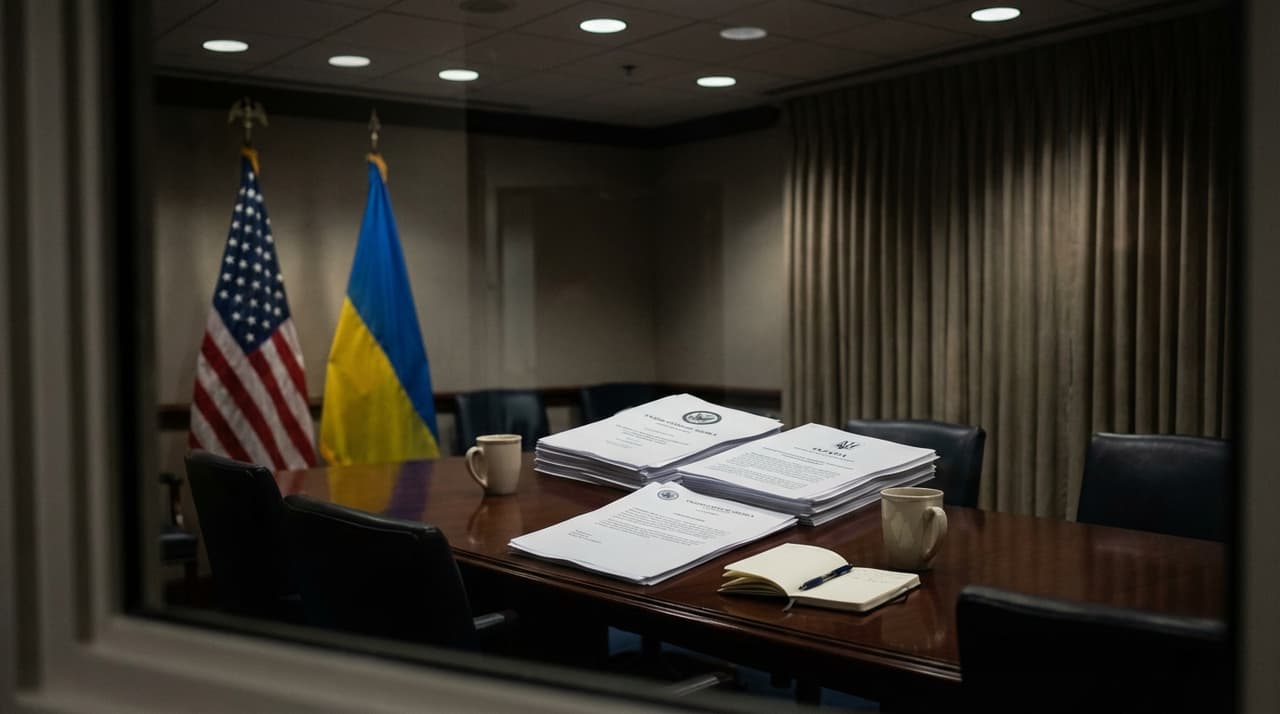
- U.S. and Ukrainian negotiators are refining a 19-point draft peace framework in closed-door sessions, with no final agreement reached yet.
- U.S. Special Envoy Steve Witkoff is set to present the plan to Russian President Vladimir Putin in Moscow, marking a critical next step in trilateral efforts.
- The talks, described as constructive, include unresolved issues like territory and security guarantees, with implications for global markets and post-conflict reconstruction.
U.S. and Ukrainian officials have held at least six meetings in about two weeks, including recent sessions at a secret location in Miami, Florida, to advance a U.S.-drafted peace framework for the war in Ukraine. According to people familiar with the matter, the discussions involved senior Ukrainian officials such as National Security and Defense Council chief Rustem Umerov and General Andriy Hnatov, with the sides reviewing outcomes of a prior U.S.–Russia meeting in Moscow and exploring practical pathways to end the conflict.
Officials from both countries describe the talks as productive, but stress that the plan remains a living document with no breakthrough yet. The framework has been narrowed from 28 to 19 points, with key sticking points including territory, security guarantees, and implementation mechanisms. Ukraine’s foreign minister has publicly signaled expectations of concrete results and progress toward at least a ceasefire in the near term from upcoming meetings with the U.S. team.
Witkoff’s travel to Moscow to present the U.S. plan to Putin is framed as the next step in trying to translate the draft into trilateral negotiations. The U.S. State Department says the primary goal is a just and lasting peace and regional stability, noting that any framework will require further evaluation before public release. Moscow has stated it will closely follow the U.S.–Ukraine talks, with Putin indicating the U.S. initiative could be a basis for a final agreement, though no formal Russian endorsement has been given.
These negotiations are part of renewed peace efforts in 2025 after the change in U.S. administration, with the Trump government more open to elements of Russian proposals. The talks explicitly include post-conflict reconstruction and bilateral economic cooperation on the agenda, suggesting the plan links security arrangements with long-term economic support for Ukraine. A credible peace framework would have major implications for global energy, grain, and defense markets, though details are not yet public; current coverage emphasizes that markets and European allies are watching closely but remain cautious due to the lack of a concrete deal.
For Ukrainian civilians, any serious movement toward a ceasefire could reduce immediate risks from strikes and frontline fighting, but there is domestic sensitivity about compromise on territory or sovereignty. Among Western allies, there is cautious support for efforts to stop the war but also concern that a deal perceived as too favorable to Moscow could set a problematic precedent. Public debate in policy circles focuses on whether a U.S.-brokered framework can balance justice with pragmatic compromises, with current reporting indicating these trade-offs remain unresolved.
In the short term, the next inflection points include Witkoff’s presentation in Moscow and further U.S.–Ukraine rounds to refine the draft based on Russia’s response. Discussions with NATO and European partners are also planned to align positions and potential implementation roles. In the long term, analysts stress that any agreement will likely require phased implementation, with verification of withdrawals and security guarantees, and there is a real risk of a frozen conflict if core disputes are only partially addressed. The plan’s viability will depend heavily on domestic political acceptance in Ukraine and Russia and on sustained Western economic and security commitments to Ukraine.
This article has been updated to clarify that the U.S. plan is a draft framework and no ceasefire has been agreed upon yet.