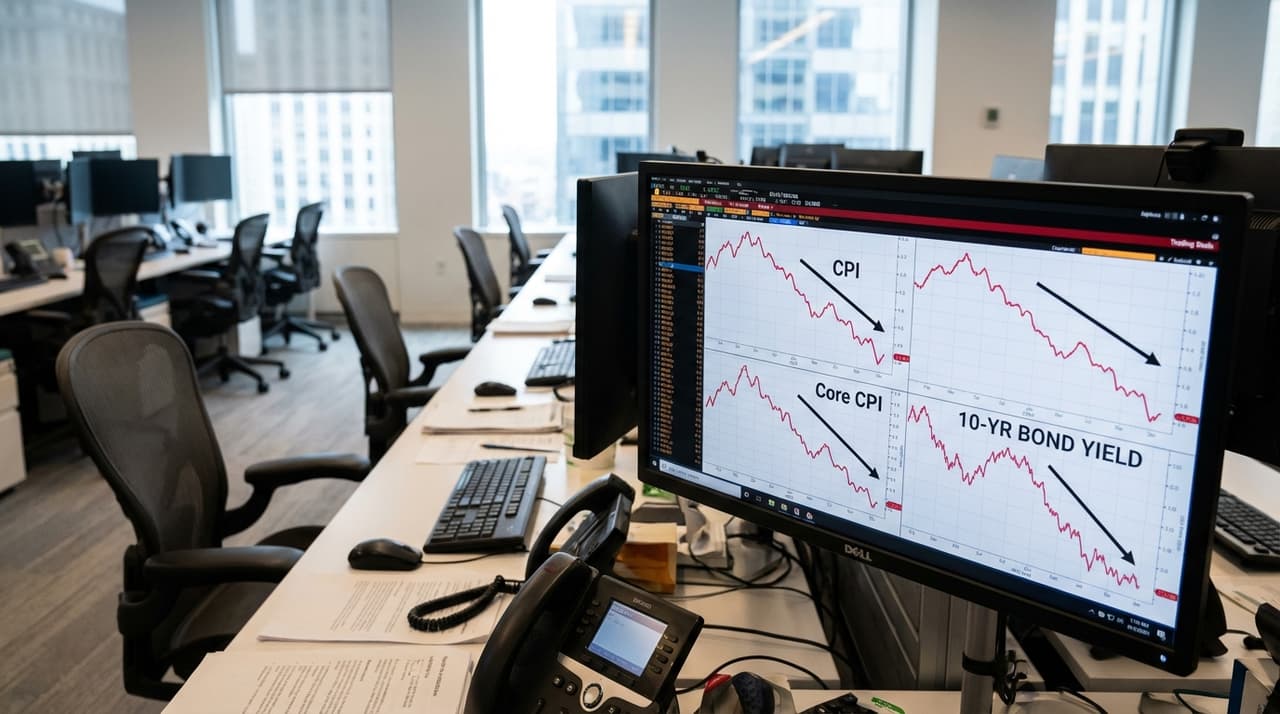
- US headline and core CPI came in lower than expected, signaling a stronger disinflation trend.
- The data reduces the likelihood of further Fed rate hikes and may accelerate market pricing for cuts.
- Despite the positive inflation print, consumer sentiment remains weak amid lingering economic concerns.
A Welcome Surprise for Markets
US inflation cooled more sharply than anticipated in November, with both headline and core consumer prices rising less than forecasters had projected. According to data released today, headline CPI increased 2.7% year-over-year, well below the 3.1% consensus estimate, while core CPI—which excludes volatile food and energy components—rose 2.6% versus expectations of 3.0%. This marks the lowest reading for core inflation since early 2021 and brings both measures closer to the Federal Reserve's 2% target than markets had anticipated.
The immediate market reaction was pronounced, with Treasury yields falling across the curve as traders recalibrated their expectations for monetary policy. The two-year yield, which is particularly sensitive to Fed policy expectations, dropped about 10 basis points in early trading. Equity futures rallied, especially for rate-sensitive sectors like technology and real estate, while the dollar weakened against major currencies. "This is exactly what the Fed wanted to see," said one fixed-income trader who requested anonymity because they weren't authorized to speak publicly. "The disinflation story is back on track after some worrying signs of reacceleration."
Policy Implications and Political Context
For policymakers at the Federal Reserve, the November data provides crucial breathing room. Just last month, several Fed officials had expressed concern that inflation might be settling above their target, with some even suggesting additional rate hikes could be necessary if progress stalled. Today's numbers undermine that hawkish narrative and strengthen the case for maintaining the current policy stance while potentially setting the stage for rate cuts in 2025. The Fed's dual mandate—price stability and maximum employment—now appears more balanced, with inflation moving toward target even as the labor market shows signs of cooling.
Politically, the timing couldn't be more significant. The administration has faced persistent criticism over the cost-of-living crisis, and today's data offers tangible evidence that inflationary pressures are easing. A senior administration official, speaking on background, noted that "this validates our approach to managing the economy through a challenging period." However, the same official cautioned that "we're not declaring victory yet" and emphasized continued monitoring of price trends.
Consumer Sentiment Diverges from Data
Despite the encouraging inflation numbers, consumer confidence tells a different story. The Conference Board's index fell sharply in November to its lowest level since April, reflecting widespread concerns about jobs, income prospects, and the economic fallout from the recent government shutdown. This divergence between improving hard data and deteriorating sentiment presents a puzzle for economists and policymakers alike. "Households are still feeling the pinch from earlier price spikes," explained a retail analyst familiar with consumer behavior. "Even if inflation is moderating, many families haven't recovered their purchasing power."
Real-time market data shows that while financial markets celebrated the inflation surprise, consumer-facing stocks in sectors like retail and restaurants showed more muted reactions. This suggests investors recognize that consumer spending power remains constrained despite the improving inflation picture. Attempts to reach major retailers for comment on how the inflation data might affect their pricing strategies were unsuccessful by publication time.
Looking Ahead
The immediate question for markets is whether November represents a one-off improvement or the beginning of a sustained move toward the Fed's target. Several structural factors could keep inflation somewhat elevated even with today's positive surprise—including ongoing tariff impacts, rising insurance costs, and persistent supply-side frictions in certain sectors. Fed officials will likely want to see several months of similar data before significantly altering their policy stance.
For now, the inflation surprise has shifted the conversation from whether the Fed might hike again to when it might begin cutting. According to people familiar with the matter, some regional Fed banks are already discussing potential easing scenarios for mid-2025, though the central bank's official communications continue to emphasize data dependence. The next major test comes with the December inflation report, scheduled for release in mid-January, which will show whether November's improvement was sustained through year-end.
Correction: An earlier version of this article misstated the timing of the next inflation report. It is scheduled for mid-January, not early January.