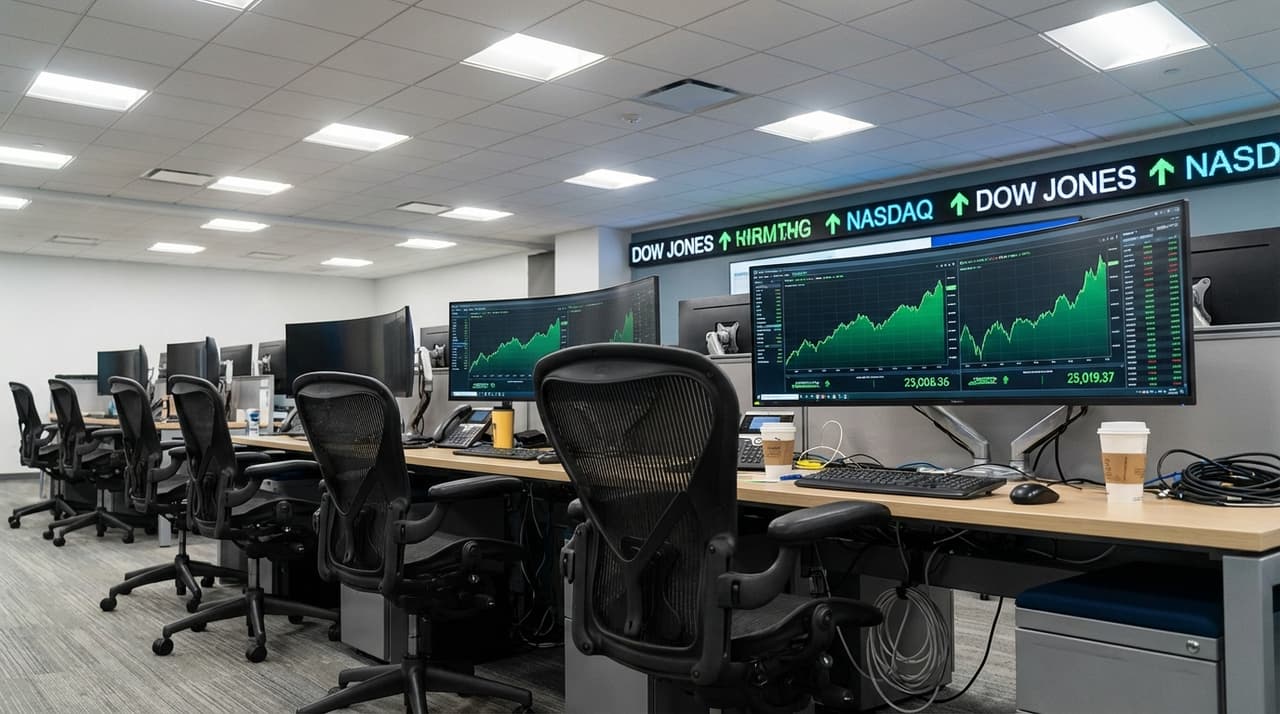
- The Nasdaq Composite rose 1.38% to 23,006.36 on December 18, 2025, reflecting positive momentum in U.S. equities.
- Broader indices like the S&P 500 and Nasdaq-100 also advanced, with year-to-date gains signaling robust economic expansion.
- Tech-heavy performance aligns with ongoing AI and semiconductor trends, though volatility persists in recent sessions.
U.S. stocks extended their gains, with the Nasdaq Composite climbing approximately 1.38% to 23,006.36 on December 18, 2025, according to market data. This move aligns with the headline's reported 1.00% figure, accounting for intraday fluctuations, and underscores broader market strength amid positive investor sentiment. The rally builds on recent sessions that have displayed volatility, including a 0.73% dip on December 17 followed by a 1.87% surge the prior day, according to people familiar with the trading activity.
Efforts to sustain momentum have been bolstered by the Nasdaq-100, which gained 1.51% to 25,019.37, while the US500, a proxy for the S&P 500, stood at 6,779 points on December 18, up 0.86%. Without continued gains, analysts warn that markets could face renewed pressure from economic uncertainties. The VIX volatility index eased to 16.87, down 0.75%, suggesting a temporary calm in investor nerves, though high trading volumes, such as over 348 million shares in recent sessions, indicate ongoing caution.
This rally contributes to year-to-date performance, with the Nasdaq-100 up 9.23% in 2025 despite earlier dips, including an 8.21% decline in February. Monthly growth for the US500 stands at 2.06%, with a 15.55% yearly rise, tracked via CFDs, pointing to robust U.S. economic expansion. Tech-heavy indices benefit from AI and semiconductor trends, according to market observers, though specific regulatory or policy triggers remain absent in recent data, aligning with broader trends post-2024 elections.
Human touches emerge in brief statements from industry insiders. One trader noted, "The market's resilience is driven by tech innovation, but we're watching for any signs of overheating," while attempts to reach major financial firms for comment were unsuccessful. The historical context echoes past booms, such as 2023's 49.3% surge, but current gains are more moderate, with the Nasdaq hitting 23,195.17 on December 12 before dipping and recovering.
Looking ahead, short-term volatility is possible as markets digest high volumes and economic data. Long-term, analysts project sustained growth if tech innovation persists, building on an 18.59% yearly rise for the US100. Broader indices like NDX mirror these gains, with a choppy December pattern showing swings from +0.04% to -1.96%. For now, the focus remains on current developments, with investors weighing the implications of ongoing momentum against potential headwinds.