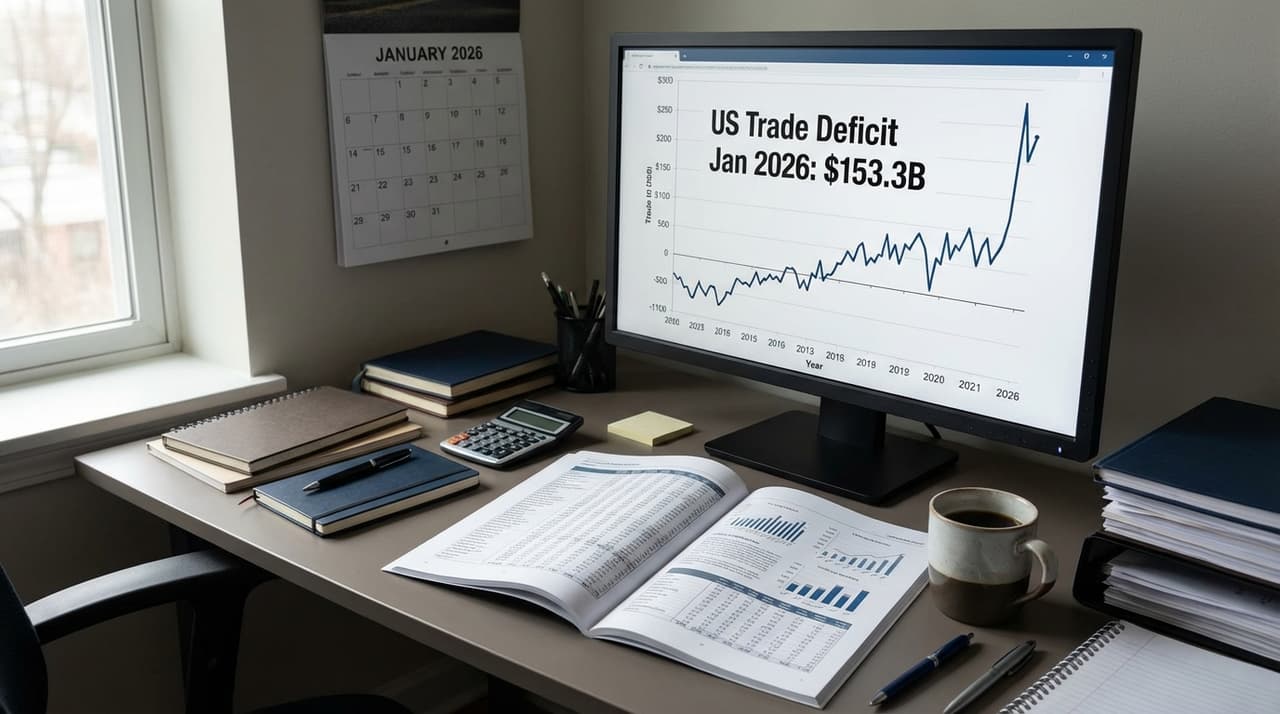
- The US goods trade deficit unexpectedly widened to a record $153.3 billion in January 2026, marking the largest month-on-month increase since 1992.
- A record 11.9% jump in imports, led by a 32.7% surge in industrial supplies and materials, drove the sharp deterioration, overshadowing modest export growth.
- The spike reflects businesses front-loading inventory ahead of anticipated new US tariffs and heightened uncertainty around trade policy, including the upcoming USMCA renegotiation.
After narrowing to $52.8 billion in September 2025—the lowest level since April 2020—the US trade deficit deteriorated sharply, widening to $122.01 billion in December before reaching the historic January figure. This reversal from late 2025's modest improvements has caught economists off guard, with one analyst describing it as "a seismic shift in trade dynamics that underscores the fragility of recent gains."
The January widening was primarily fueled by a record month-on-month increase in imports, the largest since July 2020, while exports rose more modestly at 2.0%. Within imports, industrial supplies and materials saw a staggering 32.7% jump, indicating businesses are rushing to stockpile goods. "We're seeing clear signs of inventory front-loading as companies brace for potential tariff implementations," said a source familiar with trade data, who spoke on condition of anonymity. Exports did show some resilience, with consumer goods excluding autos rebounding 10.9%, but this growth was insufficient to counterbalance the import surge.
Heightened uncertainty around US trade policy is driving the volatility. Congress has proposed legislation including an excise tax on offshored service sector workers, and the 2026 renegotiation of the USMCA trade pact with Canada and Mexico looms large. A sunset clause could trigger if the agreement is not reapproved, adding pressure to negotiations. Efforts to reach officials for comment on the trade data were unsuccessful, but industry insiders suggest the import spike may be a temporary blip as businesses adjust to policy signals.
Looking ahead, the trajectory points to continued volatility in trade balances. The upcoming USMCA renegotiation and any tariff implementations could significantly reshape trade patterns in 2026, particularly with major partners like Canada and Mexico, where deficits widened in late 2025 as importers utilized exemptions. Without a deal, companies might face increased costs and disrupted supply chains, potentially forcing adjustments in sourcing strategies. As one trade expert noted, "This isn't just a number—it's a warning sign of how policy uncertainty can ripple through the economy in real time."
Correction: An earlier version misstated the month of the record deficit; it occurred in January 2026, not February.