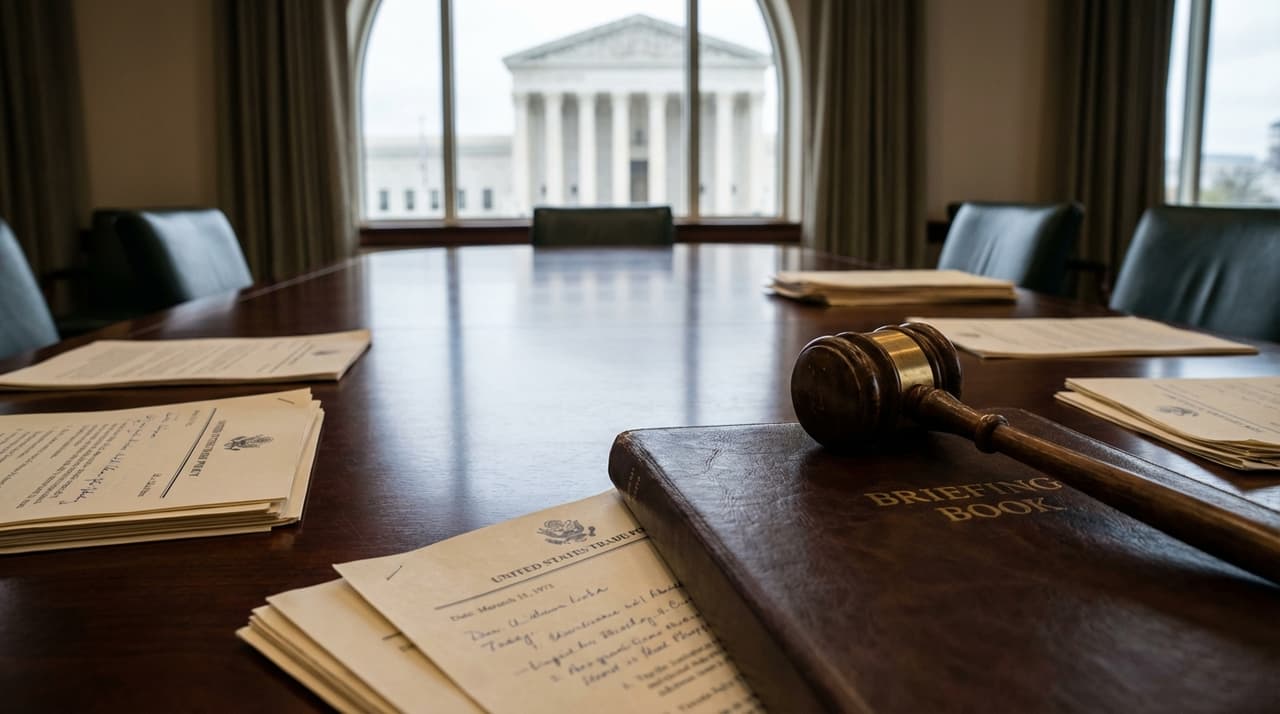
- The Supreme Court is weighing whether IEEPA authorizes sweeping "worldwide" tariffs, with a decision expected by year-end or in 2026.
- U.S. Trade Representative Jamieson Greer says tariffs will remain a core policy tool even if the Court strikes down the current regime.
- Businesses face uncertainty over potential refunds while the administration prepares alternative legal bases to maintain tariff revenues.
U.S. Trade Representative Jamieson Greer has made clear that tariffs will continue to be a central feature of American trade policy, regardless of how the Supreme Court rules on the legality of the current International Emergency Economic Powers Act (IEEPA)-based tariff regime. His comments come as the Court heard expedited oral arguments on November 5, 2025, in consolidated challenges to the broad "worldwide" and "reciprocal" tariffs imposed on most imports.
"We can produce the revenues we need using other tariff statutes," Greer told Reuters, according to people familiar with his remarks. He added that Congress should consider new trade rules in the longer term, but emphasized that "tariffs will remain a tool regardless of how the Supreme Court rules." The administration's stance signals a determination to preserve both the fiscal benefits and strategic leverage derived from these duties, which have generated billions in revenue and reshaped global supply chains.
Observers describe the case as "too close to call," with several justices expressing skepticism during arguments that IEEPA—a statute designed to address "unusual and extraordinary threats"—authorizes such sweeping, revenue-focused tariffs. A decision could come before year-end or sometime in 2026, potentially invalidating the tariffs and triggering complex refund processes for importers who have paid the duties. Greer noted that refund timing, if required, would be up to Treasury and Customs and Border Protection (CBP), and he has met with CBP leadership but cannot yet provide a clear timeline.
Behind the scenes, the administration has been actively preparing for a possible adverse ruling. Officials have initiated multiple alternative trade investigations under other statutes, such as Section 122 of the Trade Act of 1974, which allows tariffs of up to 15% to address serious balance-of-payments deficits. This proactive maneuvering aims to ensure that new tariffs could be imposed quickly if the IEEPA-based duties are struck down, minimizing any gap in revenue or policy impact. Treasury Secretary Scott Bessent has indicated that, while the case is pending, the administration will not impose new tariffs under IEEPA, underscoring an awareness of legal risk even as alternatives are readied.
For businesses, the uncertainty is palpable. Companies in manufacturing, retail, and import-heavy sectors have been adjusting supply chains and pricing strategies around the expectation of elevated U.S. tariffs. Now, they must weigh whether to absorb current costs, pass them on to consumers, or bank on potential refunds—all while facing the risk that new tariffs under different legal bases could swiftly follow any Court decision. Some importers have already begun contingency planning, though details remain fluid given the legal complexities.
If the Supreme Court upholds the tariffs, the current regime would continue, reinforcing expansive executive tariff powers and likely fueling further political debate over congressional versus presidential control of trade policy. If the Court strikes them down, active collection would likely cease, and litigation would intensify over the scope of injunctions and refund processes. The administration's readiness to pivot suggests that, in either scenario, tariffs will persist as a tool, reflecting broader bipartisan concerns about trade imbalances and strategic economic dependencies. As one trade policy expert put it, "The legal hook may change, but the policy direction appears set."