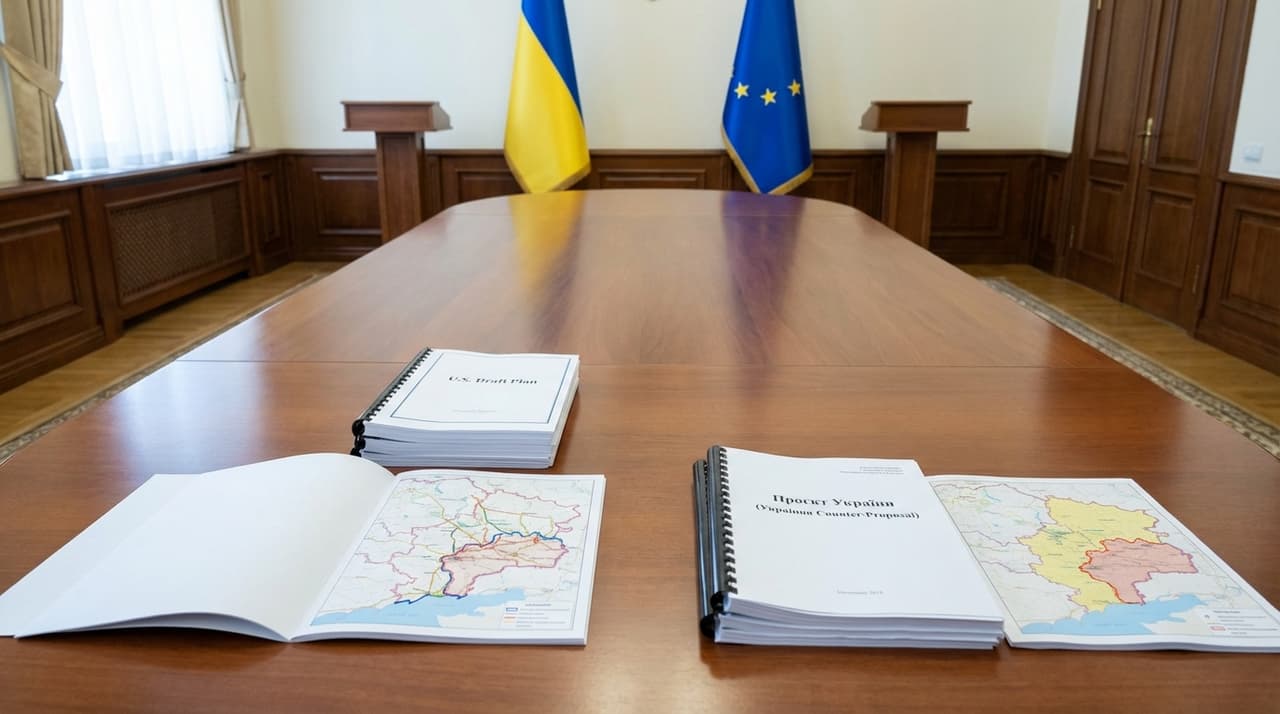
- Ukraine's president reaffirms that any territorial changes require a nationwide vote, creating a legal hurdle for peace talks.
- A Trump-backed U.S. draft plan demands Ukraine cede Donbas to Russia, but Kyiv is preparing a counter-proposal with European support.
- European leaders align with Ukraine, opposing land-for-peace deals while Russia insists on its core demands being met.
Ukrainian President Volodymyr Zelenskyy has drawn a firm constitutional line in ongoing peace negotiations, stating that control over the Donbas region could only be decided through a nationwide referendum. This declaration comes as U.S. mediators, backed by the Trump administration, push for a settlement that would see Ukraine permanently lose the territories of Donetsk and Luhansk.
According to people familiar with the discussions, the current U.S. draft plan—shaped by advisers Steve Witkoff and Jared Kushner—envisions Ukraine recognizing Donbas as de facto Russian territory. The proposal includes additional concessions around strategic assets like the Zaporizhzhia nuclear plant. Zelenskyy has flatly rejected these terms, labeling them as overly favorable to Moscow and inconsistent with Ukraine's sovereignty.
"Under our constitution, any alteration of borders must be decided exclusively by the Ukrainian people," Zelenskyy said in recent remarks, reinforcing a stance that complicates rapid diplomatic progress. His administration is now preparing a 20-point counter-proposal, replacing an earlier 28-point U.S. draft that Kyiv viewed as unacceptable. European capitals, including Paris, Berlin, and London, are backing this effort, signaling a unified front against territorial concessions.
Kremlin spokesman Dmitry Peskov responded tersely, indicating that Russia "will not accept any deal that fails to meet its core demands," which include full control over Donbas and recognition of its territorial gains. This sets the stage for a protracted standoff, with Ukraine's referendum requirement acting as a significant legal barrier. One European diplomat, speaking on condition of anonymity, noted, "The referendum clause isn't just procedural—it's a political shield against pressure."
Economically, the stakes are immense. Donbas holds critical industrial assets and energy infrastructure, with its control affecting Ukraine's long-term reconstruction prospects and the broader sanctions regime against Russia. Western aid packages, totaling billions, hinge on these negotiations, adding financial weight to the diplomatic maneuvering. Market analysts are closely watching energy futures and defense stocks, as any breakthrough could trigger volatility.
In the background, efforts to reach Ukrainian and U.S. officials for further comment were unsuccessful as of press time. The situation remains fluid, with talks expected to intensify in the coming weeks. For now, Zelenskyy's referendum stance ensures that any deal on Donbas will face rigorous public scrutiny, potentially delaying a resolution but upholding Kyiv's constitutional integrity.