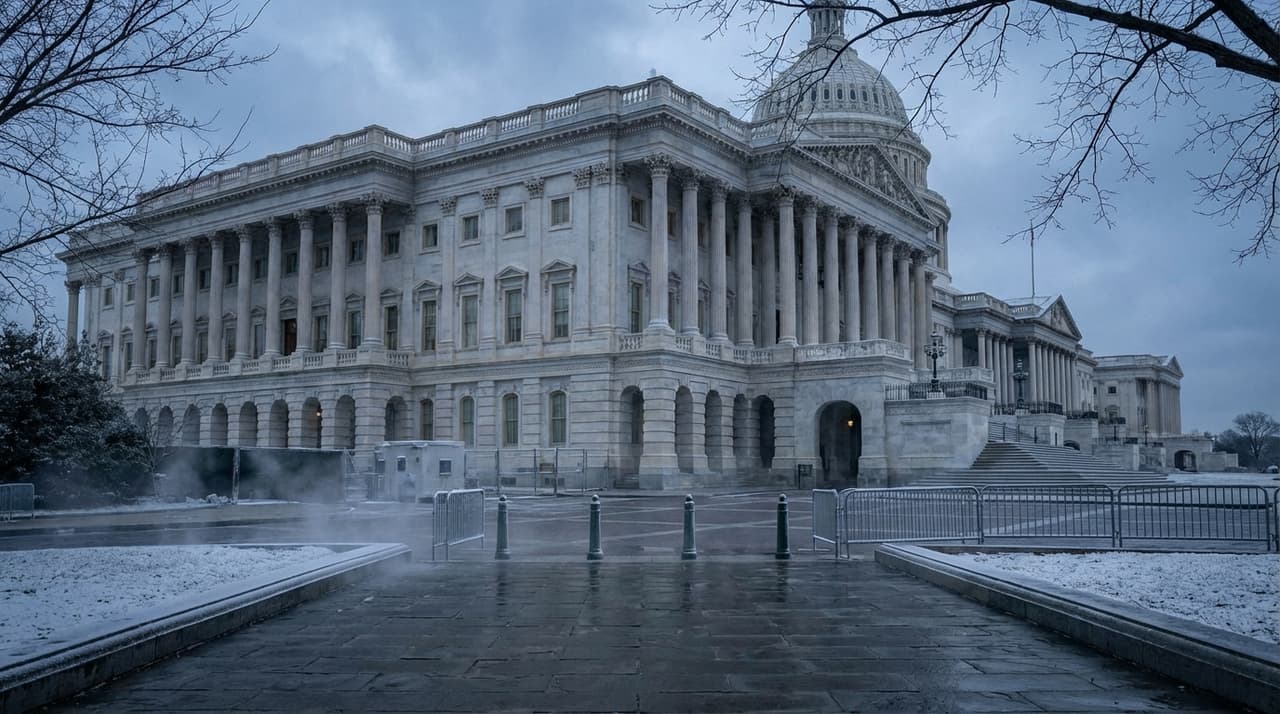
- Tim Cook was seen arriving at the U.S. Capitol for President-Elect Donald Trump's inauguration, which was moved indoors due to sub-freezing temperatures.
- Cook donated $1 million to Trump's inaugural committee as part of broader Big Tech outreach to the new administration.
- Tech firms are engaging with the incoming administration to secure favorable policies on artificial intelligence and cryptocurrency while mitigating regulatory risks.
Apple (AAPL) CEO Tim Cook's presence at the U.S. Capitol this week wasn't just ceremonial—it was a calculated move in the high-stakes game of Washington influence. According to people familiar with the matter, Cook was among the tech leaders who financially supported Trump's inauguration, with Apple's CEO contributing $1 million to the inaugural committee. The event itself was shifted indoors due to dangerously cold temperatures, but the chill in the air didn't cool tech's determination to establish channels with an administration that has been openly hostile to large platforms.
Efforts to shape the regulatory environment have hit a new intensity as Trump prepares to take office with a team that has pledged to target what they call "censorship" and "wokeness" in Big Tech. Trump's pick to chair the Federal Trade Commission, Andrew Ferguson, has made clear his intentions, while venture capitalist David Sacks has been named as an AI and cryptocurrency "czar," signaling where the administration's focus will lie. Without establishing these relationships early, companies like Apple could face aggressive antitrust actions and restrictive policies that might hamper their growth in critical areas like AI development.
"What institutional investors like us are really focused on is regulatory stability," said one financial executive who requested anonymity due to the sensitivity of political discussions. "Companies are making calculated bets—accepting some reputational risk now in exchange for potential policy advantages down the line."
Apple, with its massive market capitalization and cash reserves, has particular incentive to protect its interests. The company's recent financial performance remains strong, but regulatory headwinds could threaten its services business, including the App Store, iCloud, and Apple Pay. Cook's appearance at the Capitol, along with his substantial donation, represents Apple's ongoing strategy of maintaining working relationships across administrations, a practice that has served the company well through previous political transitions.
Other tech giants are following similar playbooks. Meta (META), Amazon (AMZN), OpenAI, and Uber (UBER) have all made donations in the $1 million range to Trump's inaugural efforts, according to sources familiar with the contributions. Ripple's $5 million crypto donation shows how digital asset firms are making parallel pushes for favorable treatment in financial regulation. This sector-wide approach mirrors historical patterns when industries like defense and pharmaceuticals heavily supported new administrations to shape regulatory priorities—only now the battleground is AI and digital platforms.
Attempts to reach Apple for comment on Cook's specific motivations were unsuccessful, but analysts watching the situation note that the scale and concentration of tech money toward this inauguration is unprecedented. The record-breaking flow of funds into Trump's committee underscores how strongly major firms want access to policymakers in what could become a more confrontational regulatory climate.
For stakeholders, the implications are immediate. Investors generally view this engagement as prudent risk management, though some express concern about potential reputational damage. Employees and users in more progressive demographics might feel uncomfortable with what appears to be alignment with Trump's polarizing politics. Advocacy groups have already begun criticizing what they see as tech firms "currying favor" rather than pushing back on threats to civil rights or antitrust enforcement.
Looking ahead, Apple is likely to intensify its lobbying on AI rules, app-store regulation, and content-moderation issues. Cook's visible presence at key political events suggests the company will seek direct lines of communication to Trump's economic and tech advisers. In the longer term, if the administration follows through on its threats, Apple could face new regulatory challenges, but this early engagement might help shape them in ways less damaging to the company's core businesses.
The inauguration may have been moved indoors, but tech's outreach is happening very much in the open—a clear signal that industry leaders understand what's at stake in the coming policy battles.