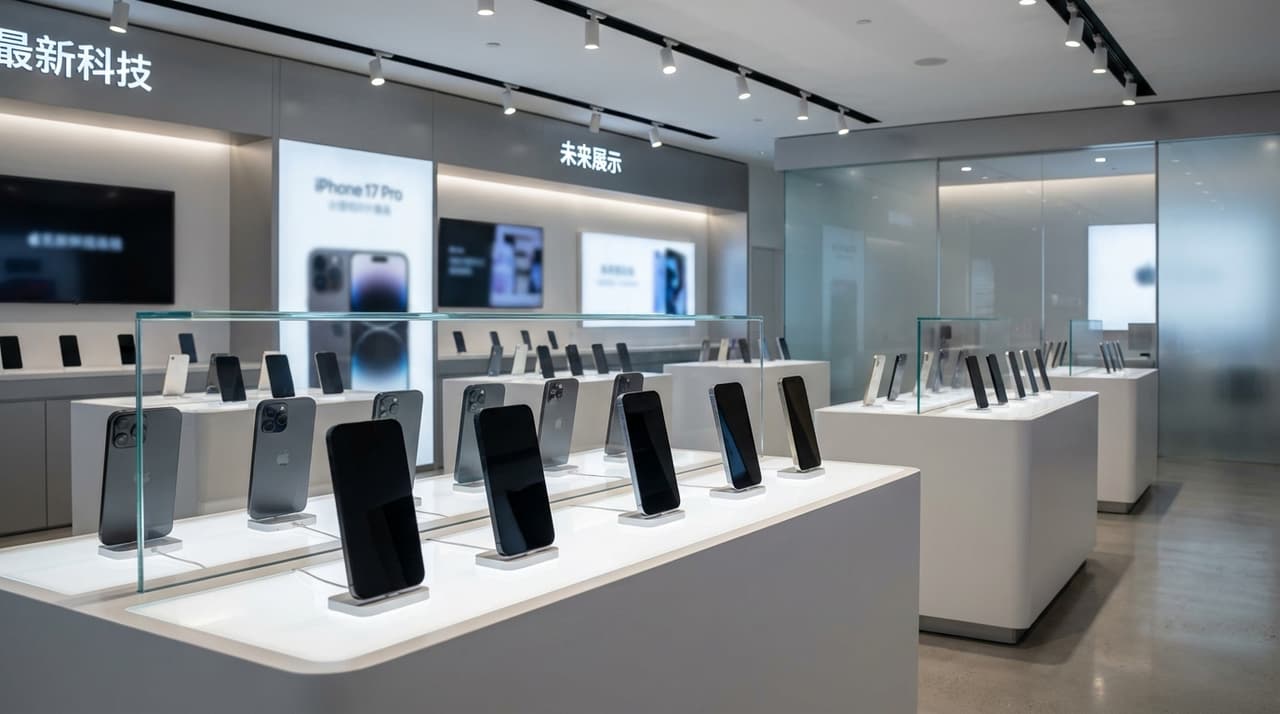
- Apple (AAPL) leads China's smartphone market with over 20% share in October, fueled by iPhone 17 demand.
- Shipments of foreign-branded phones, including iPhones, rose 13% year-over-year to 7.027 million units, per Reuters calculations based on CAICT data.
- IDC revises Q4 forecast for Apple in China from a 9% decline to a 17% year-over-year increase, signaling a robust turnaround.
A Resurgent Performance in a Competitive Landscape
Apple's iPhone shipments in China have defied earlier projections, with October data showing a 13% year-over-year increase in foreign-branded phone shipments to 7.027 million handsets, according to Reuters calculations based on figures from the China Academy of Information and Communications Technology (CAICT). This surge positions Apple at the forefront of a market that had seen the company struggle earlier in the year, with sources close to the matter noting that internal targets have been exceeded amid strong consumer appetite for the latest iPhone models.
Efforts to regain momentum in China, Apple's largest market, have paid off handsomely. In April 2025, the company reported a 9% decline in iPhone shipments, but the launch of the iPhone 17 series has catalyzed a remarkable recovery. Analysts point to aggressive marketing strategies and improved supply chain coordination as key drivers, with one industry insider describing the turnaround as "nothing short of phenomenal" given the intense local competition from Huawei and Xiaomi (1810.HK).
Market Implications and Future Challenges
Without this uptick, Apple might have faced continued erosion in its market position, but the recent data suggests a shift in consumer preferences back toward premium devices. The company's market share exceeded 20% in October, according to preliminary estimates, putting it miles ahead of rivals in the high-end segment. This performance has broader implications for the global smartphone industry, with IDC revising its 2025 growth forecast upward to 1.5% year-over-year, largely on the back of Apple's success.
However, the outlook isn't entirely rosy. A global memory shortage is expected to constrain supply and raise prices in 2026, potentially impacting lower-end Android devices more severely. Apple has indicated that its next base iPhone model may shift from fall 2026 to early 2027, a move that could reduce iOS shipments by 4.2% next year, according to analysts. Despite this, average selling prices are projected to rise, possibly offsetting unit declines in market value.
Attempts to reach Apple for comment on the October shipment figures were unsuccessful, but a spokesperson for a major retailer in China noted that iPhone 17 inventory has been moving "faster than anticipated" in recent weeks. As the holiday quarter approaches, all eyes will be on whether Apple can sustain this momentum amid evolving market dynamics.