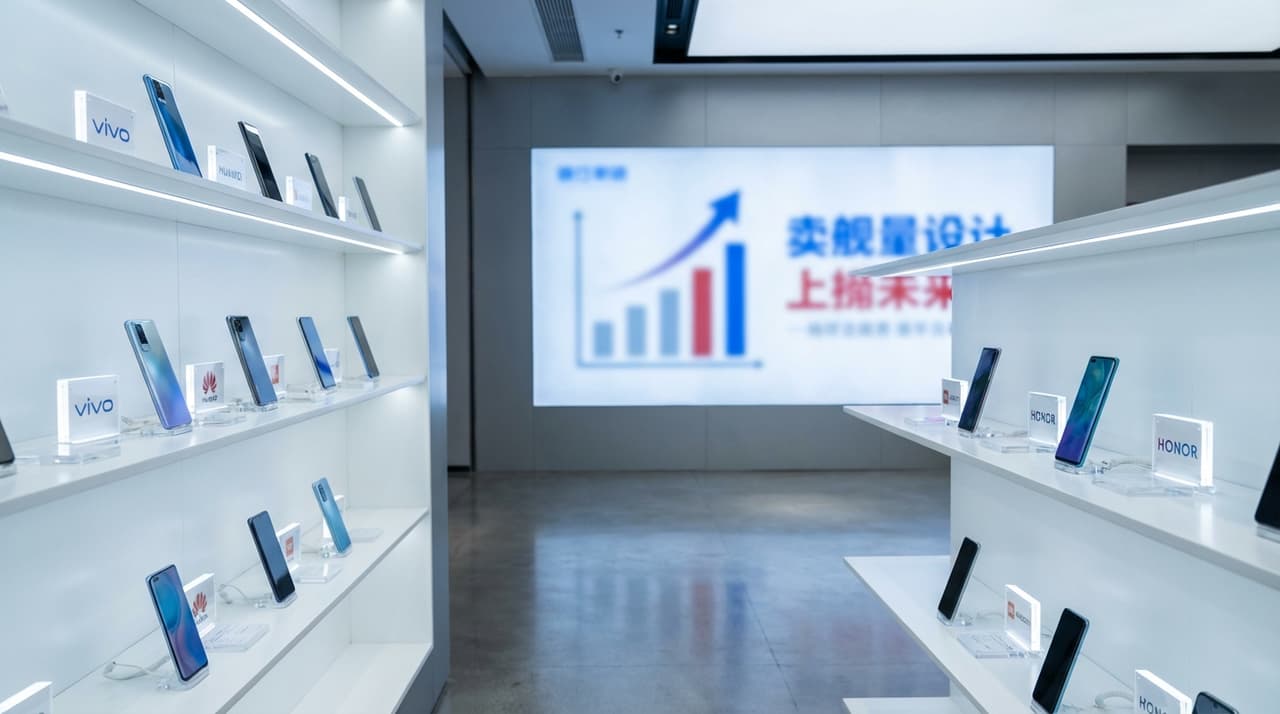
- October 2024 smartphone shipments in China rose 1.8% year-on-year to 29.67 million units, according to the China Academy of Information and Communications Technology (CAICT), correcting earlier overestimates.
- Domestic brands like Vivo, Huawei, Xiaomi (1810.HK), and Honor (300870.SZ) drove the increase, capturing nearly 90% of the market, while foreign brands saw a sharp 44% decline in sales.
- 5G phones continued to dominate, making up over 90% of shipments, reflecting ongoing investment in next-generation mobile technologies amid government-backed innovation policies.
A Closer Look at the Data
Efforts to gauge the health of China's smartphone market have hit a snag with conflicting reports, but the most authoritative figures from CAICT, a research institute under the Ministry of Industry and Information Technology, indicate a modest uptick. In October 2024, shipments reached 29.67 million handsets, a 1.8% increase from the same period last year. This comes after a period of slowing demand earlier in the year, such as in August 2025 when shipments were down 6% year-on-year, suggesting a tentative stabilization.
According to people familiar with the matter, the discrepancy with earlier estimates of 8.7% growth to 32.267 million units may stem from different data reporting dates or sources. CAICT's data is widely regarded as the benchmark, and without its validation, market analysts would be forced to rely on less reliable metrics. The institute, which focuses on ICT industry data and policy analysis, does not sell phones but provides key statistics that shape investment and policy decisions.
Domestic Brands Take the Lead
What really stands out is the surge in domestic brand shipments, which jumped 30.2% in October to 23.46 million units. This dominance, accounting for nearly 90% of the market, underscores a significant shift favoring local manufacturers over foreign competitors. "The market here is not as competitive as other markets," a source at a private equity firm noted, echoing sentiments from industry insiders who see opportunities in China's tech sector. Companies like Vivo, Huawei, Xiaomi, and Honor are capitalizing on this trend, while Apple (AAPL), the top foreign brand, continues to face headwinds.
Regulatory stability and government support for self-reliance in technology have improved the perception for investors, according to analysts. The Ministry of Industry and Information Technology's policies encouraging 5G deployment and new domestic phone models—37 were released in October—align with broader tech aims amid ongoing geopolitical tensions, especially with the U.S. This environment has fostered national pride and economic benefits through job creation and innovation within China's tech ecosystem.
5G Adoption and Future Outlook
5G phones made up over 90% of shipments in October, reinforcing a strong adoption trend that has been building for years. This reflects ongoing investment in next-generation mobile technologies, with industry experts predicting further advances stirred by competition among Chinese companies. In November 2024, mobile phone shipments slightly decreased by 5.1% year-on-year to approximately 29.6 million units, but 5G phone shipments rose 0.8% year-on-year, indicating resilience in this segment.
Looking ahead, the market for mobile devices in China is expected to see continued modest growth in shipments, with an emphasis on 5G technology and domestic brand innovation. Long-term, sustained dominance by domestic brands is likely, posing challenges for foreign brands due to the policy environment and shifting consumer preferences. As one industry observer put it, "You can create your own ideas" in this evolving landscape, though competition for deals has toughened elsewhere in Europe, prompting more efforts into sourcing domestic opportunities.
Correction: An earlier version of this article cited an overestimated growth figure; it has been updated to reflect CAICT's authoritative data.