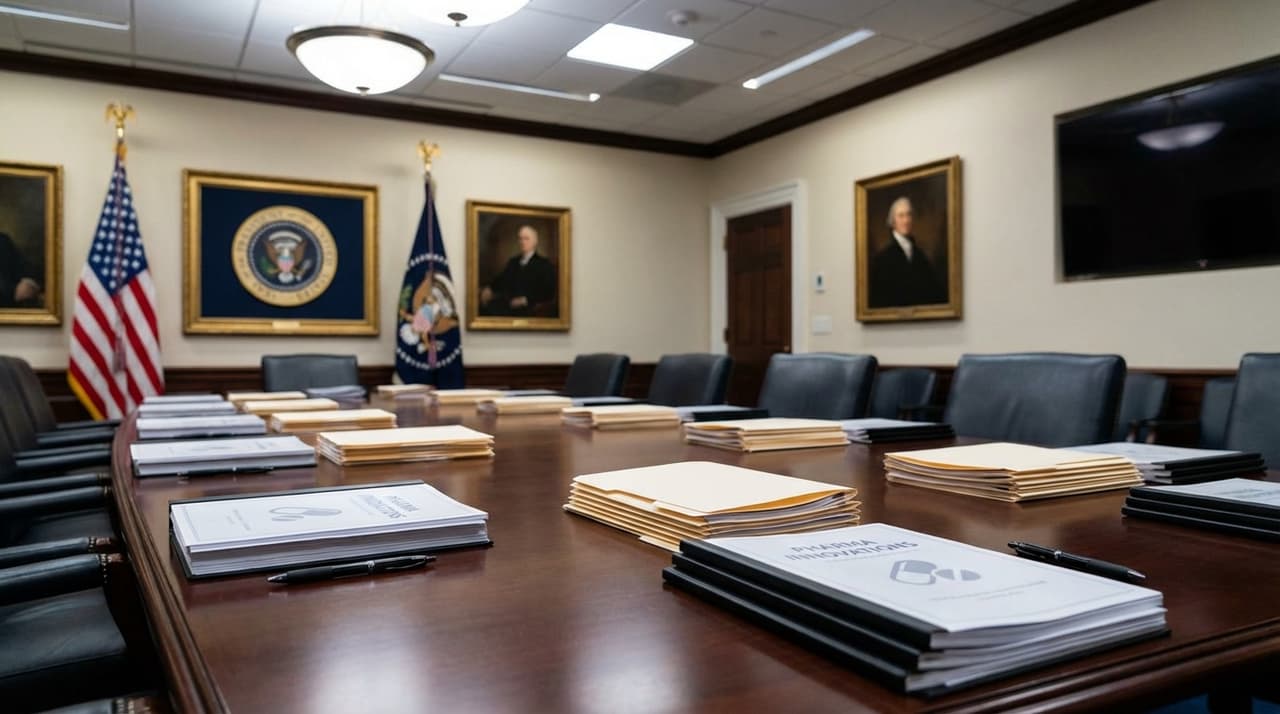
- Major pharmaceutical firms, including GlaxoSmithKline (GSK), Merck (MRK), and Sanofi (SNY), are reportedly preparing to unveil price reductions in a meeting with former President Trump at the White House on Friday.
- The move signals a potential shift in drug pricing strategies amid ongoing political and economic pressures, though details remain unconfirmed as companies focus on innovation and pipeline growth.
- Stakeholders are closely watching for impacts on patient costs and revenue streams, with blockbuster drugs like Keytruda and Arexvy at the forefront of discussions.
Efforts to address high drug prices in the U.S. have taken a new turn, with at least seven pharmaceutical companies poised to announce price cuts alongside former President Donald Trump at the White House this Friday, according to people familiar with the matter. Among those expected to participate are industry giants GlaxoSmithKline (GSK), Merck, and Sanofi, though official confirmations have yet to surface in recent data. The meeting, if it proceeds, could mark a significant development in the ongoing dialogue between drugmakers and political figures over affordability, even as these firms emphasize their growth trajectories and pipeline launches.
GlaxoSmithKline, a top-10 global player with approximately $38.4 billion in 2023 sales driven largely by its Arexvy RSV vaccine, has been planning 12 or more pipeline launches by 2025. Similarly, Merck, leading pharma rankings with around $64.17 billion in FY2024 revenue powered by Keytruda and Gardasil, faces a looming patent cliff for Keytruda in 2028. Sanofi, reporting €43 billion in 2023 sales, is focusing on its Dupixent eczema treatment and Beyfortus RSV vaccine while planning a Q4 2024 OTC spin-off. None of these companies have publicly commented on the rumored price cuts, and attempts to reach representatives for comment were unsuccessful as of Thursday evening.
Market reactions have been muted so far, with shares in these firms holding steady in pre-market trading, but analysts note that any confirmed reductions could pressure margins in the short term. The pharmaceutical industry has been navigating a complex landscape of generic competition, such as the 23% decline in Merck's Januvia sales, and regulatory uncertainties. While broader trends highlight innovation in areas like oncology and AI-driven discovery, this potential pricing move underscores the persistent societal demand for lower drug costs, particularly for treatments like Keytruda for cancer or Dupixent for eczema.
If the price cuts materialize, they would likely benefit consumers grappling with high U.S. drug prices, though the financial implications for companies could be nuanced. Stakeholders, including governments and investors, are weighing the balance between affordability and sustaining R&D investments. In the background, these firms continue to streamline operations through spin-offs—GSK with Haleon in 2022 and Sanofi's planned OTC division—aiming to sharpen their focus on prescription drugs and growth markets like the U.S. and China.
As Friday approaches, the industry awaits clarity on whether this event will proceed and what specific reductions might entail. For now, the emphasis remains on reporting the facts as they unfold, with updates expected as more details emerge from the White House or company statements.