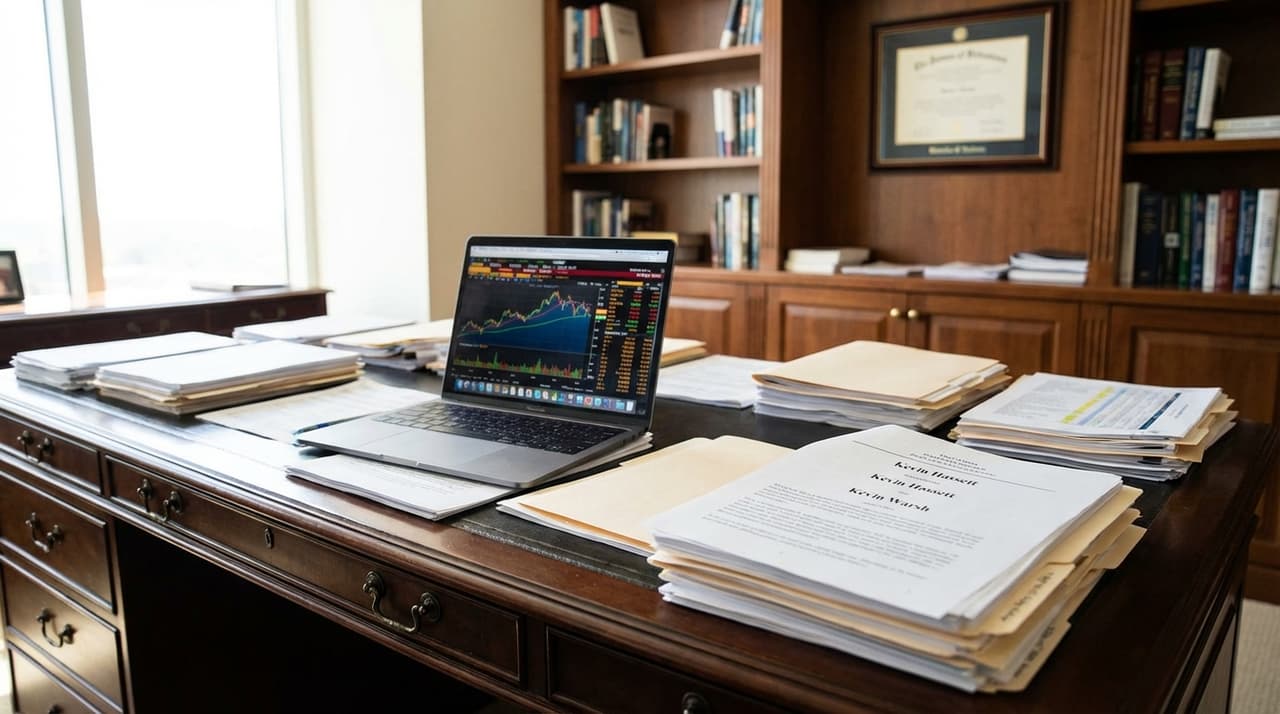
- Treasury Secretary Scott Bessent endorses Kevin Hassett and Kevin Warsh as "very, very qualified" for Federal Reserve chair.
- President Trump's interviews continue, with an announcement expected in early January 2026 amid market volatility.
- The selection process highlights tensions over Fed independence and rate-cut expectations.
Treasury Secretary Scott Bessent has publicly thrown his support behind Kevin Hassett and Kevin Warsh as top contenders for the next Federal Reserve chair, calling both "very, very qualified" in a Fox Business interview. This endorsement aligns with President Trump's recent statements naming them as leading candidates, as the administration narrows its search ahead of an expected announcement in early January 2026.
Bessent noted that one unnamed candidate gave weak responses during interviews, confirming that Trump has been direct in his questioning and that more interviews could happen this week. The Treasury Secretary also criticized the Fed as an "unelected institution" that has lost public trust, echoing Trump's long-standing frustrations with current Chair Jerome Powell's approach to rate cuts. Efforts to find a successor have intensified, with Trump pushing for federal funds rates at 1% or lower to boost economic growth, raising concerns among investors about central bank independence.
In a recent Wall Street Journal interview, Trump placed Warsh, a former Fed Governor, at the top of his list and praised both "Kevins" as great choices, following a 45-minute White House meeting with Warsh where he affirmed support for aggressive rate cuts. Prediction markets have shown volatility in response: Hassett's odds dropped from over 80% as Warsh briefly led, driven by Trump's comments and endorsements like JPMorgan (JPM) CEO Jamie Dimon's private backing for Warsh. According to people familiar with the matter, the administration is weighing candidates' openness to White House consultation on monetary policy, with Hassett seen as favoring more aggressive cuts and Warsh as potentially pursuing a balanced approach alongside balance sheet reductions.
Without a deal on a nominee soon, the uncertainty could spike market volatility, as stakeholders from businesses to consumers eye the implications for borrowing costs. Attempts to reach the White House for further comment were unsuccessful, but sources indicate that Trump views this selection as critical to his economic agenda, criticizing high rates as a hindrance to growth. The process reflects ongoing tensions, with some analysts warning that politicizing the Fed could undermine its credibility in fighting inflation.
Short-term, markets are adjusting to shifting odds, with the announcement timeline firming up for early next year. In the long run, a chair like Warsh or Hassett could reshape U.S. monetary policy, per expert views on independence and growth priorities. This story is developing, and updates will follow as more interviews conclude.